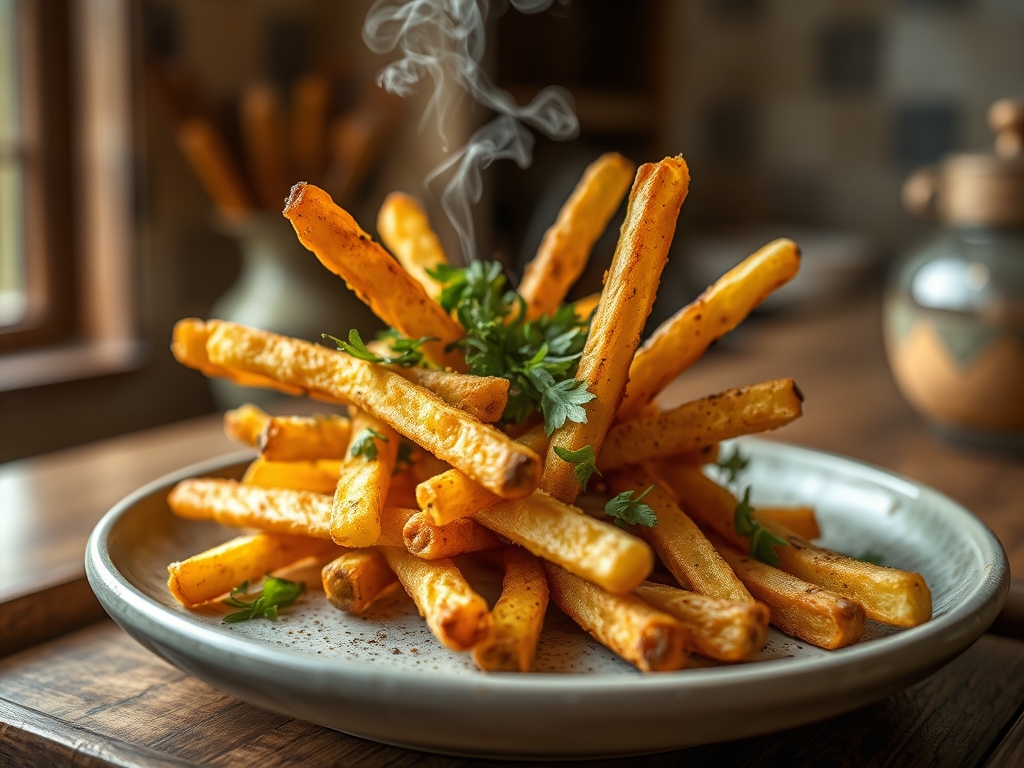
The humble potato is not merely a root vegetable; it is a pressurized vessel of starch granules waiting for a thermal catalyst to trigger a phase shift. To achieve the perfect fry, you must master French Fry Kinetics. This is the precise study of moisture migration, starch gelatinization, and the eventual Maillard reaction that transforms a pallid tuber into a structural masterpiece. Most home cooks fail because they treat frying as a singular event. In reality, it is a dual-stage industrial process. We are looking for a specific textural contrast: a glass-like exterior that shatters upon impact, giving way to a fluffy, mashed-potato interior that has been perfectly steamed within its own golden cage. If your fries are limp, oily, or inconsistently colored, your kinetic energy is misaligned. We are here to calibrate your kitchen infrastructure, ensuring every strip of Russet potato undergoes a total molecular transformation. Prepare your station; we are moving from amateur snacking to high-level culinary engineering.
THE DATA MATRIX
| Metric | Specification |
|---|---|
| Prep Time | 45 Minutes (Excluding Soak) |
| Execution Time | 25 Minutes |
| Yield | 4 Standard Servings |
| Complexity (1-10) | 7 (Precision Dependent) |
| Estimated Cost per Serving | $0.85 USD |
THE GATHERS
Ingredient Protocol:
- 1.2 kg / 2.6 lbs Russet Potatoes (High starch content is non-negotiable)
- 2 Liters / 8.5 cups Neutral Oil (Peanut or Grapeseed for high smoke points)
- 15 ml / 1 tbsp White Vinegar (To stabilize pectin structures)
- 10 g / 2 tsp Fine Sea Salt (For immediate post-thermal adhesion)
- Optional: 2 g / 0.5 tsp Smoked Paprika (To infuse a piquant aromatic profile)
Section A: Ingredient Quality Audit:
If your potatoes are sprouting or feel soft, the sugar-to-starch ratio has shifted toward simple sugars. This results in fries that burn before they crisp. The fix: soak the sliced batons in cold, acidified water for at least two hours to leach out excess surface sugars. If your oil smells "fishy" or heavy, it has oxidized. Always use fresh, high-stability fats to ensure the flavor remains clean and the texture does not become viscous or greasy.
THE MASTERCLASS
1. Precision Slicing and Starch Extraction
Utilize a sharp chef knife or a mandoline to cut potatoes into consistent 1cm batons. Uniformity is the backbone of French Fry Kinetics; irregular shapes lead to uneven thermal absorption. Immediately submerge the strips in a large bowl of cold water.
Pro Tip: Use a digital scale to ensure your batches are equal in weight. This prevents temperature drops in the oil that can lead to oil-logging. Soaking removes surface starch, preventing the fries from sticking together during the initial blanch.
2. The Acidified Parboil
Place the batons in a large pot with cold water and the white vinegar. Bring to a boil and simmer for exactly eight minutes. The vinegar prevents the potato from falling apart by strengthening the cell wall pectin, allowing the interior to soften while the exterior remains intact.
Pro Tip: Drain the potatoes onto a wire rack rather than a towel. Use a bench scraper to move them gently. This maximizes airflow and begins the dehydration process, which is essential for a crisp finish.
3. The Low-Temp Blanch (Stage One)
Heat your oil in a heavy-bottomed saucier or deep fryer to 160C / 325F. Fry the potatoes in batches for about 6 to 8 minutes. They should not brown yet; they should look pale but feel firm and "set" on the outside.
Pro Tip: Use a high-quality probe thermometer to monitor the oil. If the temperature dips below 150C, the potato will absorb oil like a sponge instead of creating a protective crust.
4. The High-Heat Finish (Stage Two)
Increase the oil temperature to 190C / 375F. Return the blanched fries to the oil for 2 to 3 minutes. This is where the Maillard reaction accelerates, creating the golden hue and the signature crunch.
Pro Tip: Work in small batches to maintain thermal momentum. Use a spider strainer to agitate the fries, ensuring even heat distribution across all surfaces.
5. The Aerated Seasoning
Immediately transfer the fries to a stainless steel bowl. Toss with salt and spices while the surface oil is still liquid. This creates a functional bond between the seasoning and the crust.
Pro Tip: Do not crowd the bowl. You want to aerate the fries as you toss them to allow steam to escape. If steam is trapped, it will rehydrate the crust and turn your masterpiece soggy within sixty seconds.
Section B: Prep & Timing Fault-Lines:
The most common failure is the "Recovery Time" of the oil. When you drop cold potatoes into hot fat, the temperature plummets. If you do not have a powerful heat source or if you overload the pot, the French Fry Kinetics fail. The oil must return to its target temperature within 60 seconds. If it takes longer, reduce your batch size by half.
THE VISUAL SPECTRUM
Section C: Thermal & Visual Troubleshooting:
Referencing the Masterclass photo, your fries should exhibit a "blistered" texture. If the fries are dark brown but limp, the oil was too hot, caramelizing the sugars before the starch could dehydrate. If they are pale and hard, you skipped the parboil or the first blanch. The ideal visual cue is a light "shimmer" on the surface, indicating that the oil has rendered the exterior into a rigid, crystalline lattice. If you see dark spots, these are "sugar burns" from insufficient soaking.
THE DEEP DIVE
Macro Nutrition Profile:
A standard 150g serving provides approximately 460 calories, 22g of fat, and 63g of carbohydrates. While high in energy, the dual-stage method actually reduces total oil absorption compared to single-stage frying because the initial blanch creates a starch seal.
Dietary Swaps:
- Vegan: Naturally compliant; ensure the oil is plant-based.
- Keto: Substitute potatoes with jicama or celeriac, though the kinetics will differ due to lower starch.
- GF: Naturally gluten-free, but avoid cross-contamination in shared fryers.
Meal Prep & Reheating Science:
To maintain molecular structure when reheating, avoid the microwave. The microwave agitates water molecules, steaming the fry from the inside out and destroying the crust. Instead, use an air fryer or oven at 200C for 5 minutes to re-activate the surface oils and crisp the exterior.
THE KITCHEN TABLE
Why use vinegar in the boiling water?
Vinegar slows the breakdown of pectin. This allows you to boil the potato until it is perfectly tender inside without the baton breaking apart before it ever hits the deep fryer.
Can I use Yukon Gold potatoes instead?
Yukon Golds have a waxier texture and higher sugar content. They will produce a creamier interior but will never achieve the same structural rigidity or "crunch" as the high-starch Russet.
Why are my fries soggy after five minutes?
Internal steam is the enemy. If you do not properly drain and "shake" the fries after the final fry, the residual moisture migrates outward, softening the starch crust you worked so hard to build.
Is the double-fry really necessary?
Yes. The first fry cooks the starch through to the center. The second fry dehydrates the surface to create the crispness. You cannot achieve both simultaneously without burning the exterior.