Stop treating your greens like a secondary thought or a soggy garnish. We are here to conduct a full-scale technical audit of the Swiss Chard Sauté; a dish that serves as the ultimate litmus test for a chef's ability to manage bi-phasic cooking. Swiss chard is a biological anomaly in the pan. You have the fibrous, structural integrity of the stems paired with the delicate, volatile leaf tissue that threatens to turn into a swampy mess at the slightest hint of thermal mismanagement. To master this, you must think like an engineer. We are not just tossing leaves in a pan; we are managing moisture migration and enzymatic browning. The goal is a finished product where the stems provide a crisp, succulent snap while the leaves remain vibrant, silky, and perfectly infused with aromatics. If your current output is a pile of gray, weeping vegetation, your infrastructure is failing. It is time to recalibrate your process, tighten your timing, and execute a vegetable dish that commands the same respect as a dry-aged ribeye.
THE DATA MATRIX
| Metric | Specification |
|---|---|
| Prep Time | 15 Minutes |
| Execution Time | 8 Minutes |
| Yield | 4 Servings |
| Complexity (1-10) | 4 |
| Estimated Cost per Serving | $1.25 USD |
THE GATHERS
Ingredient Protocol:
- 2 Large Bunches Swiss Chard (approx. 500g / 1.1 lbs)
- 30ml / 2 tbsp Extra Virgin Olive Oil
- 3 Large Garlic Cloves (approx. 15g / 0.5 oz)
- 2.5g / 0.5 tsp Red Pepper Flakes
- 15ml / 1 tbsp Fresh Lemon Juice
- 5g / 1 tsp Flaky Sea Salt
- 1g / 0.25 tsp Freshly Cracked Black Pepper
Section A: Ingredient Quality Audit:
If your chard arrives with wilted edges or a rubbery texture, your cellular turgor pressure has collapsed. To fix this, submerge the stems in an ice-water bath for twenty minutes prior to fabrication; this rehydrates the cell walls through osmosis. If your garlic lacks that piquant punch, check the cloves for green germs. A green germ indicates the garlic is sprouting and will taste bitter. Remove the germ manually or increase your fat ratio to buffer the harshness. For those dealing with excessively "earthy" or bitter chard, a pinch of sugar can provide a chemical counterbalance to the oxalic acid without dulling the natural flavor profile.
THE MASTERCLASS
Step-by-Step Execution:
1. The Bi-Phasic Fabrication
Separate the leaves from the stems using a sharp chef knife or a bench scraper. Slice the stems into uniform 1cm batons and roughly chop the leaves into 2-inch ribbons. Use a digital scale to ensure your ratios are consistent across batches.
Pro Tip: Uniformity in stem size is non-negotiable for even heat distribution. If your stem pieces vary in thickness, the smaller ones will turn to mush before the larger ones lose their raw, fibrous bite.
2. Aromatic Infusion
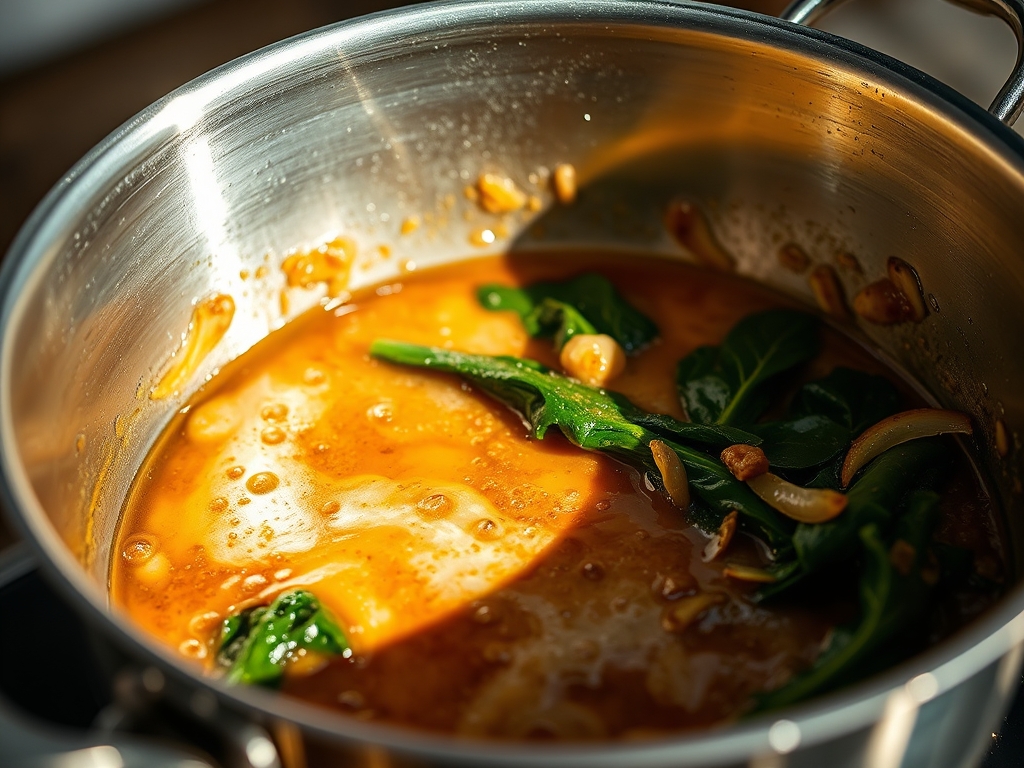
Place a heavy-bottomed saucier or skillet over medium-low heat. Add the olive oil, sliced garlic, and red pepper flakes. Heat until the garlic begins to infuse the oil, turning a pale golden color. Do not allow the garlic to brown deeply, as this introduces carbonized bitterness.
Pro Tip: Starting in a cold pan allows the garlic to render its essential oils into the fat before the exterior sears; this creates a more viscous and flavored base for the greens.
3. The Stem Softening
Increase the heat to medium-high. Add the chard stems to the pan with a pinch of salt. Sauté for 3 to 4 minutes until they become translucent but retain a "snap."
Pro Tip: Salt acts as a desiccant here, drawing out just enough moisture to soften the cellulose without collapsing the structure. Use your digital scale to measure salt precisely to avoid over-seasoning early in the reduction.
4. The Leaf Collapse
Add the leaves in three stages. Toss the first batch until slightly wilted to make room, then repeat. This prevents the pan temperature from dropping too sharply, which would cause the greens to steam rather than sauté.
Pro Tip: High heat is essential to aerate the steam escaping the leaves. If the pan is too crowded, the moisture traps under the leaves, leading to the dreaded "boiled" texture and a loss of chlorophyll brightness.
5. The Acidic Finish
Once the leaves are tender and dark green, remove from heat immediately. Deglaze the pan with the fresh lemon juice and toss one final time. Adjust seasoning with flaky salt and black pepper.
Pro Tip: Adding acid at the very end prevents the lemon juice from reacting with the chlorophyll over time, which would turn the vibrant green into a dull, unappetizing olive drab.
Section B: Prep & Timing Fault-Lines:
The most common failure in a Swiss Chard Sauté is "The Weep." This occurs when the greens sit in the pan too long after the heat is off, continuing to release water. To prevent this, move the finished product to a pre-warmed serving dish immediately. Another timing error is the "Garlic Burn," which happens when the pan is too hot before the aromatics are added. Always monitor your surface temperature; if the oil is smoking, it is too hot for delicate garlic slices.
THE VISUAL SPECTRUM
Section C: Thermal & Visual Troubleshooting:
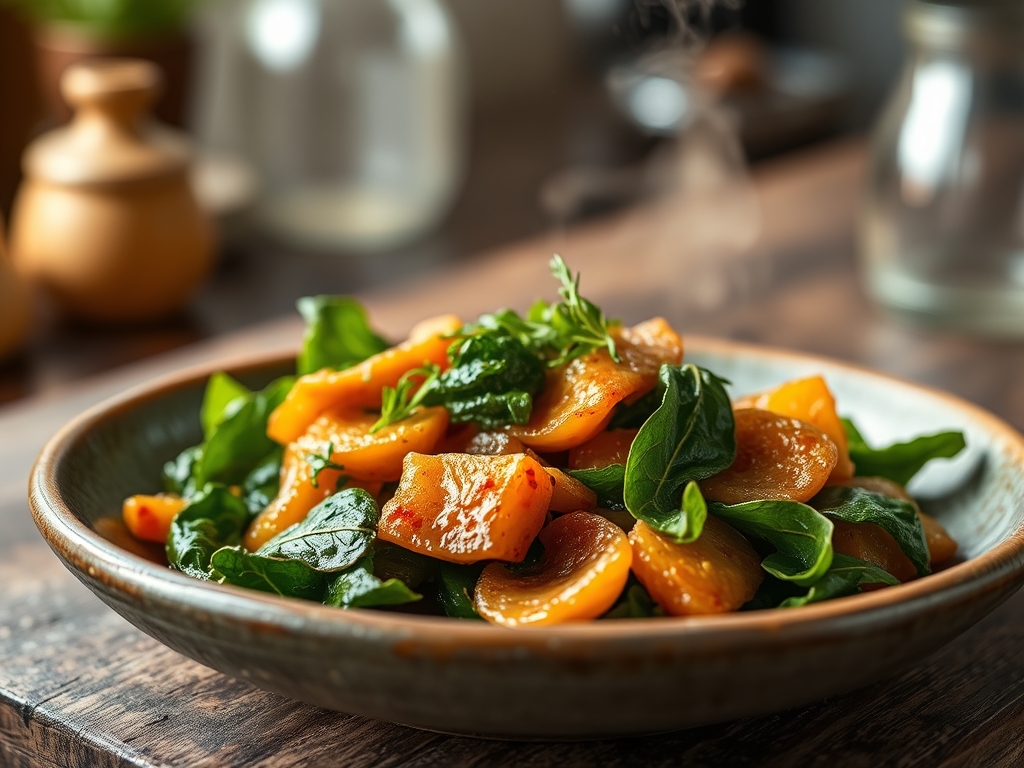
Referencing the Masterclass photo, observe the high-contrast color palette. The stems should appear pearlescent and slightly translucent, not brown. If your stems are browning, your heat is too high or your fat content is too low. The leaves should look "slick" but not oily. If there is a pool of green liquid at the bottom of the plate, you failed to evaporate the moisture during the sauté phase. To fix this in real-time, increase the heat for the final thirty seconds of cooking to flash-evaporate the excess liquid. If the leaves look dull, you likely overcooked them by more than sixty seconds.
THE DEEP DIVE
Macro Nutrition Profile:
A standard serving provides approximately 85 calories, 7g of healthy fats, 4g of fiber, and 2g of protein. It is a powerhouse of Vitamin K, providing over 300% of your daily requirement.
Dietary Swaps:
- Vegan: Already compliant. Ensure your olive oil is high quality.
- Keto: Perfect as-is. Increase the olive oil or add a finish of grass-fed butter for higher fat macros.
- GF: Naturally gluten-free. Ensure no cross-contamination in your spice rack.
Meal Prep & Reheating Science:
To maintain molecular structure during reheating, avoid the microwave. The microwave agitates water molecules, causing the greens to become limp. Instead, flash-heat in a dry skillet for 90 seconds. This evaporates any "wept" moisture and restores the silkiness of the oil coating.
THE KITCHEN TABLE
Why is my chard so bitter?
Chard contains oxalic acid. To neutralize this, ensure you use enough salt and a finishing acid like lemon or vinegar. These components block the bitter receptors on your tongue, allowing the natural sweetness of the plant to emerge.
Can I use the stems of all chard varieties?
Yes. Whether it is Rainbow, Fordhook Giant, or Ruby Red, the stems are entirely edible. Just ensure you adjust cooking time based on thickness. Thicker stems may require an extra minute of sautéing before the leaves are added.
How do I stop the garlic from burning?
Slice the garlic into thicker "chips" rather than mincing it. Thicker slices have less surface area relative to their volume, making them more resilient to high heat during the final stages of the sauté.
Is it necessary to wash the chard twice?
Absolutely. Chard is grown in sandy soil and its crinkled leaves are magnets for grit. Submerge in a basin of cold water, lift out, and repeat. Grit is the ultimate "audit fail" for any professional kitchen.