Listen to the sound of a kitchen at 4:00 PM on a Sunday. It is not the frantic clatter of a short-order line; it is the rhythmic, low-frequency thrum of a heavy-bottomed pot meeting a slow flame. This is the realm of Collard Green Braising. We are talking about the systematic deconstruction of fibrous, cellulose-heavy leaves into something silky, viscous, and deeply soulful. If you think you can rush this process, you are not just wrong; you are fighting the laws of physics. Raw collards are practically armor-plated with fiber. To transform them, you must initiate a long-phase breakdown that coaxes out the hidden sugars while the proteins from smoked meats infuse the liquor with a smoky, salty backbone. The air should turn thick with the scent of vinegar and rendered fat. This is culinary architecture. We are building a flavor profile that is both piquant and savory, ensuring every bite carries the weight of a tradition that demands patience and precision. Strap in, because we are about to audit your technique from the soil up.
THE DATA MATRIX
| Metric | Specification |
|---|---|
| Prep Time | 45 Minutes |
| Execution Time | 3 Hours |
| Yield | 8 Servings |
| Complexity (1-10) | 4 |
| Estimated Cost per Serving | $1.85 |
THE GATHERS
Ingredient Protocol:
- 1.8 kg / 4 lbs Fresh Collard Greens (Stems removed)
- 450g / 1 lb Smoked Turkey Wings or Ham Hocks
- 1.4 Liters / 6 cups High-Quality Chicken Stock
- 1 Large Yellow Onion (Small dice)
- 45ml / 3 tbsp Apple Cider Vinegar
- 15g / 1 tbsp Light Brown Sugar
- 10g / 2 tsp Red Pepper Flakes
- 4 Cloves Garlic (Smashed)
- 30ml / 2 tbsp Neutral Oil or Bacon Fat
Section A: Ingredient Quality Audit:
The most common failure point is the age of the greens. If your collards feel like sandpaper and have a dull, yellowing hue, the cellulose has become overly lignified. This means they will never truly tenderize. To fix this, increase your braising time by 30 percent and add a pinch of baking soda to the liquid to help break down the cell walls. If your smoked meat lacks a deep, mahogany color, it probably contains liquid smoke rather than true wood-fire essence. In this case, deglaze the pot with a splash of bourbon or high-quality soy sauce to add the missing depth and umami.
THE MASTERCLASS
1. The Aromatic Foundation
Begin by heating your fat in a large heavy-bottomed pot or a wide saucier. Sauté the onions until they are translucent and just beginning to caramelize. Add the garlic and red pepper flakes, stirring constantly for 60 seconds.
Pro Tip: Use a digital scale to weigh your aromatics. Consistency is the hallmark of a professional. The Maillard reaction here provides the base notes for the entire dish; do not rush the onion softening.
2. The Liquid Extraction
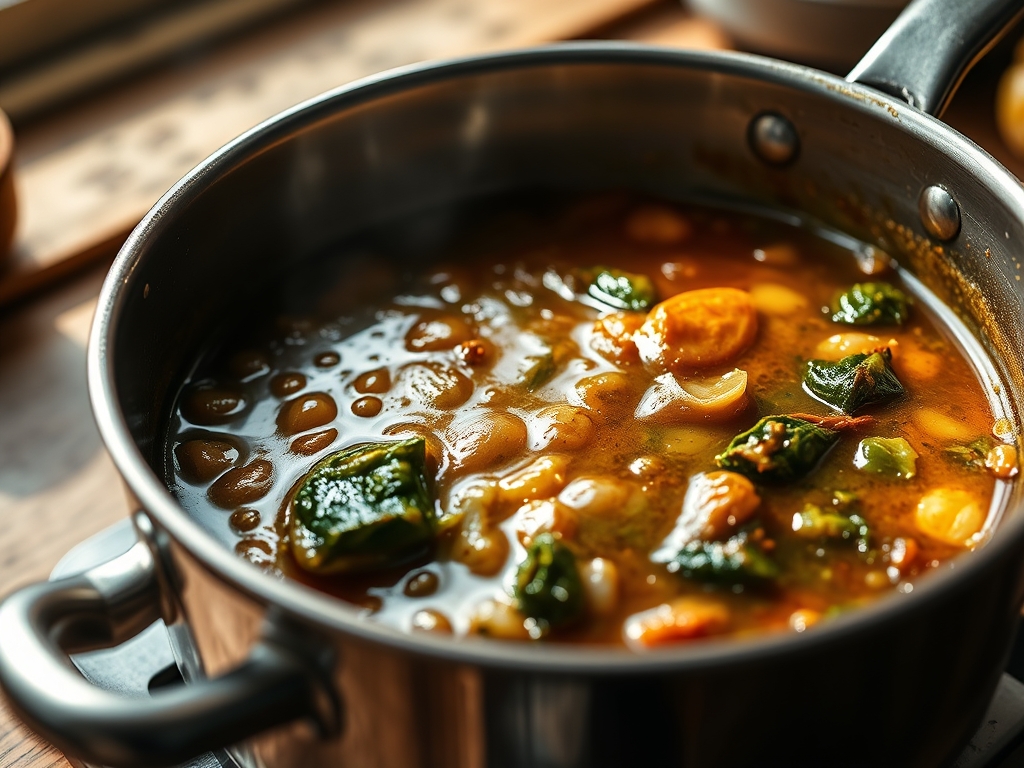
Pour in your chicken stock and apple cider vinegar. Add the smoked meat and bring the mixture to a rolling boil. Once boiling, reduce to a simmer and cover. Let the meat simmer alone for at least 45 minutes before the greens ever touch the water.
Pro Tip: This creates the "pot liquor." By simmering the meat first, you render the collagen into gelatin, which creates a luxurious, viscous mouthfeel that water alone cannot achieve.
3. The Systematic Leaf Integration
Using a bench scraper to transport your chopped greens, add them to the pot in batches. They will look like too much at first. Stir them down until they wilt, then add the next handful. Once all greens are submerged, season with the brown sugar and a touch of salt.
Pro Tip: Do not over-salt early. As the liquid reduces, the salinity will concentrate. The sugar acts as a chemical foil to the natural bitterness of the greens, balancing the pH of the braise.
4. The Long Phase Breakdown
Cover the pot with a tight-fitting lid and reduce the heat to the lowest possible setting. You want a "lazy bubble." Let the greens braise for 2 to 2.5 hours. Check every 30 minutes to ensure the liquid level remains at least halfway up the greens.
Pro Tip: Use an infrared thermometer to check the liquid temperature. It should hover around 190 degrees Fahrenheit. This is the "sweet spot" where the cellulose collapses without the greens turning into an unappealing mush.
Section B: Prep & Timing Fault-Lines:
Human error usually manifests in the "crunch factor." If the greens are still squeaky against your teeth, you have pulled them too early. The internal structure has not yet fully hydrolyzed. Conversely, if the liquid has evaporated and the bottom is scorching, your heat was too high. If you find yourself in a time crunch, do not turn up the heat. Instead, use a pressure cooker for 35 minutes, though you will sacrifice some of the flavor complexity that only open-air reduction can provide.
THE VISUAL SPECTRUM
Section C: Thermal & Visual Troubleshooting:
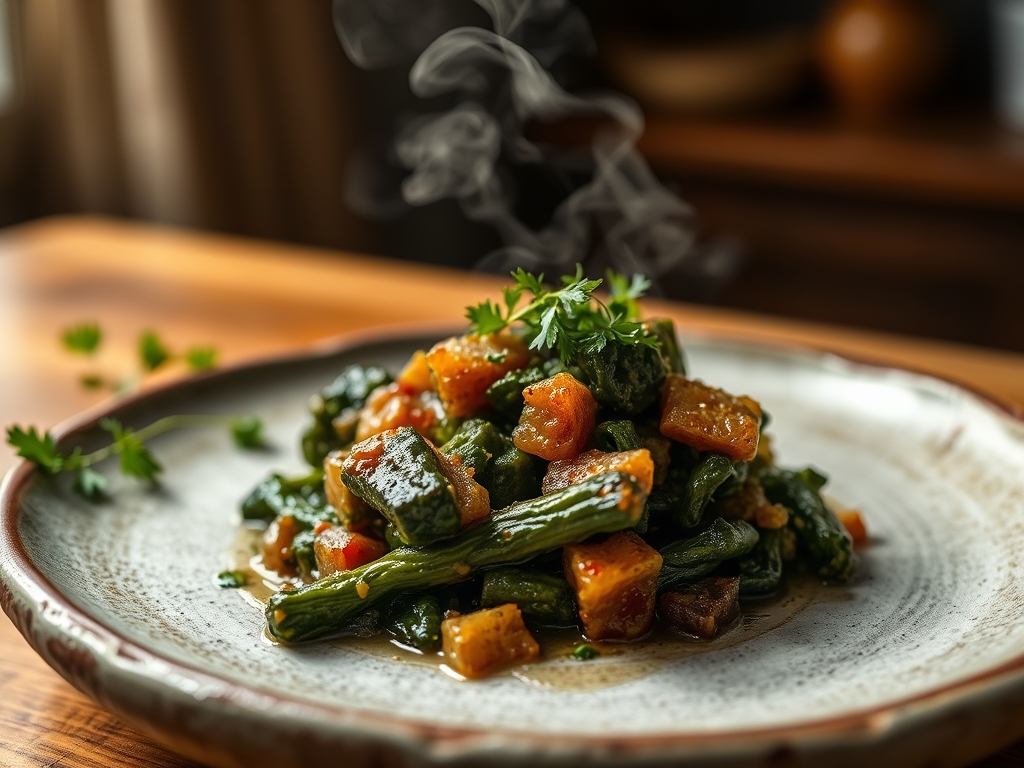
Look at the Masterclass photo above. Notice the deep, forest-green hue. If your greens look neon or bright, they are undercooked. If they look grey or brownish-black, they have been oxidized or overcooked at too high a temperature. The liquid should be slightly opaque and shimmering with tiny droplets of fat. This indicates a successful emulsification of the rendered meat fats and the stock. If the liquid looks "thin" or watery, remove the lid for the final 20 minutes of cooking to aerate and reduce the pot liquor into a concentrated glaze.
THE DEEP DIVE
Macro Nutrition Profile:
Collard greens are a nutritional powerhouse. One serving provides roughly 150 calories, 8g of protein, and 12g of fiber. They are exceptionally high in Vitamin K and Vitamin A. The fat content varies based on your choice of smoked meat, but the primary caloric load comes from the healthy fats used to render the aromatics.
Dietary Swaps:
- Vegan: Replace chicken stock with mushroom dashi and use smoked paprika or liquid smoke with sun-dried tomatoes to mimic the cured meat flavor.
- Keto: Omit the brown sugar entirely. The natural sweetness of the onions will suffice.
- Gluten-Free: This recipe is naturally gluten-free; just ensure your chicken stock is certified.
Meal Prep & Reheating Science:
Collard greens are one of the few dishes that actually improve after 24 hours. As they cool, the flavors continue to infuse into the cellular structure of the leaves. When reheating, do so on the stovetop over medium heat. Avoid the microwave, as it can cause uneven heating that toughens the remaining fibers. Adding a tablespoon of fresh stock during reheating will help restore the viscous texture of the pot liquor.
THE KITCHEN TABLE
Why are my greens so bitter?
Bitterness is usually a result of undercooking or a lack of acid. Ensure you braise for the full duration and check your vinegar levels. A small pinch of sugar or a splash more vinegar usually neutralizes the alkaline bitterness.
Can I use kale instead of collards?
You can, but the timing changes. Kale has a thinner cell wall and will reach the desired silkiness in about 45 minutes. If you cook kale for three hours, it will likely disintegrate into a puree.
What is pot liquor exactly?
Pot liquor, or "pot likker," is the nutrient-dense, flavor-packed liquid left behind after braising. It is a concentrated broth of vitamins, minerals, and rendered fats. It is often served with cornbread for dipping to ensure no flavor is wasted.
Should I wash the greens before or after cutting?
Always wash before cutting. Collards are grown in sandy soil and the grit hides in the crevices of the leaves. Submerge them in a clean sink of cold water at least twice to ensure a grit-free experience.
Does the type of pot matter?
Yes. A heavy cast-iron Dutch oven or a thick-walled stainless steel pot is essential. These materials distribute heat evenly, preventing hot spots that could scorch the greens during the long, three-hour braising process.