Stop settling for the limp, soggy apologies for starch that plague most amateur sheet pans. We are here to discuss the architecture of the perfect side dish; a structural marvel where a glass-like exterior yields to a cloud of aerated, fluffy interior. This is the pursuit of the ultimate Potato Wedge Char. To achieve this, we must move beyond simple roasting and enter the realm of surface area maximization and controlled thermal shock. We are looking for that specific, deep mahogany hue that signals the completion of the Maillard reaction without crossing the threshold into carbonization. It requires a fundamental understanding of starch gelatinization and the precise application of lipid-based heat transfer. If you are still tossing raw spuds in a bowl with a splash of oil and hoping for the best, you are failing the audit. We are building a crust that can withstand the weight of a viscous dipping sauce while maintaining its internal integrity. Prepare to recalibrate your kitchen standards as we dive into the infrastructure of the superior potato.
THE DATA MATRIX
| Metric | Specification |
|---|---|
| Prep Time | 20 Minutes |
| Execution Time | 35 Minutes |
| Yield | 4 Standard Servings |
| Complexity (1-10) | 4 (Technique Dependent) |
| Estimated Cost per Serving | $0.85 USD |
THE GATHERS
Ingredient Protocol:
- Russet Potatoes: 1.36 kg / 3 lbs (High starch content is non-negotiable).
- Neutral High-Smoke Point Oil: 60 ml / 0.25 cup (Avocado or Grapeseed).
- Kosher Salt: 15 g / 1 tbsp (Diamond Crystal preferred for surface adhesion).
- Smoked Paprika: 10 g / 2 tsp (For color depth and piquant undertones).
- Garlic Powder: 5 g / 1 tsp (Dehydrated aromatics prevent burning).
- Cornstarch: 15 g / 1 tbsp (The secret to the structural "glass" crunch).
- Fresh Rosemary: 5 g / 1 sprig (To infuse the oil during the final stage).
Section A: Ingredient Quality Audit:
Sub-par raw materials are the primary cause of structural failure. If your potatoes feel soft or display a green tint, the starch-to-sugar ratio has shifted; this results in a wedge that burns before it crisps. To fix this, soak sliced wedges in ice-cold water for thirty minutes to leach out excess surface sugars. If your spices lack aroma, they are oxidized. Revive them by lightly toasting in a dry saucier for sixty seconds before mixing with your oil. Finally, never use extra virgin olive oil for this process. Its low smoke point will break down at the temperatures required for a proper Potato Wedge Char, leaving a bitter, acrid film on your palate.
THE MASTERCLASS
1. Precision Slicing and Starch Management
Utilize a sharp chef's knife or a heavy-duty mandoline to ensure uniformity. Slice each potato into eight even wedges. Place them immediately into a stainless steel bowl and rinse under cold water until the effluent runs clear. This removes the surface starch that causes sticking.
Pro Tip: Use a digital scale to ensure each wedge is approximately the same mass. Uniformity ensures that every piece reaches the thermal finish line at the exact same second, preventing a mix of burnt and raw edges.
2. The Par-Blanch Protocol
Bring a large pot of salted water to a rolling boil. Submerge the wedges for exactly six minutes. You are not cooking them through; you are gelatinizing the exterior layer. This creates a "fuzzy" surface of starch molecules that will eventually crisp up into a jagged, crunchy crust.
Pro Tip: Add a teaspoon of baking soda to the water. This raises the pH level, breaking down the pectin on the potato's surface more efficiently, which leads to an exponentially better Potato Wedge Char.
3. Dehydration and Surface Coating
Drain the potatoes and spread them onto a cooling rack. Use a clean kitchen towel to pat them dry. Moisture is the enemy of the Maillard reaction. Once dry, toss them in a large bowl with your oil, spices, and cornstarch. Use a bench scraper to gently toss them without breaking the softened edges.
Pro Tip: The cornstarch acts as a secondary structural scaffold. It absorbs any remaining surface moisture and creates a thin, brittle veil that fries in the oven's convection currents.
4. Thermal Execution
Preheat your oven to 220C / 425F. Place a heavy-duty baking sheet inside while it heats. When the oven is ready, pull the hot tray out and arrange the wedges skin-side down. The immediate sizzle indicates that the lipid-based heat transfer has begun.
Pro Tip: Always use a heavy-gauge rimmed baking sheet. Thin trays warp under high heat, causing oil to pool in corners and resulting in uneven browning across your batch.
Section B: Prep & Timing Fault-Lines:
The most common human error is "crowding the pan." If the wedges are touching, they will steam rather than roast, resulting in a pale, flaccid texture. Ensure at least one centimeter of clearance between each unit. If your oven has a convection setting, use it; the forced air circulation is essential for the rapid evaporation of moisture. If you notice the wedges are sticking to the pan, do not force them. They will naturally release once the crust has fully formed and the proteins have set.
THE VISUAL SPECTRUM
Section C: Thermal & Visual Troubleshooting:
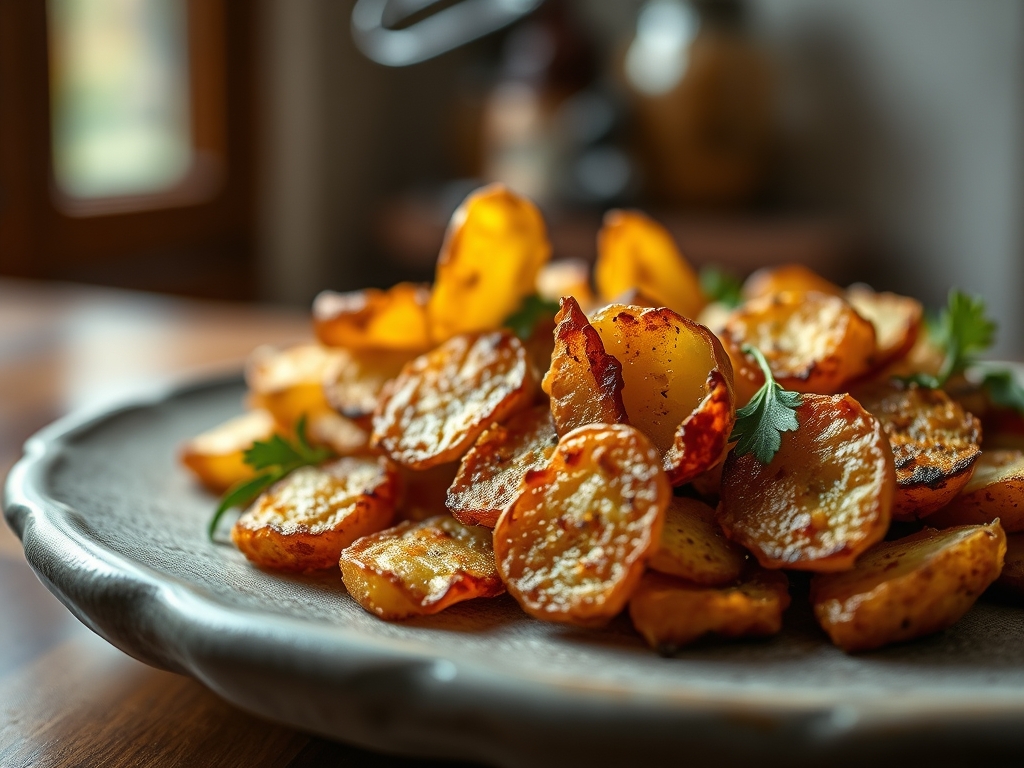
Observe the reference photo above. Notice the "blistering" on the surface; this is the visual cue for a successful starch gelatinization. If your wedges look matte and dull, you likely under-oiled or skipped the par-boiling step. If the tips are black but the centers are pale, your oven rack is too high; move it to the center position to balance the radiant heat from the top and bottom elements. A perfect Potato Wedge Char should look like burnished copper with dark, concentrated spots of caramelization at the sharpest angles of the wedge.
THE DEEP DIVE
Macro Nutrition Profile:
A standard serving (approx. 150g) provides 280 calories, 42g of complex carbohydrates, 4g of fiber, and 12g of healthy fats. By utilizing high-quality oils and controlling the "fry" in an oven environment, we reduce the trans-fat profile significantly compared to commercial deep-frying.
Dietary Swaps:
- Vegan: Naturally compliant. Ensure your dipping sauce uses a vegan aquafaba-based mayo.
- Keto: Replace potatoes with daikon radish or rutabaga. Note that the starch profile is lower, so the crunch will be less pronounced.
- GF: Naturally gluten-free, provided your cornstarch is certified.
Meal Prep & Reheating Science:
To maintain the molecular structure when reheating, avoid the microwave. The microwave agitates water molecules, which softens the starch lattice and turns the wedge into mush. Instead, use an air fryer or a toaster oven at 200C / 400F for five minutes. This re-activates the fats and recrisps the exterior shell.
THE KITCHEN TABLE
Why are my wedges soft inside?
You likely skipped the par-boiling step or used a low-starch potato like a Red Bliss. Russets are essential for that mealy, fluffy interior that contrasts against the exterior crunch.
Can I use fresh garlic instead of powder?
Fresh garlic has a high water content and small particles that burn at 220C. This creates a bitter flavor. Stick to high-quality dehydrated garlic powder for high-heat roasting.
How do I get that deep red color?
The combination of smoked paprika and the Maillard reaction creates that hue. Ensure your paprika is fresh; if it looks brown in the jar, it won't provide the piquant visual pop you need.
Is the baking soda really necessary?
Yes. It is a chemical hack that accelerates the breakdown of the potato skin, creating more surface area for the oil to "fry." It is the difference between a smooth wedge and a textured one.