Imagine a substance so primal it predates the modern culinary industrial complex; a golden, shimmering liquid that holds the very soul of the bovine profile. We are not merely cooking today. We are performing a structural audit on raw adipose tissue to extract the purest lipid gold known to man. Beef Tallow Rendering is the ultimate test of patience and thermal management. It is the process of stripping away moisture and connective tissue to isolate a stable, high smoke point fat that can transform a standard potato into a glass-shined masterpiece. The air in your kitchen is about to change. It will transition from the raw, metallic scent of cold butcher paper to a deep, nutty, and intoxicating aroma that signals the breakdown of cellular walls. This is infrastructure for your pantry. It is the base layer of flavor that defines professional grade searing and deep frying. If you want to master the Maillard reaction, you must first master the medium. Strap in; we are going deep into the molecular mechanics of fat.
THE DATA MATRIX
| Metric | Specification |
|---|---|
| Prep Time | 25 minutes |
| Execution Time | 4 to 6 hours |
| Yield | 950ml / 4 cups |
| Complexity (1-10) | 3 |
| Estimated Cost per Serving | $0.15 |
THE GATHERS
Ingredient Protocol:
- 2.25kg / 5 lbs Beef Fat Trim (preferably kidney fat or "suet").
- 250ml / 1 cup Filtered Water (to prevent initial scorching).
- 15g / 1 tbsp Fine Sea Salt (optional, for purification).
Section A: Ingredient Quality Audit:
The success of your Beef Tallow Rendering depends entirely on the provenance of your raw material. If your fat trim arrives with significant streaks of dark red muscle or greyish lymph nodes, your final yield will be cloudy and prone to spoilage. These impurities introduce proteins that burn at low temperatures. To fix sub-par raw materials, use a sharp boning knife to aggressively trim away any non-fat tissue until you are left with pure, white waxy blocks. If the fat has a "funky" or oxidized smell, it is too late for a simple render; you must perform a "wet wash" by boiling the finished tallow with equal parts water and salt, then chilling it to separate the clean fat from the debris.
THE MASTERCLASS
1. Thermal Surface Area Optimization
Begin by dicing your chilled beef fat into uniform 1cm cubes. For maximum efficiency, pulse the fat in a food processor until it reaches the consistency of coarse ground meat. Increasing the surface area allows the heat to penetrate the cellular membranes faster, leading to a more efficient release of the lipids.
Pro Tip: Use a bench scraper to move the processed fat into your vessel. Cold fat sticks to surfaces; the stainless steel edge of a scraper ensures zero waste and maintains the integrity of your measurements.
2. The Hydration Buffer
Place the fat into a heavy-bottomed saucier or Dutch oven and add the filtered water. This water acts as a thermal regulator. It prevents the fat from jumping straight to high temperatures and scorching before the rendering process actually begins.
Pro Tip: Water evaporates at 100C (212F), effectively capping the temperature of the pot until the moisture is gone. This "evaporative cooling" protects the delicate flavor compounds from oxidizing too early.
3. Low and Slow Liquefaction
Set your heat source to the lowest possible setting. You are looking for a gentle simmer, not a vigorous boil. Over the next several hours, the white solids will begin to shrink and turn golden brown as the liquid fat pools at the bottom of the pot.
Pro Tip: Use a digital scale to weigh your pot before and after. This allows you to calculate your exact yield percentage and monitor how much moisture has been successfully evacuated from the system.
4. Filtration and Purification
Once the solids (cracklings) are crispy and floating in a sea of clear, amber liquid, it is time to harvest. Set up a fine-mesh strainer lined with triple-layered cheesecloth over a heat-proof glass jar. Pour the mixture slowly to catch every microscopic bit of protein.
Pro Tip: Do not squeeze the cheesecloth. While tempting, this forces fine particulates into your clean tallow, which will decrease its shelf life and lower its smoke point. Let gravity do the heavy lifting.
Section B: Prep & Timing Fault-Lines:
The most common failure in Beef Tallow Rendering is the "Thermal Runaway." This occurs when the water has fully evaporated and the temperature of the liquid fat spikes rapidly. If you are not monitoring the pot, the tallow can go from golden to burnt in under five minutes. If you notice the liquid turning a dark coffee color, immediately remove the pot from the heat and place the base in a shallow cold water bath to halt the residual cooking. Timing is also critical; rushing the process by increasing the heat will result in a "beefy" flavor that is too aggressive for delicate pastries or neutral frying.
THE VISUAL SPECTRUM
Section C: Thermal & Visual Troubleshooting:
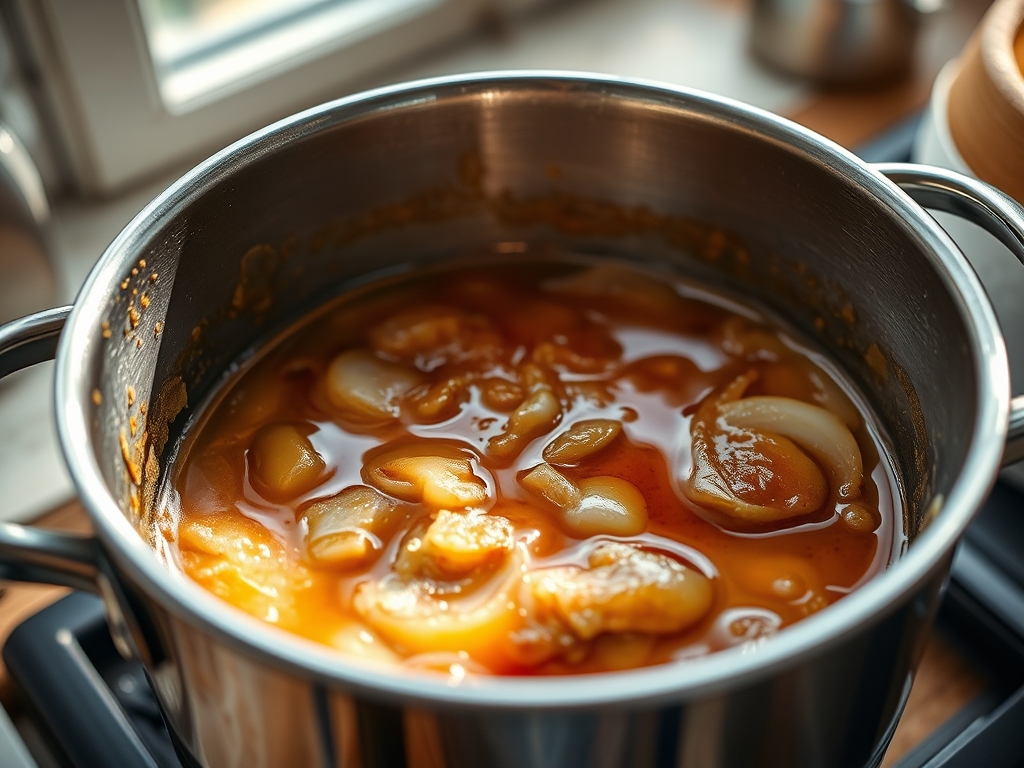
Look closely at the Masterclass photo above. Notice the clarity of the liquid; it should be translucent with a warm, honey-like hue. If your tallow looks milky or opaque while still hot, you have trapped moisture in the emulsion. You must return it to the heat to finish the evaporation. If the solids at the bottom are black rather than golden brown, you have scorched the proteins, and the fat will likely have a bitter aftertaste. Pure tallow should set into a hard, creamy white block at room temperature. If it remains soft or "squishy," it likely contains too many unsaturated fats from trim rather than the highly saturated suet found around the kidneys.
THE DEEP DIVE
Macro Nutrition Profile:
Beef tallow is a powerhouse of saturated and monounsaturated fats. A single tablespoon contains approximately 115 calories, 13g of total fat, and zero carbohydrates or proteins. It is rich in fat-soluble vitamins such as A, D, E, and K, along with Conjugated Linoleic Acid (CLA), which has been studied for its anti-inflammatory properties.
Dietary Swaps:
For those following a Keto or Carnivore protocol, tallow is the gold standard. It is naturally Gluten-Free. For a Vegan alternative, you can simulate the high smoke point of tallow using refined coconut oil, though you will lack the distinct savory depth. To mimic the "umami" of tallow in plant-based cooking, infuse neutral oils with dried shiitake mushrooms.
Meal Prep & Reheating Science:
Tallow is incredibly stable. Because it is low in polyunsaturated fats, it does not oxidize easily. You can store it in a sealed jar at room temperature for months, or in the fridge for over a year. When reheating, remember that tallow has a smoke point of approximately 205C (400F). It is ideal for searing steaks because it maintains its molecular structure under extreme heat, unlike butter which contains milk solids that burn at 150C.
THE KITCHEN TABLE
How do I know when the rendering is finished?
The process is complete when the bubbles stop rising to the surface. This indicates all water has evaporated. The remaining solids should be small, crispy, and golden brown, resembling tiny croutons floating in clear oil.
Can I use any beef fat for this?
While you can use any trim, "suet" (the hard fat around the kidneys) produces the cleanest, most neutral-tasting tallow. Muscle trim fat has a stronger "beefy" flavor and a slightly lower melting point due to different fatty acid chains.
Why is my tallow grainy after it cools?
Graininess occurs when the tallow cools too slowly, allowing large fat crystals to form. For a smooth, buttery texture, place your jar of liquid tallow in the refrigerator immediately after straining to force rapid crystallization.
Is it necessary to use water at the start?
Yes, especially for beginners. The water prevents the fat from burning against the bottom of the pot before enough liquid fat has rendered out to create a protective pool. It acts as a safety buffer for the first hour.