Listen to the sound of structural integrity. It is the rhythmic, high-frequency snap of a starch lattice undergoing rapid dehydration in a shimmering bath of oil. We are not merely talking about breakfast; we are conducting a high-stakes Potato Latke Study into the physics of the perfect crisp. The humble tuber is a volatile vessel of water and carbohydrate that requires aggressive intervention to achieve culinary greatness. Without a rigorous moisture extraction protocol, you are not making latkes; you are making sad, oil-logged sponges that lack the structural fortitude to hold a dollop of sour cream. We demand a piquant contrast between the jagged, golden exterior and the creamy, steaming interior. This is a battle against oxidation and cellular collapse. To succeed, you must treat your kitchen like a laboratory and your ingredients like high-performance polymers. We are here to render the fat, aerate the batter, and ensure every bite delivers a visceral crunch that resonates through the jawbone. Prepare for a masterclass in fried potato infrastructure.
THE DATA MATRIX
| Metric | Specification |
|---|---|
| Prep Time | 30 Minutes |
| Execution Time | 20 Minutes |
| Yield | 12 to 15 Pucks |
| Complexity (1-10) | 6 |
| Estimated Cost per Serving | $0.85 USD |
THE GATHERS
Ingredient Protocol:
- 1 kg / 2.2 lbs Russet Potatoes (High starch content is non-negotiable)
- 250g / 2 medium Yellow Onions
- 2 large Eggs (Room temperature for better emulsification)
- 60g / 0.5 cup All-purpose flour or Matzo meal
- 10g / 2 tsp Kosher salt
- 5g / 1 tsp Black pepper (Freshly cracked)
- 5g / 1 tsp Baking powder (The secret to a lighter crumb)
- 500ml / 2 cups Grapeseed or Canola oil (High smoke point required)
Section A: Ingredient Quality Audit:
If your potatoes feel soft or sprout-heavy, the starch-to-sugar ratio has shifted. This results in premature browning before the interior is cooked. To fix this, soak shredded potatoes in ice water for ten minutes to leach out excess sugars, then dry them with surgical precision. If your onions are excessively viscous or watery, they will compromise the batter. Pulse them in a food processor rather than grating by hand to maintain cellular structure, or squeeze them in a separate cheesecloth to prevent their juice from thinning your starch binder.
THE MASTERCLASS
Step-by-Step Execution:
1. The Mechanical Shred
Utilize a box grater or the shredding attachment of a food processor to transform the peeled Russets into long, consistent strands. Use a bench scraper to move the shreds into a large bowl immediately to prevent enzymatic browning.
Pro Tip: Uniformity is the soul of even heat distribution. Variations in strand thickness lead to localized burning while the core remains raw.
2. The Dehydration Phase
Transfer the shredded potatoes and onions into a clean kitchen towel or high-grade cheesecloth. Twist with maximum torque to expel every milliliter of liquid into a bowl. Let the liquid sit for three minutes, then pour off the water, keeping the white potato starch at the bottom.
Pro Tip: This reclaimed starch is the "glue" of the Potato Latke Study. It provides a superior crunch compared to flour alone because it mimics the natural molecular structure of the tuber.
3. Batter Integration
Whisk the eggs, flour, salt, pepper, baking powder, and reclaimed starch in a large bowl. Fold in the dry potato and onion shreds until every strand is lightly coated. Do not over-mix, as this can develop gluten in the flour and lead to a tough, bready texture.
Pro Tip: Use a digital scale to ensure your flour-to-potato ratio is exact. Too much flour masks the potato flavor; too little causes the puck to disintegrate upon contact with hot oil.
4. Thermal Calibration
Heat 1cm of oil in a heavy-bottomed skillet or a saucier until it reaches 180C (350F). Test the temperature by dropping a single shred into the oil; it should sizzle violently and float immediately.
Pro Tip: Maintaining a consistent thermal floor is vital. If the oil temperature drops below 160C, the potato will absorb the fat rather than searing, resulting in a greasy, heavy product.
5. The Golden Maillard Sear
Drop spoonfuls of the mixture into the oil, flattening them slightly with a spatula. Fry for 3 to 4 minutes per side until the edges are dark gold and the center is firm. Move the finished latkes to a wire cooling rack rather than paper towels.
Pro Tip: Paper towels trap steam under the latke, which softens the bottom. A wire rack allows for 360-degree airflow, preserving the structural integrity of the fried crust.
Section B: Prep & Timing Fault-Lines:
The most common failure in the Potato Latke Study is the "Wet Batter Syndrome." If you let the batter sit for more than fifteen minutes, the salt will continue to draw moisture out of the potatoes, turning your crispy mix into a soggy slurry. To counter this, work in small batches. If the batter becomes watery, add a tablespoon of flour to re-stabilize the emulsion. Furthermore, never crowd the pan. Adding too many pucks at once will crash the oil temperature and ruin the sear.
THE VISUAL SPECTRUM
Section C: Thermal & Visual Troubleshooting:
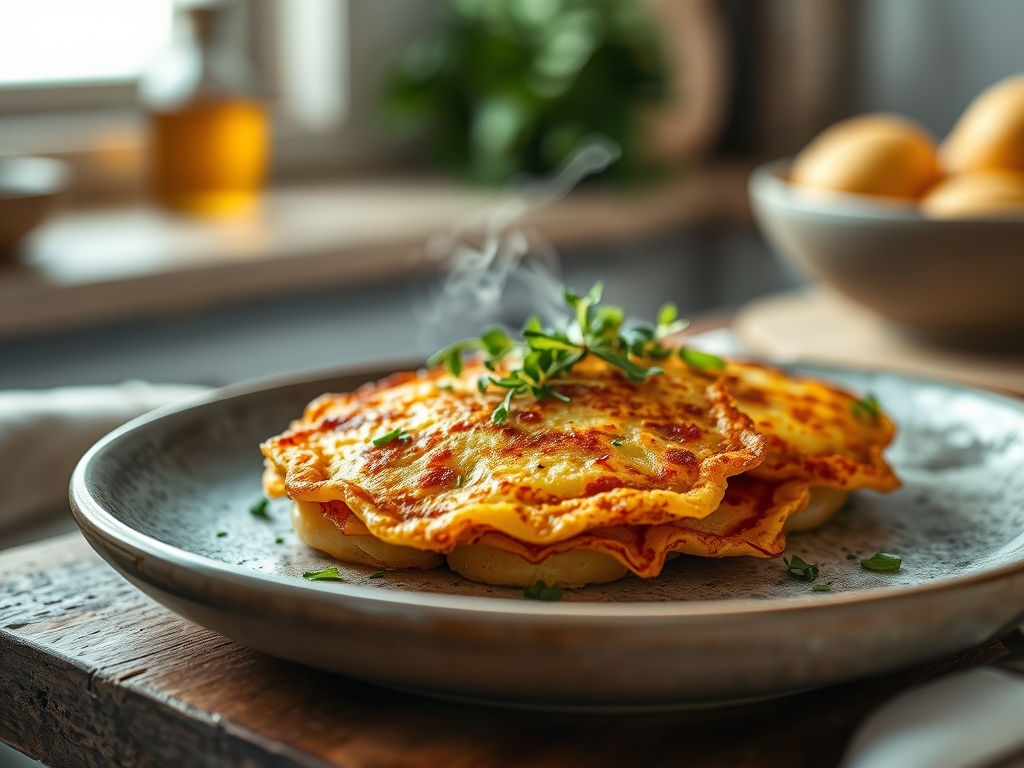
Look closely at the Masterclass photo. You should see a "halo" of jagged, darker brown strands around the perimeter; this indicates successful moisture extraction and high-heat contact. If your latkes look pale and uniform, your oil was too cold. If they are dark brown on the outside but mushy inside, your heat was too high. The ideal visual cue is a variegated landscape of gold, amber, and bronze. If the color is dull, you may have used low-starch waxy potatoes; next time, ensure you use Russets to achieve that crystalline, glass-like crunch.
THE DEEP DIVE
Macro Nutrition Profile:
A standard serving (two latkes) typically contains 280 calories, 14g of fat, 32g of carbohydrates, and 5g of protein. While starch-heavy, the inclusion of eggs provides a necessary protein binder that slows glucose absorption.
Dietary Swaps:
- Vegan: Replace eggs with a "flax egg" (1 tbsp ground flax to 3 tbsp water) and use a touch more potato starch for binding.
- Keto: Swap the potatoes for shredded cauliflower and daikon radish; use almond flour as the binder.
- Gluten-Free: Use potato starch or a GF all-purpose blend. The results are often crispier than the original.
Meal Prep & Reheating Science:
To maintain molecular structure, never microwave a latke. The microwave excites water molecules, causing them to migrate from the center to the crust, resulting in total sogginess. Instead, reheat in a 200C (400F) oven for five minutes on a wire rack to re-crisp the exterior oils.
THE KITCHEN TABLE
Why are my latkes falling apart in the pan?
This usually indicates a lack of binder or excess moisture. Ensure you have squeezed the potatoes dry and added enough egg. If the oil is not hot enough, the starch cannot set quickly enough to hold the shape.
Can I shred the potatoes in advance?
Negative. Potatoes oxidize and turn gray or pink when exposed to oxygen. If you must prep early, submerge the shreds in cold water with a splash of lemon juice, but you must dry them aggressively before frying.
What is the best oil for frying?
High smoke point oils like grapeseed, avocado, or refined peanut oil are superior. Avoid extra virgin olive oil or butter; they will burn and infuse the potato with a bitter, acrid flavor before the interior is cooked.
How do I get the edges so crispy?
The secret is the "ragged edge." Do not form perfectly smooth patties. Allow some strands to protrude from the main body of the puck; these thin outposts dehydrate faster and provide the signature crunch of the Potato Latke Study.