Imagine a culinary landscape where the difference between a masterpiece and a tragedy is measured in microns. We are not just making an appetizer; we are performing a high stakes structural audit of bovine muscle fibers. The goal is total translucency. When you approach Beef Carpaccio Slicing, you are engaging in a battle against the natural elasticity of protein. If your blade is dull, you are merely tearing flesh; if your temperature is off, you are serving a limp, uninspired mess. We want beef so thin it practically dissolves upon contact with the palate, releasing a piquant rush of iron and salt. This is the ultimate test of your knife skills and your patience. We are looking for that perfect intersection of cold-chain management and mechanical precision. Forget chunky tartare or thick-cut steaks. We are aiming for a silk-like texture that allows the dressing to infuse every single cell. Strap in, sharpen your steel, and prepare to transform a humble tenderloin into a work of translucent art.
THE DATA MATRIX
| Metric | Specification |
|---|---|
| Prep Time | 2 Hours (Includes Chilling) |
| Execution Time | 15 Minutes |
| Yield | 4 Servings |
| Complexity (1-10) | 8 |
| Estimated Cost per Serving | $12.50 – $18.00 |
THE GATHERS
Ingredient Protocol:
- 450g / 1 lb Center-cut Beef Tenderloin (PSMO removed)
- 60ml / 4 tbsp Extra Virgin Olive Oil (High Polyphenol)
- 30ml / 2 tbsp Fresh Lemon Juice
- 15g / 1 tbsp Non-pareil Capers (drained)
- 50g / 1.75 oz Parmigiano-Reggiano (Aged 24 months)
- 5g / 1 tsp Maldon Sea Salt
- 2g / 0.5 tsp Fresh Cracked Black Peppercorns
- 30g / 1 cup Wild Arugula (washed and dried)
Section A: Ingredient Quality Audit:
If your beef looks dull or grey, the oxidation process has already compromised the flavor profile. Always source "AAA" or "Prime" grade beef from a trusted purveyor; the intramuscular fat must be minimal for this specific application. If the meat feels mushy, it likely sat at room temperature too long, causing the cellular walls to collapse. To fix a lack of brightness in the flavor, ensure your lemon juice is squeezed seconds before service to maintain its volatile aromatic compounds. If your olive oil tastes bitter rather than viscous and fruity, swap it for a cold-pressed variety to avoid overpowering the delicate protein.
THE MASTERCLASS
1. The Cryogenic Stabilization
The first step in achieving elite Beef Carpaccio Slicing is temperature control. Wrap your trimmed tenderloin tightly in plastic wrap, creating a uniform cylinder. Place it in the freezer for approximately 60 to 90 minutes. You are not looking for a solid block of ice; you want the exterior to be firm while the core remains slightly malleable.
Pro Tip: This process increases the structural rigidity of the muscle fibers. A digital scale should be used to ensure your portions are consistent before freezing, as uneven thickness will lead to uneven tempering.
2. The Precision Shear
Using a razor-sharp carving knife or a Japanese Sujihiki, begin taking the thinnest possible shavings from the end of the cylinder. The blade should do all the work. Do not saw at the meat; use one long, fluid pulling motion to create a sheet that is nearly transparent.
Pro Tip: Use a bench scraper to help lift the delicate slices from the cutting board to the plate without tearing. The science here is minimizing friction to prevent the fat from melting prematurely against the blade.
3. The Mechanical Expansion
If your slices are still slightly too thick, place them between two sheets of parchment paper lightly greased with olive oil. Use the flat side of a meat mallet or a heavy sauté pan to gently tap the meat outward from the center. This flattens the fibers without destroying the texture.
Pro Tip: This technique uses lateral force to render the beef into a uniform thickness. Ensure you use a saucier or a smooth-bottomed tool to avoid creating divots or "windows" in the meat.
4. The Emulsion Integration
Whisk your lemon juice and olive oil in a small bowl until they aerate and form a temporary emulsion. Drizzle this over the beef immediately after plating. The acid in the lemon will begin to "cook" the surface of the beef, a process known as denaturation, which changes the color from bright red to a slight pinkish-grey.
Pro Tip: Use a digital scale to measure your oil-to-acid ratio. A perfect 3:1 balance ensures the dressing is piquant enough to cut through the richness of the beef without masking its natural minerality.
5. The Structural Garnish
Shave the Parmigiano-Reggiano into wide, thin curls using a vegetable peeler. Scatter the capers and arugula across the top. Finish with a flourish of Maldon salt and cracked pepper to provide a textural contrast to the buttery beef.
Pro Tip: The salt acts as a flavor bridge. As it dissolves into the moisture of the meat, it creates a brine that helps infuse the seasonings deep into the fiber matrix.
Section B: Prep & Timing Fault-Lines:
The most common failure is the "Thaw Collapse." If you slice the beef and let it sit at room temperature for more than 10 minutes before serving, the fat will liquefy and the meat will become unpleasantly chewy. Always chill your serving plates in the refrigerator for 30 minutes prior to assembly. If you find the meat is sticking to the knife, wipe the blade with a damp cloth after every two slices to remove protein buildup.
THE VISUAL SPECTRUM
Section C: Thermal & Visual Troubleshooting:
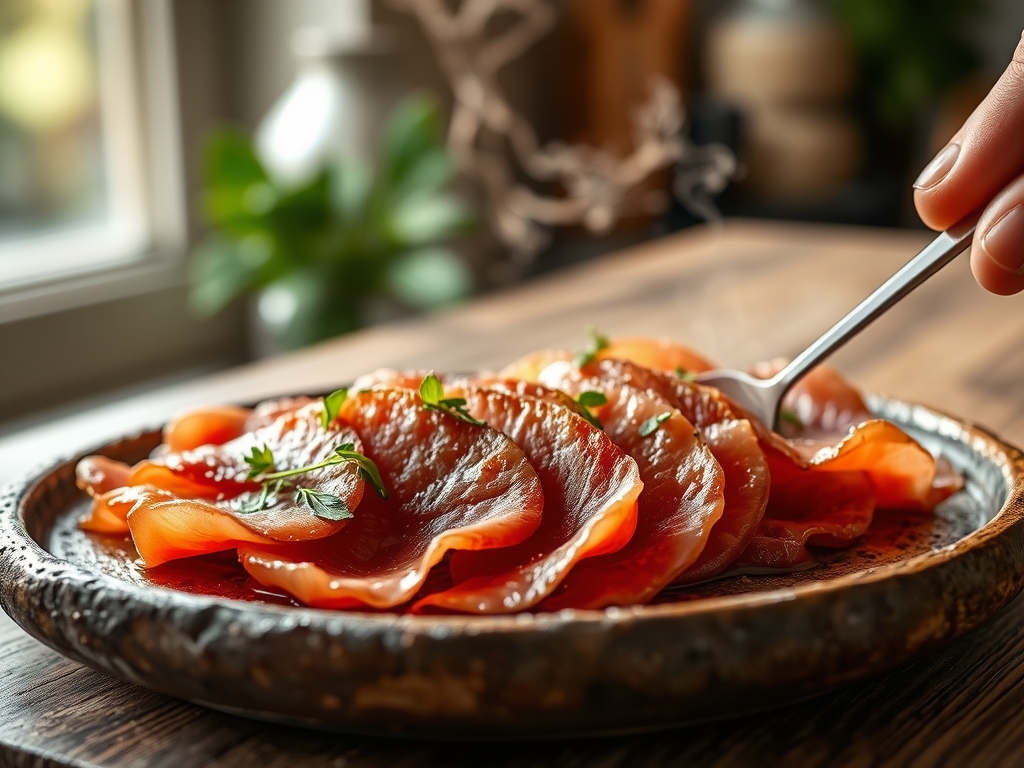
Look at the Masterclass photo; notice the vibrant, ruby-red hue and the way the light catches the oil. If your beef looks brown, it has been exposed to oxygen for too long. To prevent this, slice only what you need for immediate service. If the edges of your beef look ragged, your knife is not sharp enough or you are applying too much downward pressure. The goal is a clean, surgical edge. If the dressing looks broken or greasy on the plate, you failed to properly aerate the vinaigrette; whisk it more vigorously next time to ensure a cloudy, unified appearance.
THE DEEP DIVE
Macro Nutrition Profile:
Beef Carpaccio is a high-protein, low-carbohydrate powerhouse. A standard serving contains approximately 220 calories, 25g of protein, 12g of fat, and less than 1g of carbohydrates. It is an excellent source of Vitamin B12 and Heme iron.
Dietary Swaps:
- Vegan: Substitute the beef with salt-roasted, thinly sliced golden beets or king oyster mushroom caps. Use nutritional yeast or vegan parmesan for the salty kick.
- Keto/GF: This dish is naturally Keto and Gluten-Free. To increase healthy fats, add sliced avocado or toasted pine nuts.
Meal Prep & Reheating Science:
Do not attempt to reheat this dish. The molecular structure of raw beef depends on cold stability. If you have leftovers, they must be consumed within 24 hours. To store, cover the plate tightly with plastic wrap pressed directly against the surface of the meat to minimize oxygen contact.
THE KITCHEN TABLE
Why is my beef tearing when I slice it?
Your beef is likely too warm or your knife is dull. Ensure the meat is semi-frozen to provide structural resistance against the blade. Use a long, single-stroke pulling motion rather than a back-and-forth sawing action.
Can I use a different cut of beef?
While tenderloin is standard due to its lack of connective tissue, you can use top round or eye of round. However, these cuts are tougher, so the mechanical flattening step becomes mandatory to ensure a pleasant mouthfeel.
How do I get those perfect cheese shavings?
Use a sharp Y-peeler or a mandoline set to the thinnest gauge. Ensure the cheese is cold; room-temperature cheese will crumble rather than forming the elegant, wide ribbons seen in professional presentations.
Is it safe to eat raw beef?
Safety depends on the "cold chain." Buy whole muscle cuts, not pre-ground meat. Sear the outside of the roast briefly and then trim the "cooked" part off if you are concerned about surface bacteria before freezing and slicing.