Listen to the sound of catastrophic failure. It is the wet, rhythmic slapping of a soggy bottom hitting a porcelain plate. It is the hiss of moisture escaping a puff pastry shell that has surrendered its structural integrity to a tidal wave of meat juice. We are not here to play house; we are here to perform a rigorous Beef Wellington Audit. This is the undisputed heavyweight champion of the culinary infrastructure world. It is a multi-layered engineering project where the stakes are prime fillet and the enemy is steam. To master this dish, you must think like a civil engineer specializing in moisture migration barriers. We are layering flavors like tectonic plates: a seared core of protein, a savory fungal mortar, a salt-cured membrane, and a laminated buttery exoskeleton. If one layer fails, the entire skyscraper collapses into a pile of expensive, damp dough. Strap in, calibrate your digital scales, and prepare to audit your technique until it is as sharp as a carbon steel blade.
THE DATA MATRIX
| Metric | Specification |
|---|---|
| Prep Time | 90 Minutes |
| Execution Time | 45 Minutes |
| Yield | 4 to 6 Servings |
| Complexity | 9 / 10 |
| Estimated Cost per Serving | $25.00 to $35.00 |
THE GATHERS
Ingredient Protocol:
The Core Protein:
- 1kg / 2.2 lbs Center-cut Beef Tenderloin (Chateaubriand)
- 30ml / 2 tbsp Neutral oil (Grapeseed or Canola)
- 60g / 4 tbsp English Mustard
The Moisture Barrier (Duxelles):
- 750g / 1.6 lbs Chestnut mushrooms
- 2 Shallots, finely minced
- 4 Garlic cloves, crushed
- 10g / 2 tsp Fresh thyme leaves
- 50ml / 3.5 tbsp Heavy cream
The Structural Wraps:
- 12 to 14 slices Prosciutto di Parma
- 500g / 1.1 lbs High-quality Puff Pastry (all-butter)
- 2 Egg yolks (for the egg wash)
- 5g / 1 tsp Flaky sea salt
Section A: Ingredient Quality Audit:
If your mushrooms look like a bruised swamp, your Duxelles will fail. Sub-par mushrooms contain excessive water; if they are not firm to the touch, you must extend your render time by twenty percent to ensure all moisture evaporates. If your puff pastry uses shortening instead of butter, it will lack the structural rigidity required to hold the steam. Technical fix: if using lower-grade pastry, increase your oven temperature by ten degrees to force a faster rise, though an all-butter pastry is the only professional choice. Finally, ensure your beef is "center-cut." If there is a significant taper in the meat, the ends will overcook before the center reaches a perfect medium-rare.
THE MASTERCLASS
1. The Maillard Initiation
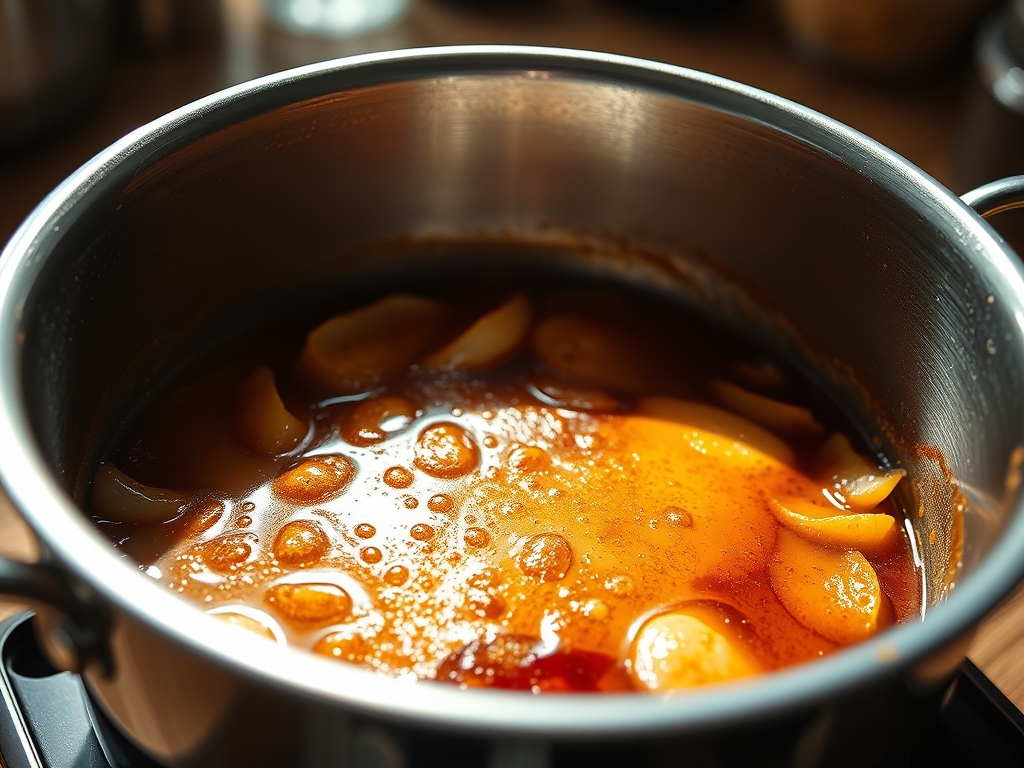
Season the beef aggressively with salt and pepper. Heat a heavy-bottomed saucier or cast-iron skillet until it smokes. Sear the beef for no more than sixty seconds per side. We are looking for a deep mahogany crust, not a cooked interior. Remove and immediately brush with English mustard while the meat is hot.
Pro Tip: The heat from the sear allows the mustard to infuse the outer fibers of the meat, while the vinegar in the mustard acts as a chemical tenderizer. Use a digital scale to ensure your salt ratio is exactly one percent of the meat's weight.
2. The Fungal Reduction
Pulse mushrooms in a food processor until they resemble fine crumbs. Sauté in a dry pan with shallots and thyme. You must cook this until the pan is bone dry and the mushrooms begin to brown. This is your primary moisture barrier.
Pro Tip: This process is about the reduction of volume and the concentration of umami. If the mushrooms still release liquid when pressed with a bench scraper, they are not ready. Add a splash of brandy to deglaze the pan for extra depth.
3. The Prosciutto Membrane
Lay a sheet of plastic wrap on your workstation. Arrange the prosciutto slices in an overlapping rectangle. Spread the cooled mushroom duxelles over the ham in an even layer. Place the beef at one end and use the plastic wrap to roll it into a tight, uniform cylinder.
Pro Tip: Chill this "log" in the refrigerator for at least thirty minutes. This sets the shape and ensures the viscous fats in the prosciutto solidify, creating a physical wall that prevents meat juices from reaching the pastry later.
4. The Laminated Enclosure
Roll out your puff pastry on a floured surface. Unwrap the beef log and place it in the center. Brush the edges with egg wash and wrap the pastry tightly around the beef. Trim any excess dough; overlapping pastry leads to raw, doughy sections.
Pro Tip: Use a bench scraper to help tuck the pastry under the meat for a seamless finish. A tight wrap prevents air pockets, which would otherwise act as insulation and cause uneven cooking.
5. The Thermal Execution
Brush the exterior with egg wash and score a decorative pattern into the surface. Bake at 200C / 400F until the internal temperature hits 48C / 118F for a perfect medium-rare after resting.
Pro Tip: Use an instant-read probe thermometer. The "carry-over" cooking will raise the internal temperature by another five to seven degrees. Resting for fifteen minutes is non-negotiable to allow the proteins to reabsorb their juices.
Section B: Prep & Timing Fault-Lines:
The most common human error is rushing the cooling phases. If you wrap hot beef in cold pastry, the butter in the dough melts instantly, destroying the lamination before it even hits the oven. This results in a "leaky" Wellington. Always ensure the beef and duxelles are refrigerator-cold before the final assembly. If your kitchen is over 22C / 72F, work over an ice bath or move the assembly to a cooler zone to maintain the pastry's integrity.
THE VISUAL SPECTRUM
Section C: Thermal & Visual Troubleshooting:
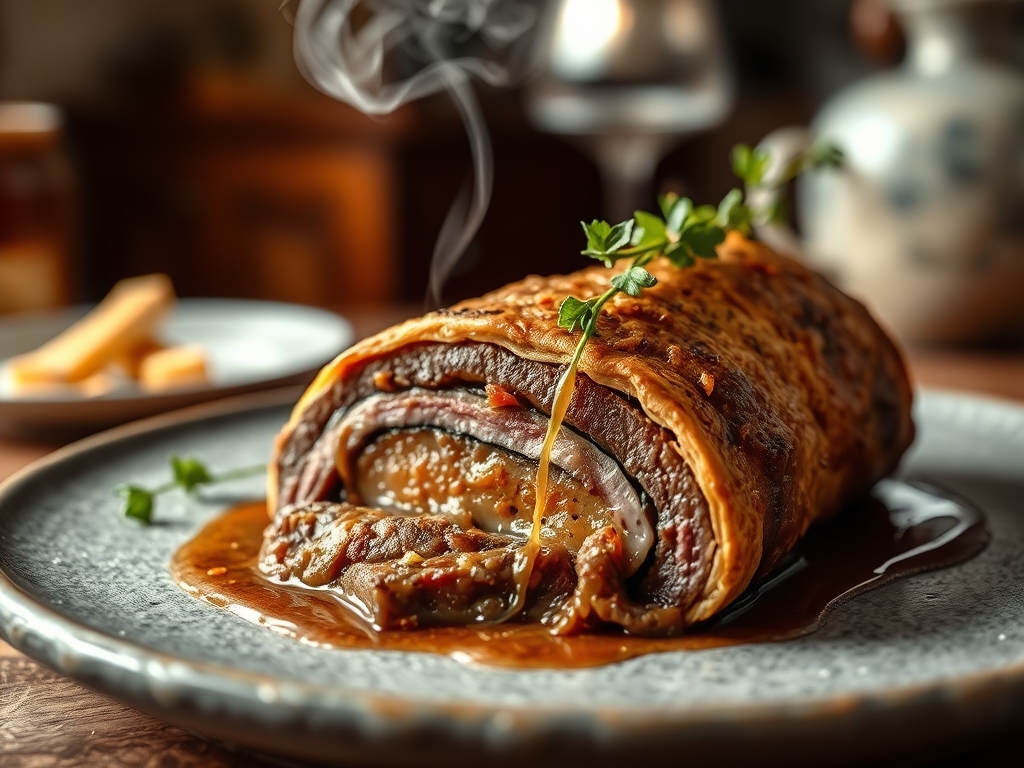
Referencing the Masterclass photo, look for the "Golden Ratio" of crust to meat. If your pastry is pale and dull, your egg wash lacked sufficient protein; next time, use only yolks and a pinch of sugar to encourage the Maillard reaction. If the bottom of the pastry is grey and translucent, your moisture barrier failed. This usually means the duxelles were too wet or the prosciutto was too thin. If the beef has a thick grey ring around the pink center, your initial sear was too long or too cold. You want a sharp transition from the crust to the ruby-red interior.
THE DEEP DIVE
Macro Nutrition Profile:
This is a high-density caloric masterpiece. A standard serving contains approximately 45g of protein, 38g of fat, and 30g of carbohydrates. It is a celebratory fuel source, rich in iron, B12, and saturated fats from the butter-laden pastry.
Dietary Swaps:
- Keto: Replace the puff pastry with a fathead dough (mozzarella and almond flour) and swap the duxelles for a spinach and feta mash.
- Vegan: Use a roasted beet or a seitan log as the core. Substitute prosciutto with grilled eggplant slices and use a vegan "butter" pastry.
- Gluten-Free: Utilize a high-quality GF puff pastry, though be warned: GF pastry has less elasticity, making the "tight roll" technique more difficult.
Meal Prep & Reheating Science:
You can assemble the Wellington up to twenty-four hours in advance, which actually improves the structural bond. To reheat leftovers without ruining the molecular structure, use a wire rack in a 150C / 300F oven. This allows hot air to aerate the bottom of the pastry, preventing it from becoming a soggy mess in the microwave.
THE KITCHEN TABLE
Why is my pastry soggy on the bottom?
Your moisture barrier failed. Either the mushrooms were too wet, or the beef wasn't rested enough before wrapping. Ensure the duxelles are a dry paste and the prosciutto wrap is airtight to prevent juice leakage during the bake.
Can I use a different cut of beef?
Tenderloin is preferred for its uniform shape and tenderness. You could use a Ribeye roast, but the high fat content will render out during baking, significantly increasing the risk of a soggy bottom. Stick to the lean Chateaubriand.
What is the purpose of the mustard?
The mustard provides a piquant acidity that cuts through the richness of the beef and butter. It also acts as a "glue" for the duxelles and helps develop a savory crust during the initial sear.
How do I get that shiny, professional finish?
Double-glaze with egg yolks. Apply one layer, chill for ten minutes to let it "set," then apply a second layer before scoring. This creates a deep, lacquered appearance that looks like a professional culinary audit.