The scent of chilled iron and sharp mustard is the siren song of a kitchen operating at peak efficiency. We are not merely making dinner; we are conducting a high stakes operation in Beef Tartare Security. This is the ultimate test of a chef's cold chain integrity and knife skills. When you serve raw protein, there is no heat to mask mediocrity or kill pathogens. You are flying without a net. The texture must be velvety yet distinct, a delicate balance where the fat remains solid enough to provide structure but soft enough to melt upon contact with the palate. Every gram of caper and every drop of yolk must be accounted for in the final chemical equation. We are looking for a result that is vibrant, ruby red, and pulsing with a piquant energy that only the highest quality bovine muscle can provide. If your station is messy, your tartare is compromised. Strap in for a technical audit of the most dangerous, and rewarding, dish in the cold larder repertoire.
THE DATA MATRIX
| Metric | Specification |
|---|---|
| Prep Time | 25 Minutes |
| Execution Time | 10 Minutes |
| Yield | 2 Servings |
| Complexity | 8 / 10 |
| Estimated Cost per Serving | $18.50 |
THE GATHERS
Ingredient Protocol:
- 340g / 12oz Prime Beef Tenderloin (Center cut, meticulously trimmed)
- 2 Large Egg Yolks (Pasteurized or farm-fresh high-security source)
- 30ml / 2 tbsp Extra Virgin Olive Oil (Cold pressed)
- 15g / 1 tbsp Dijon Mustard (Smooth, high acidity)
- 10g / 2 tsp Small Capers (Rinsed and patted dry)
- 10g / 2 tsp Shallots (Brunoise cut)
- 5ml / 1 tsp Worcestershire Sauce
- 2g / 0.5 tsp Tabasco or hot sauce
- 3g / 0.5 tsp Flaky Sea Salt
- 1g / 0.25 tsp Freshly cracked black pepper
- 5g / 1 tbsp Fresh Chives (Finely snipped)
Section A: Ingredient Quality Audit:
The primary failure point in Beef Tartare Security is temperature abuse. If your beef arrives at room temperature, it is a biological hazard; reject the shipment immediately. If the beef lacks a deep, oxblood hue and appears grey or brown, oxidation has occurred. To fix minor oxidation in a professional setting, trim the exterior surfaces of the muscle to reveal the anaerobic interior. If your egg yolks are watery rather than viscous, they lack the emulsifying power needed to bind the dressing. Ensure all aromatics, such as shallots and capers, are bone dry before dicing. Excess moisture will dilute the dressing and create a "weeping" effect on the plate, compromising the structural integrity of the final mold.
THE MASTERCLASS
1. The Cryospheric Preparation
Place your beef in the freezer for exactly 15 minutes before you intend to cut. This is not to freeze the meat, but to firm the molecular structure of the fat and protein. Use a digital scale to ensure your portions are exact. While the beef chills, place your stainless steel mixing bowl in an ice bath.
Pro Tip: Cold protein is easier to shear cleanly. A sharp knife through soft, room temperature meat causes "smearing," which destroys the mouthfeel and accelerates bacterial growth.
2. The Precision Shear
Using a razor sharp chef knife or a specialized sujihiki, slice the beef into 5mm sheets, then into batons, and finally into a perfect 5mm dice. Do not use a food processor; the mechanical blades will render the fat and turn your premium tenderloin into a paste. Use a bench scraper to move the meat back into the chilled bowl immediately.
Pro Tip: The goal is to maximize surface area for the dressing while maintaining enough mass to provide a "chew." This mechanical process is the foundation of the dish's texture.
3. The Emulsion Matrix
In a separate small saucier or mixing bowl, whisk the egg yolks, Dijon mustard, and olive oil until the mixture is thick and glossy. Gradually infuse the Worcestershire and hot sauce. This creates a stable emulsion that will coat the beef rather than sliding off it.
Pro Tip: Mustard contains natural emulsifiers that help bridge the gap between the fat in the oil and the water content in the yolk, ensuring a consistent coating.
4. The Final Integration
Fold the diced beef, shallots, capers, and chives into the emulsion. Use a gentle folding motion to ensure every cube of beef is coated without bruising the meat. Season with salt and pepper at the very last second before plating.
Pro Tip: Salt is a desiccant; it draws moisture out of the meat via osmosis. If you season too early, the meat will lose its luster and become unpleasantly "leathery."
Section B: Prep & Timing Fault-Lines:
The most common human error is the "Lag Time Trap." If the beef sits in the dressing for more than 10 minutes before consumption, the acids in the mustard and Worcestershire will begin to denature the proteins, effectively "cooking" the meat and turning it a dull grey. To prevent this, keep all components separate until the order is fired. Another failure is the "Ice Bath Neglect." If your mixing bowl reaches 10 degrees Celsius (50 degrees Fahrenheit), stop immediately and re-chill. Bacterial doubling occurs rapidly in the "Danger Zone."
THE VISUAL SPECTRUM
Section C: Thermal & Visual Troubleshooting:
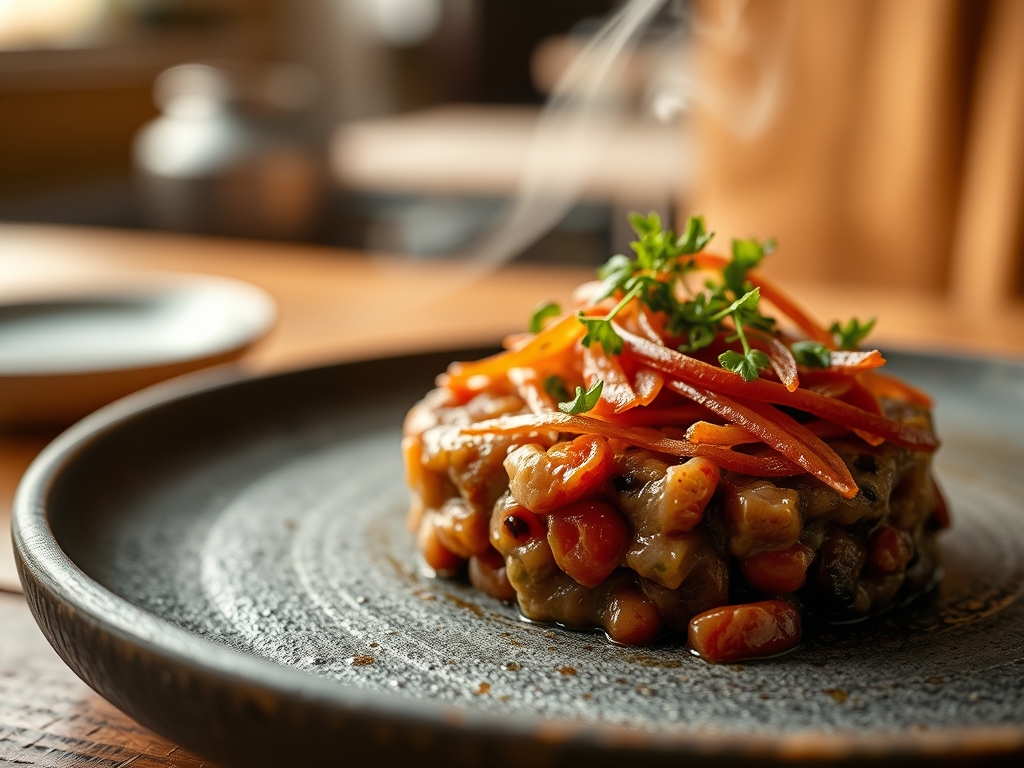
Referencing the Masterclass photo, the ideal tartare should possess a high-gloss sheen. If your dish looks dull or matte, you have likely under-emulsified the dressing or used too little oil. If the beef appears "mushy" rather than having distinct cubes, your knife was dull or the meat was too warm during the cut. To fix a "weeping" tartare where liquid pools at the bottom of the plate, increase the amount of mustard in your base to tighten the emulsion. The color should be a vibrant, healthy red; any hints of grey indicate the meat has been exposed to salt or acid for too long. Ensure your garnishes, like the micro-greens or egg yolk topper seen in the visual, are placed with surgical precision to maintain the professional aesthetic.
THE DEEP DIVE
Macro Nutrition Profile
Per serving, this dish provides approximately 320 calories. It is a protein powerhouse with 35g of high bioavailability protein, 18g of fat (mostly monounsaturated if using high quality olive oil), and less than 2g of carbohydrates. It is rich in Vitamin B12, Zinc, and Heme Iron.
Dietary Swaps
- Vegan: Replace beef with finely diced roasted beets or smoked tomatoes. Use a silken tofu and turmeric base to replicate the egg yolk emulsion.
- Keto: This dish is naturally Keto-compliant. Serve with cucumber slices or parmesan crisps instead of traditional crostini.
- Gluten-Free: Ensure your Worcestershire sauce is a certified GF variety, as some brands use barley malt vinegar.
Meal Prep & Reheating Science
There is no "reheating" in Beef Tartare Security. Once the meat is cut and dressed, the clock is ticking. You cannot meal prep this dish for future days. However, you can prep the aromatics (capers, shallots, chives) up to 6 hours in advance if kept in airtight containers. The molecular structure of raw beef degrades rapidly once the cellular walls are breached by a knife.
THE KITCHEN TABLE
Can I use pre-ground beef for tartare?
Absolutely not. Ground beef has significantly more surface area exposed to potential pathogens during the grinding process. Tartare requires a solid muscle block where the exterior is trimmed away to ensure the interior is pristine and sterile.
What is the best cut besides tenderloin?
Top round or eye of round are acceptable budget-friendly alternatives. They are lean, which is essential for tartare, but they require even more precise knife work as they are slightly tougher than the buttery tenderloin.
How do I know if the beef is safe?
Trust your nose and your supplier. The beef should smell like nothing or slightly like clean rain. Any hint of ammonia or "funk" is an immediate disqualifier. Always buy from a butcher who handles whole primals.
Why is my tartare turning grey so fast?
This is likely due to high acidity in your dressing or premature salting. The chemical reaction between the acid and the myoglobin in the beef causes the color change. Mix and serve immediately to maintain the ruby hue.