Listen up, kitchen operatives. We are moving beyond the realm of simple spreads and entering the high-stakes theater of lipid engineering. If you think we are just making a snack, you have already lost the war. We are here to execute a flawless Chicken Liver Mousse; a dish that represents the absolute zenith of organ meat transformation. When done correctly, it is a shimmering, silken miracle of chemistry that defies its humble, visceral origins. We are talking about taking a raw, iron-rich organ and forcing it through a series of thermal and mechanical stressors until it surrenders into a cloud-like state of pure decadence. This is not a job for the faint of heart or the imprecise of hand. We are manipulating proteins, stabilizing fats, and managing delicate volatile aromatics to create a texture so smooth it feels like a velvet curtain falling over your palate. If your mousse lacks that specific, glossy sheen or fails to achieve a piquant depth of flavor, it is not a culinary failure; it is a structural collapse. Prepare for a full-scale audit of your technique.
THE DATA MATRIX
| Metric | Specification |
|---|---|
| Prep Time | 45 Minutes (Excluding Soak) |
| Execution Time | 25 Minutes |
| Yield | 750ml / 3 Cups |
| Complexity (1-10) | 7 (Precision Dependent) |
| Estimated Cost per Serving | $1.15 USD |
THE GATHERS
Ingredient Protocol:
- 500g / 1.1 lbs Fresh Chicken Livers (Trimmed of all connective tissue)
- 250g / 1.1 cups Unsalted High-Fat Butter (Cubed and chilled)
- 120ml / 0.5 cup Heavy Cream (Minimum 36 percent milkfat)
- 60ml / 4 tbsp Brandy or Cognac
- 60ml / 4 tbsp Dry Sherry
- 2 Large Shallots (Finely minced)
- 3 Cloves Garlic (Microplaned)
- 10g / 2 tsp Kosher Salt
- 2g / 0.5 tsp Pink Curing Salt (Optional, for color retention)
- 5g / 1 tsp Fresh Thyme Leaves
- 3g / 0.5 tsp Ground White Pepper
Section A: Ingredient Quality Audit:
The primary failure point in most mousse iterations is the raw material. If your livers exhibit a greenish tint or a sulfurous odor, they are compromised. Oxidation is your enemy here. To fix sub-par or overly "iron-forward" livers, perform a milk-soak protocol. Submerge the livers in whole milk for two hours prior to cooking. This leaches out excess blood and neutralizes the metallic edge. Furthermore, do not settle for standard supermarket butter. You require a high-butterfat European style product. Lower quality butter contains excess water which will cause your emulsion to "break" or become viscous rather than airy. If your shallots are sprouting, discard them; the green germ introduces a bitter alkaloid that will ruin the delicate balance of the deglaze.
THE MASTERCLASS
Step-by-Step Execution:
1. The Thermal Sear and Maillard Initiation
Heat a heavy-bottomed saucier over medium-high heat. Add a small knob of butter. Once foaming, add the livers in a single layer. Do not crowd the pan. Sear for 60 seconds per side until browned but still raw and soft in the center.
Pro Tip: This step is about the Maillard Reaction. You want deep browning on the exterior to develop complex flavor compounds without overcoagulating the interior proteins. Use a digital scale to ensure your liver-to-butter ratio remains exact.
2. The Aromatic Infusion
Remove the livers and set them aside on a clean tray. Lower the heat to medium and add the shallots and thyme. Sauté until translucent. Add the garlic and cook for only 30 seconds to avoid scorching.
Pro Tip: Use a bench scraper to efficiently clear your cutting board of aromatics. The goal here is to infuse the fat with volatile oils from the herbs and alliums without inducing bitterness.
3. The Deglaze and Reduction
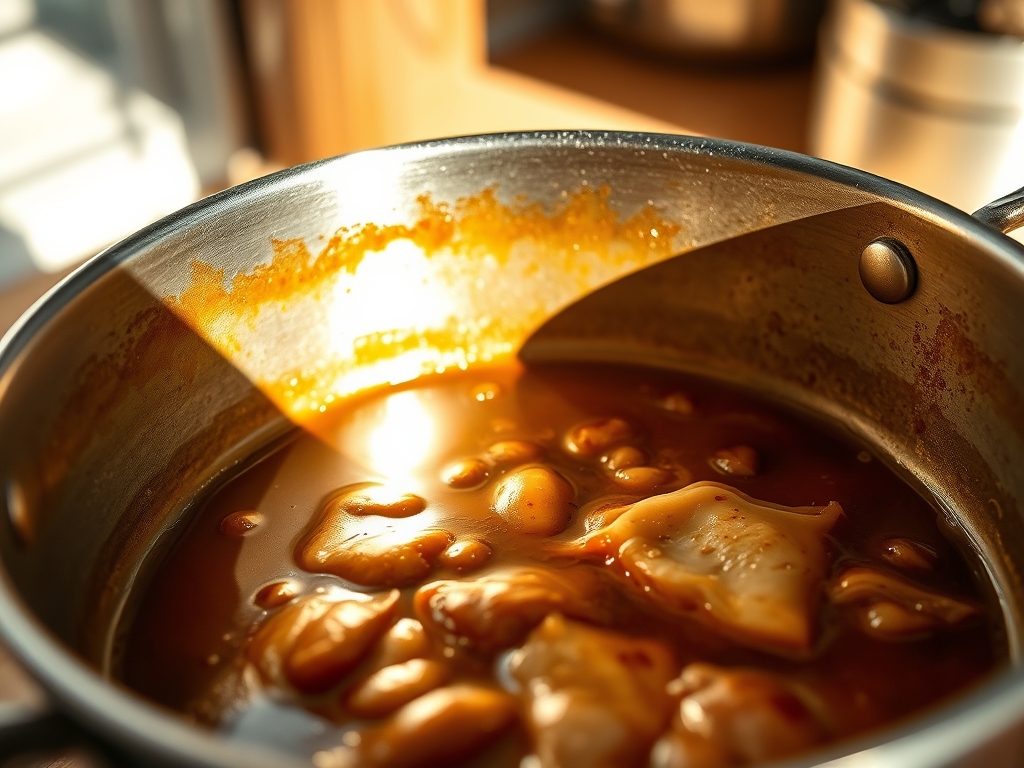
Pour the brandy and sherry into the hot pan. Use a whisk to scrape up the fond (the browned bits). Increase the heat and reduce the liquid by half until it reaches a syrupy consistency.
Pro Tip: This is a chemical extraction. The alcohol acts as a solvent, pulling flavors from the pan that water-based liquids cannot. It adds a piquant acidity that cuts through the heavy lipids we are about to introduce.
4. The High-Shear Emulsification
Transfer the liver mixture, the reduction, and the salt into a high-speed blender. Begin blending on low, gradually increasing to high. While the motor is running, drop in the chilled butter cubes one by one.
Pro Tip: This is the most critical phase. You are creating a fat-in-water emulsion. The cold butter prevents the mixture from overheating, which would cause the proteins to seize and the fat to separate.
5. The Aeration and Final Refinement
Once the mixture is smooth, add the heavy cream and pulse three times. Pass the entire mixture through a fine-mesh chinois or sieve into a bowl set over ice.
Pro Tip: Passing the mousse through a sieve removes any missed connective tissue or "grit." This ensures the final product is perfectly aerated and achieves that signature professional sheen.
Section B: Prep & Timing Fault-Lines:
Temperature control is the difference between a masterpiece and a slurry. If you add the butter to livers that are too hot (above 70C/158F), the butter will melt into oil rather than emulsifying into a cream. Conversely, if the livers are too cold, the butter will not integrate, resulting in a grainy, "pock-marked" texture. Use an infrared thermometer to verify the mixture is between 45C and 55C before adding the lipids. Timing is also vital; if you over-reduce your spirits, you lose the volume necessary to carry the flavor through the fat.
THE VISUAL SPECTRUM
Section C: Thermal & Visual Troubleshooting:
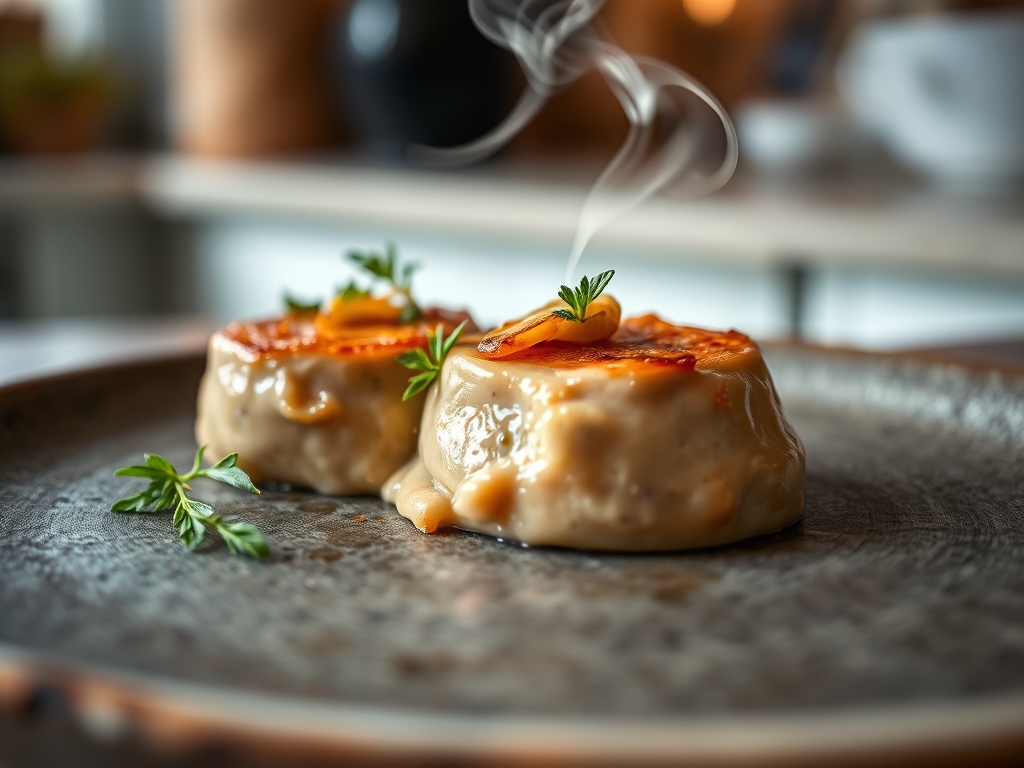
Referencing the Masterclass photo above, the ideal Chicken Liver Mousse should possess a pale, rosy-beige hue with a surface that reflects light. If your mousse appears grey or dull, you likely overcooked the livers or skipped the pink curing salt. A grey mousse is an oxidized mousse. If you see "weeping" (clear liquid pooling at the edges), your emulsion has broken because the cream was added too quickly or the temperature was too high. To fix a dull appearance, top the chilled mousse with a thin layer of clarified butter or a port wine gelee; this creates a professional oxygen barrier and restores the visual "pop."
THE DEEP DIVE
Macro Nutrition Profile
Per 50g serving, expect approximately 180 calories, 16g of fat, 7g of protein, and 2g of carbohydrates. This is a nutrient-dense powerhouse, loaded with Vitamin A, B12, and iron. It is a high-octane fuel source for the discerning palate.
Dietary Swaps
- Keto: This recipe is naturally keto-compliant. Serve with cucumber slices or pork rinds instead of crostini.
- GF: Ensure your brandy and sherry are certified gluten-free. Serve with GF crackers.
- Vegan: Not applicable. To replicate this texture without animal products, one would need to use a combination of cashews, coconut oil, and nutritional yeast, though the iron-rich profile will be lost.
Meal Prep & Reheating Science
Mousse should never be reheated. Heat destroys the emulsion, causing it to liquefy into a greasy mess. For meal prep, store in small ramekins with a layer of fat on top to prevent oxidation. It will maintain its molecular integrity for up to 5 days in a 4C environment.
THE KITCHEN TABLE
Why is my mousse grainy?
Graininess usually indicates overcooked livers or a failure to use a fine-mesh sieve. If the proteins in the liver reach too high a temperature, they clump together. Always pass the final mixture through a chinois for a professional finish.
Can I freeze chicken liver mousse?
Yes, but be warned. Freezing can cause ice crystals to puncture the delicate fat globules, leading to slight separation upon thawing. To mitigate this, thaw slowly in the refrigerator and whisk vigorously before serving to re-incorporate the fats.
What is the best way to serve this?
Serve at slightly below room temperature. If it is too cold, the butter remains hard and the flavors stay muted. If it is too warm, the structure softens. Pair with something acidic, like pickled red onions or cornichons.
Why did my mousse turn grey on top?
That is oxidation. When the iron in the livers meets oxygen, it darkens. To prevent this, press plastic wrap directly onto the surface of the mousse or seal it with a thin layer of melted butter or aspic.