Forget the delicate, fleeting sear of a thin steak. We are entering the realm of structural integrity and thermal endurance. When you commit to Beef Short Ribs, you are not just cooking; you are conducting a multi-hour symphony of connective tissue breakdown and collagen transformation. Imagine the scent of rendered bovine fat hitting a scorching heavy-bottomed pan, sending a cloud of umami-rich vapor into the rafters. This is the heavy artillery of the culinary world. We are looking for that specific, deep mahogany crust that only occurs when the Maillard reaction is pushed to its absolute limit before the long, slow bath in a viscous, wine-heavy braising liquid begins. The goal is a finished product that resists the fork just enough to prove its substance, only to dissolve into a rich, silken puddle of protein on the tongue. This is high-stakes infrastructure. If your heat management is sloppy, you end up with gray, boiled meat. If your deglazing is timid, you lose the soul of the sauce. Strap in, because we are about to build a masterpiece from bone, fat, and fire.
THE DATA MATRIX
| Metric | Specification |
|---|---|
| Prep Time | 45 Minutes |
| Execution Time | 4 to 5 Hours |
| Yield | 4 to 6 Servings |
| Complexity (1-10) | 7 (Requires Thermal Patience) |
| Estimated Cost per Serving | $12.00 – $18.00 USD |
THE GATHERS
Ingredient Protocol:
- 2.25 kg / 5 lbs English-cut Beef Short Ribs (Bone-in)
- 30 ml / 2 tbsp High-smoke point oil (Grapeseed or Avocado)
- 10 g / 2 tsp Kosher salt
- 5 g / 1 tsp Freshly cracked black pepper
- 300 g / 2 medium Yellow onions, diced
- 150 g / 3 large Carrots, peeled and diced
- 100 g / 2 stalks Celery, diced
- 45 g / 3 tbsp Tomato paste
- 750 ml / 1 bottle Dry red wine (Cabernet or Syrah)
- 500 ml / 2 cups Beef bone broth (low sodium)
- 4 cloves Garlic, smashed
- 3 sprigs Fresh thyme
- 2 sprigs Fresh rosemary
- 2 pieces Dried bay leaves
Section A: Ingredient Quality Audit:
If your Beef Short Ribs lack significant marbling, the final result will be stringy and dry rather than succulent. Look for "Select" or "Prime" cuts with visible white flecks of intramuscular fat. If the meat appears pale or "wet," it has likely been previously frozen and thawed improperly; pat it excessively dry with paper towels to ensure the sear actually happens instead of steaming. If your red wine is something you would not drink out of a glass, do not put it in the pot. Sub-par wine contains harsh tannins that concentrate during the reduction process, leading to a bitter, metallic aftertaste. Fix this by adding a teaspoon of honey or a splash of balsamic vinegar at the end to balance the acidity.
THE MASTERCLASS
Step 1: The Thermal Foundation
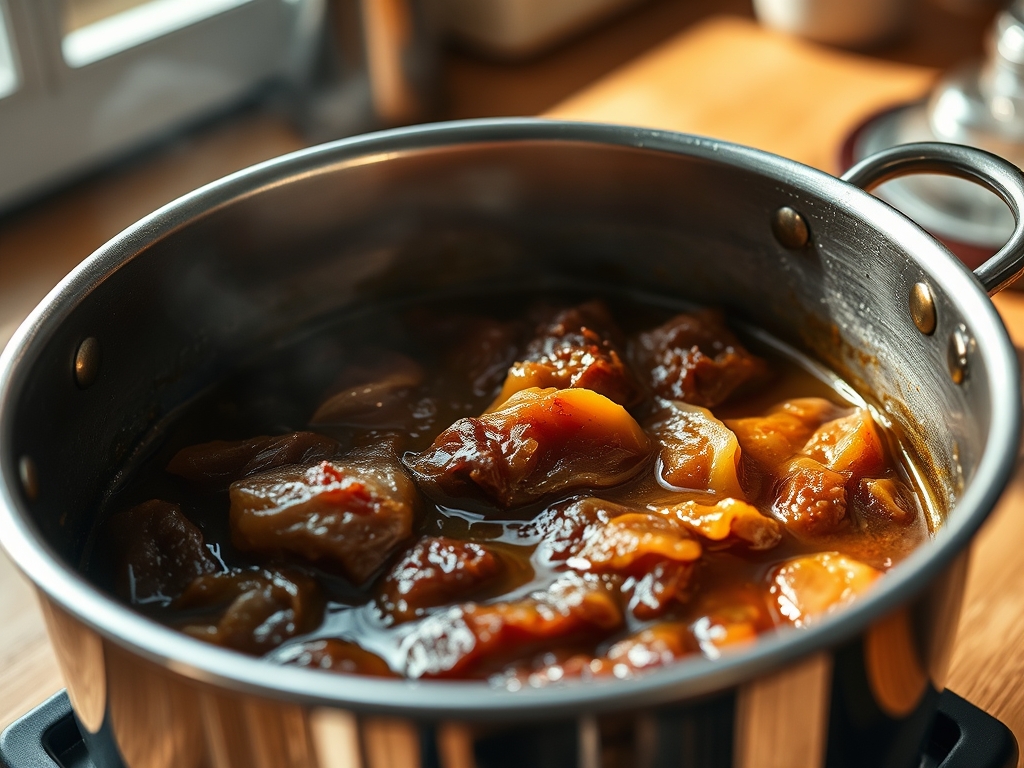
Season the beef aggressively on all sides. Heat your heavy enameled cast iron dutch oven over medium-high heat until the oil shimmers. Sear the ribs in batches, ensuring you do not crowd the pan. You want a dark, uniform crust on every square inch of the meat.
Pro Tip: Use a digital infrared thermometer to ensure your pan surface is at least 200C / 400F before the meat hits. This ensures immediate moisture evaporation, allowing the Maillard reaction to create those complex flavor compounds without the meat sticking to the surface.
Step 2: The Aromatics Architecture
Remove the meat and set it aside on a rimmed baking sheet. Reduce heat to medium and add the onions, carrots, and celery (the mirepoix) to the rendered fat. Cook until the onions are translucent and the edges of the carrots begin to caramelize. Stir in the tomato paste and cook for 3 minutes until it turns a deep rust color.
Pro Tip: Use a stainless steel bench scraper to clear the bottom of the pan as you stir. This prevents the sugars in the vegetables from scorching while ensuring every bit of "fond" (the brown bits) is ready to be integrated into the sauce.
Step 3: The Deglaze and Integration
Pour in the red wine, using a wooden spoon to scrape the bottom of the pot vigorously. This is where you deglaze the vessel, lifting all that concentrated flavor into the liquid. Let the wine reduce by half. Add the beef broth, garlic, and herbs. Return the ribs to the pot, ensuring they are submerged at least halfway but not fully "drowned."
Pro Tip: A professional saucier or whisk can help emulsify the tomato paste into the wine more effectively, preventing clumps and ensuring a smooth, homogenous braising environment that distributes heat evenly.
Step 4: The Low-Slow Transformation
Cover the pot with a tight-fitting lid and transfer to a preheated oven at 150C / 300F. Let the infrastructure stabilize for 3.5 to 4 hours. The meat is done when it is fork-tender but not yet falling off the bone into a heap of shreds.
Pro Tip: Use a digital probe thermometer to check the internal temperature of the meat between the bones. You are looking for a "stall" finish around 95C / 203F, which is the magical window where collagen fully melts into gelatin.
Step 5: The Final Reduction
Carefully remove the ribs and strain the liquid through a fine-mesh sieve into a smaller saucepan. Discard the solids. Simmer the liquid over medium heat until it coats the back of a spoon. Taste and adjust for salt.
Pro Tip: Use a fat separator before reducing the sauce. Removing the excess rendered tallow ensures your final glaze is a shimmering, viscous nectar rather than an oily mess that separates on the plate.
Section B: Prep & Timing Fault-Lines:
The most common human error is rushing the sear. If you flip the meat too early, you lose the crust. Another critical failure is the "boiling" trap; if your oven is too hot, the liquid will boil violently, toughening the muscle fibers before the collagen can melt. If you find yourself behind schedule, do not turn up the heat. Instead, keep the lid on and use the residual heat of the dutch oven to carry the cook. If the sauce is too thin at the end, a small "beurre manie" (equal parts flour and butter mashed together) can save the texture without dulling the flavor.
THE VISUAL SPECTRUM
Section C: Thermal & Visual Troubleshooting:
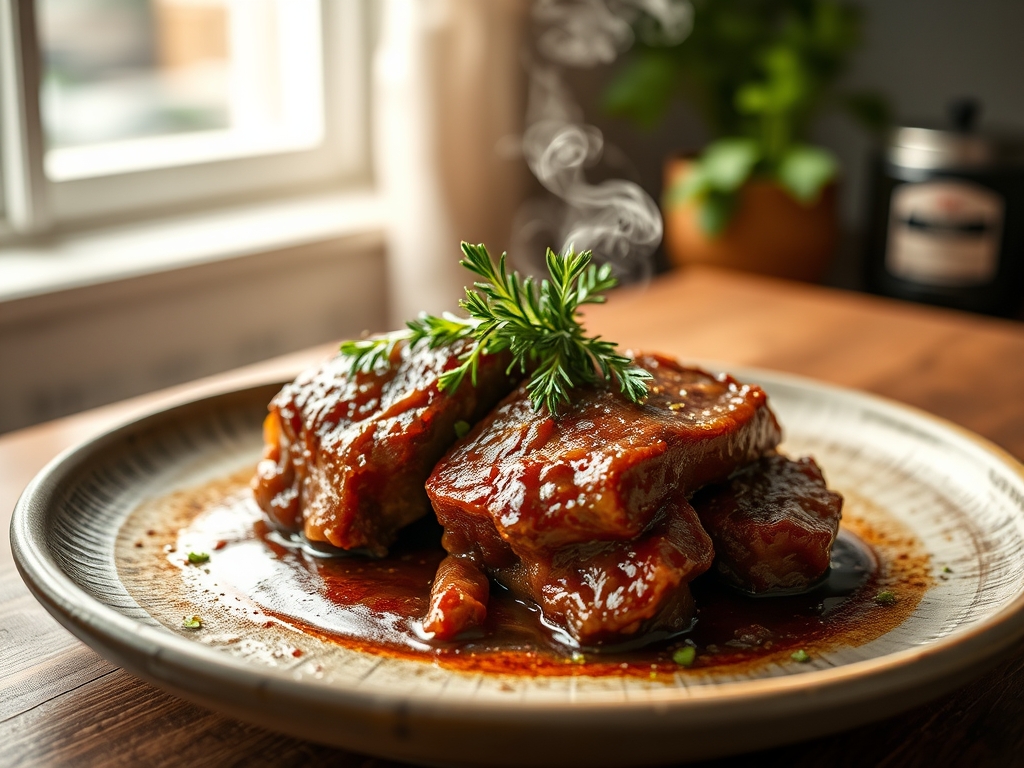
Look at the reference image. Notice the deep, dark exterior of the ribs contrasted against the rich, mahogany-red sauce. If your ribs look pale or "gray," your initial sear was too cold. If the sauce looks muddy or opaque, you likely skipped the straining step or didn't use a fat separator. The visual cue for a perfect braise is "the wiggle." When you nudge the bone, the meat should move independently like a heavy jelly but remain attached. If the bone slides out cleanly without any resistance, you have overcooked the structural proteins. To fix a dull appearance, brush the ribs with the reduced glaze and flash them under a broiler for 2 minutes before serving to create a "lacquered" finish.
THE DEEP DIVE
Macro Nutrition Profile:
Beef Short Ribs are a powerhouse of fats and proteins. A standard 200g serving contains approximately 500-600 calories, with 35g of protein and 40g of fat. They are exceptionally high in Zinc, B12, and Iron. Because this is a bone-in preparation, the sauce is also rich in natural gelatin, which supports joint health.
Dietary Swaps:
- Vegan: Swap beef for large "steaks" of Lion's Mane mushrooms or thick-cut cauliflower heads. Use vegetable stock and a splash of soy sauce for depth.
- Keto: This recipe is naturally Keto-friendly. Simply ensure the wine is bone-dry and avoid adding any thickeners like flour or cornstarch.
- Gluten-Free: Ensure your beef broth is certified GF and avoid any flour-based thickening agents.
Meal Prep & Reheating Science:
Short ribs are actually better the second day. As the dish cools, the flavors infuse deeper into the fibers and the gelatin sets. To reheat, do not use a microwave; it will turn the fat rubbery. Place the ribs and sauce in a covered dish in a 135C / 275F oven until the internal temperature reaches 74C / 165F. This preserves the molecular structure of the melted collagen.
THE KITCHEN TABLE
Why are my short ribs tough after 3 hours?
You likely haven't reached the "breakdown" point. Connective tissue is stubborn. Give it another 45 minutes. If the internal temp hasn't hit 95C, the collagen is still holding the muscle fibers in a literal death grip.
Can I do this in a slow cooker?
Yes, but you must sear the meat in a real pan first. A slow cooker cannot reach the temperatures required for the Maillard reaction. Without that initial sear, you are just making expensive pot roast.
What wine works best for the braise?
Go for a high-tannin, full-bodied red like a Cabernet Sauvignon or a Malbec. The tannins act as a structural foil to the heavy fats in the beef, creating a more balanced, piquant sauce.
Should I remove the silver skin?
On the bone side, there is a tough membrane. You can score it with a knife to help it render, but don't obsess over removing it. The long braise will soften it significantly compared to quick-cooking methods.