Listen up, kitchen operatives. We are moving beyond the realm of domestic guesswork and into the high-stakes theater of cold fat suspension. If you think Baking Powder Biscuits are merely a humble side dish for gravy, you have already failed the audit. This is an exercise in structural engineering where the primary goal is the tactical preservation of solid-state lipids within a dry-matter matrix. We are looking for skyscraper-height rise, a shatter-crisp exterior, and an interior so tender it borders on the scandalous. The sensory profile must be a violent collision of salt, cultured butter, and the sharp chemical sting of carbon dioxide liberation. When that oven door swings open, the aroma should be an aggressive olfactory assault of toasted wheat and caramelized lactose. If your biscuits look like leaden hockey pucks or sad, crumbly sandcastles, your process is compromised. We are here to recalibrate your technique, optimize your thermal variables, and ensure that every crumb serves a purpose in the pursuit of flaky, golden perfection.
THE DATA MATRIX
| Metric | Specification |
|---|---|
| Prep Time | 15 Minutes |
| Execution Time | 12 Minutes |
| Yield | 8 to 10 Units |
| Complexity (1-10) | 6 (Precision Dependent) |
| Estimated Cost per Serving | $0.45 USD |
THE GATHERS
Ingredient Protocol:
- 500g / 4 cups All-Purpose Flour (Low protein preferred)
- 25g / 2 tbsp Baking Powder (Aluminum-free)
- 10g / 2 tsp Fine Sea Salt
- 15g / 1 tbsp Granulated Sugar
- 225g / 1 cup Unsalted Butter (Frozen and cubed)
- 350ml / 1.5 cups Cold Buttermilk (Full fat)
- 30ml / 2 tbsp Melted Butter (For finishing)
Section A: Ingredient Quality Audit:
The most common failure point in the raw material phase is the chemical potency of your leavening agent. Baking powder loses its ability to aerate the dough over time. To audit this, drop a teaspoon of powder into hot water; if it does not erupt into a violent fizz, discard it immediately. Furthermore, the protein content of your flour dictates the final texture. High-protein bread flour will produce a tough, bready biscuit. If you only have high-protein flour, mitigate this by replacing 20 percent of the volume with cornstarch to weaken the gluten network. Finally, ensure your buttermilk is truly cultured. If it lacks that piquant acidity, your baking powder will not have the necessary pH catalyst to trigger a maximum rise.
THE MASTERCLASS
1. Dry Phase Integration
Begin by sifting your flour, baking powder, salt, and sugar into a wide stainless steel mixing bowl. Use a digital scale for these measurements; volumetric cups are the enemies of consistency. Whisk the dry components for sixty seconds to ensure the leavening agent is perfectly distributed.
Pro Tip: Sifting does more than remove clumps; it introduces air into the flour, allowing the fat to coat the particles more evenly. This initial aeration is the foundation of a light crumb.
2. Lipid Suspension (The Rub)
Introduce your frozen, cubed butter into the dry mix. Using a pastry cutter or a bench scraper, cut the fat into the flour until the largest pieces are the size of small peas. You must work with speed to prevent the heat from your hands from melting the butter.
Pro Tip: This process is called "rubbing in." The goal is to create discrete pockets of fat. When these hit the oven, the water in the butter evaporates, creating steam that forces the dough layers apart.
3. Hydration and Binding
Create a well in the center of your mixture and pour in the chilled buttermilk. Use a sturdy spatula to fold the liquid into the dry mass just until a shaggy dough forms. Do not overwork the dough at this stage; we are looking for a messy, heterogeneous mixture.
Pro Tip: Over-mixing triggers gluten development. We want to infuse the flour with moisture without creating a viscous, elastic web that would result in a chewy, tough biscuit.
4. Laminating the Matrix
Turn the dough onto a floured surface. Use your bench scraper to fold the dough over itself five times. This is a simplified lamination process. Pat the dough down to a thickness of one inch.
Pro Tip: Each fold creates a new layer of fat and flour. This mechanical layering is what produces the signature "peel-apart" flakes seen in high-end professional biscuits.
5. Precision Extraction
Using a sharp, circular biscuit cutter, punch out your rounds. Do not twist the cutter. Press straight down and pull straight up. Place the biscuits on a parchment-lined baking sheet so they are just touching each other.
Pro Tip: Twisting the cutter seals the edges of the dough, effectively welding the layers together and preventing the biscuit from rising vertically. Touching biscuits support each other as they climb.
6. Thermal Execution
Bake at 425 degrees Fahrenheit for 12 to 15 minutes. The biscuits should be tall and deeply bronzed. Immediately upon extraction, brush the tops with melted butter using a silicone pastry brush to render the crust soft and flavorful.
Pro Tip: High heat is non-negotiable. The rapid temperature spike is required to flash-boil the water in the butter before the dough structure sets.
Section B: Prep & Timing Fault-Lines:
The primary human error in this workflow is "Thermal Drift." If your kitchen is too hot, the butter will soften before it reaches the oven. If you see the fat starting to shine or look greasy, stop everything and put the entire bowl in the freezer for ten minutes. Timing is also critical. Once the buttermilk hits the baking powder, the chemical reaction begins. If you linger too long during the cutting phase, you will exhaust the CO2 potential of the dough, leading to a flat, dense product.
THE VISUAL SPECTRUM
Section C: Thermal & Visual Troubleshooting:
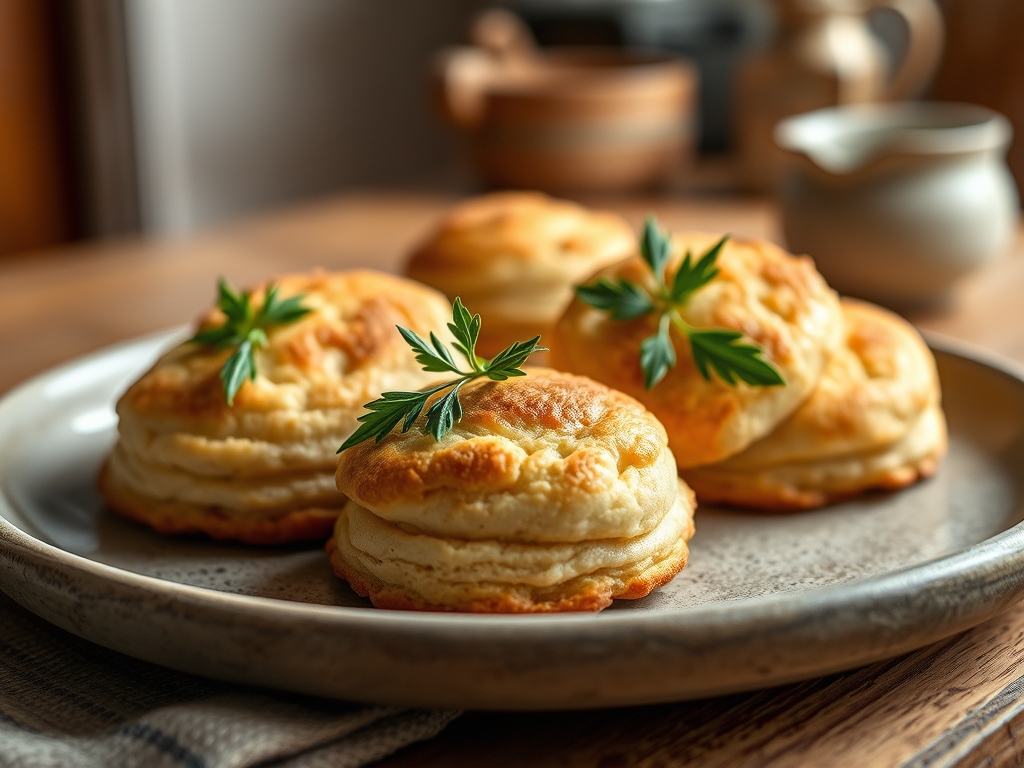
Referencing the Masterclass photo, observe the distinct horizontal fractures along the sides of the biscuits. These are the "shatter lines." If your biscuits lack these, your fat pieces were likely too small or your dough was over-handled. If the tops are pale but the bottoms are burnt, your oven is radiating too much bottom heat; move the rack to the upper third of the chamber. A dull, matte finish on the top indicates you skipped the final butter wash or failed to include enough sugar in the dry mix to facilitate the Maillard reaction. The ideal visual is a "craggy peak" look where the top has slightly uneven, golden-brown ridges that suggest a crisp texture.
THE DEEP DIVE
Macro Nutrition Profile
Each unit contains approximately 280 calories, 14g of fat, 34g of carbohydrates, and 5g of protein. While not a health food, the high fat content provides significant satiety. The sodium count is high due to the leavening agents; keep this in mind for dietary tracking.
Dietary Swaps
- Vegan: Replace butter with frozen coconut oil (solid state) and use soy milk curdled with lemon juice as a buttermilk substitute.
- Keto: This is difficult as wheat structure is central. However, almond flour mixed with xanthan gum and extra egg white can mimic the lift, though the "flake" will be absent.
- Gluten-Free: Use a high-quality 1-to-1 GF blend containing xanthan gum. Increase the buttermilk by 10 percent as GF flours are more absorbent.
Meal Prep & Reheating Science
To maintain the molecular integrity of a biscuit, never use a microwave for reheating. The microwave agitates water molecules, turning the starch into a rubbery mess. Instead, use a toaster oven at 350 degrees Fahrenheit. This re-crisps the exterior fats and restores the internal steam pressure without compromising the crumb.
THE KITCHEN TABLE
Why are my biscuits dry?
You likely over-measured the flour or over-baked the units. Use a scale for the flour and pull the biscuits the moment the tops reach a golden hue. Residual heat will finish the interior.
Can I use a food processor?
Yes, for the fat integration phase only. Pulse 5 to 7 times until the butter is pea-sized. Transfer to a bowl before adding liquid to avoid over-mixing the gluten.
What if I don't have buttermilk?
Add one tablespoon of white vinegar or lemon juice to 350ml of whole milk. Let it sit for ten minutes to curdle. It provides the necessary acid to activate the baking powder.
Why didn't they rise straight up?
This is usually caused by twisting the biscuit cutter or having an unevenly heated oven. Ensure your cutter is sharp and your oven is fully preheated for at least twenty minutes.
How do I get extra flaky layers?
Increase the number of folds during the lamination phase to seven or eight. Ensure the dough stays cold; if it warms up, the layers will blur into a single mass.