Listen to the roar of the preheating cast iron and the rhythmic whisking of flour against glass. You are not just making breakfast; you are presiding over a high-stakes structural engineering project where the primary building material is air. Most home cooks treat their morning starch as a casual affair, but true mastery requires an obsession with Pancake Batter Science. We are managing a delicate dance of carbon dioxide production and gluten inhibition. When that first ladle of viscous liquid hits the heated surface, the immediate hiss is the sound of thermal energy initiating the Great Expansion. If your ratios are off, you are left with a sad, leaden disc that lacks the structural integrity to support even a modest pat of butter. If your chemistry is sound, you witness a miraculous architectural feat: a golden, aerated honeycomb that defies gravity. This is the audit of the griddle; it is time to stop guessing and start measuring the molecular potential of your morning meal.
THE DATA MATRIX
| Metric | Specification |
|---|---|
| Prep Time | 10 Minutes |
| Execution Time | 15 Minutes |
| Yield | 8 to 10 Standard Cakes |
| Complexity (1-10) | 4 (Technical Precision Required) |
| Estimated Cost per Serving | $0.65 USD |
THE GATHERS
Ingredient Protocol:
- 250g / 2 cups All-Purpose Flour (low protein preferred)
- 30g / 2 tbsp Granulated Sugar
- 10g / 2 tsp Baking Powder (Double-Acting)
- 3g / 0.5 tsp Baking Soda
- 5g / 1 tsp Fine Sea Salt
- 350ml / 1.5 cups Full-Fat Buttermilk (Cold)
- 60g / 4 tbsp Unsalted Butter (Melted and cooled)
- 1 Large Egg (Room Temperature)
- 5ml / 1 tsp Pure Vanilla Extract
Section A: Ingredient Quality Audit:
The most common failure point in the infrastructure of a pancake is expired chemical leavening. Baking powder loses its potency within six months of opening; if your cakes are flat, your CO2 source is likely compromised. Perform a "fizz test" by dropping a pinch of powder into hot water. If it does not aggressively bubble, discard the batch. Furthermore, using "shredded" or cold butter directly into cold buttermilk will cause the lipids to seize into waxy pellets. This ruins the emulsification. Ensure your butter is melted but cooled to 90 degrees Fahrenheit to maintain a smooth, viscous suspension. If you lack buttermilk, do not simply use milk; the lack of acidity will fail to activate the baking soda, resulting in a metallic aftertaste and zero lift.
THE MASTERCLASS
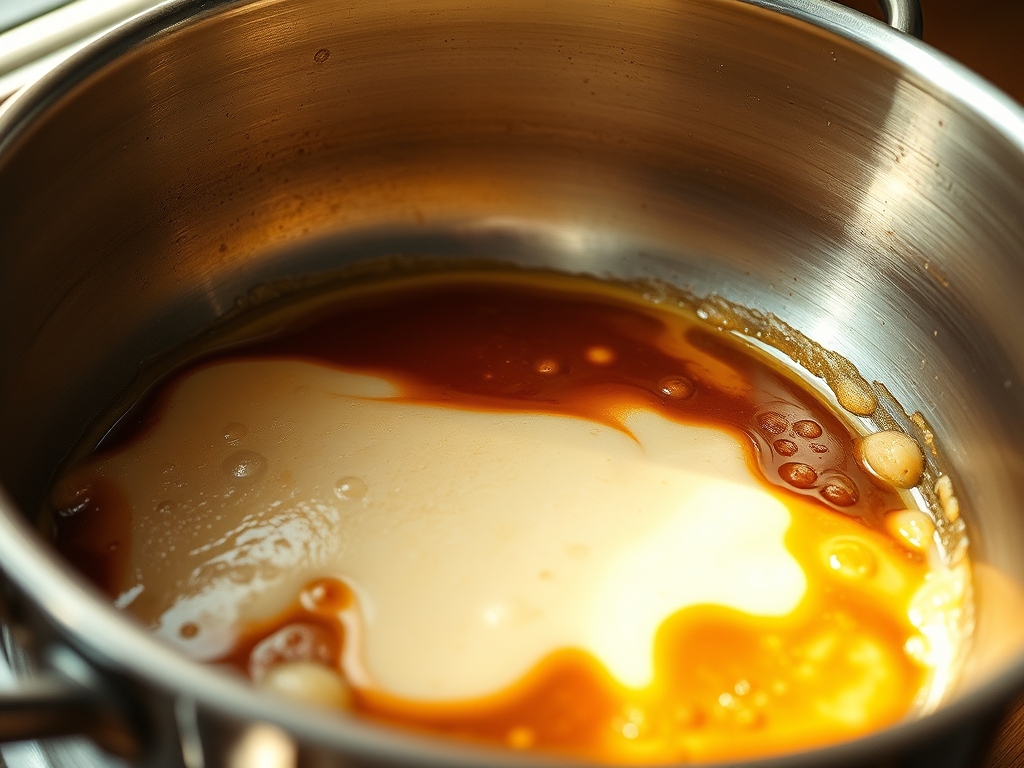
Step 1: The Dry Phase Consolidation
Whisk the flour, sugar, salt, and leavening agents in a large stainless steel bowl. Ensure the baking soda and powder are distributed with clinical precision.
Pro Tip: Use a fine-mesh sieve to aerate the flour before mixing. This removes clumps and ensures that the chemical leaveners can begin their reaction uniformly once hydrated. A digital scale is mandatory here; volume measurements of flour can vary by up to 20 percent depending on how tightly it is packed.
Step 2: The Lipid-Protein Integration
In a separate saucier or glass measuring jug, whisk the buttermilk, egg, vanilla, and melted butter. The goal is a homogenous emulsion where the fat is suspended perfectly within the aqueous liquid.
Pro Tip: Room temperature eggs are non-negotiable. A cold egg will immediately solidify the fats in the melted butter, creating "clots" in your batter that prevent a smooth crumb. Use a high-quality balloon whisk to maximize surface area contact during the emulsification process.
Step 3: The Hydration Event
Create a well in the center of the dry ingredients and pour in the liquid mixture. Use a silicone spatula or a bench scraper to fold the ingredients together until just combined. Stop the moment the large streaks of flour vanish.
Pro Tip: Over-mixing is the primary cause of "tough" pancakes. When water meets flour, gluten proteins begin to link. Excessive agitation creates a rubbery matrix. The presence of small lumps is actually a sign of structural health; they will hydrate fully during the "rest" period without the need for mechanical interference.
Step 4: The Molecular Rest
Allow the batter to sit undisturbed for at least 10 minutes. This is not a suggestion; it is a chemical necessity for the starch granules to swell and the gluten to relax.
Pro Tip: During this phase, the double-acting baking powder completes its first "lift" at room temperature. You will see small bubbles forming on the surface. Moving the batter too much after this stage will deflate these precious air pockets. Treat the bowl with the reverence of a bomb squad technician.
Step 5: Thermal Execution
Heat a heavy-bottomed griddle to 375 degrees Fahrenheit. Apply a micro-layer of neutral oil or clarified butter. Ladle the batter in 60ml increments, leaving ample space for expansion.
Pro Tip: Use an infrared thermometer to verify the surface temperature. If the pan is too cold, the batter will spread too thin before the proteins can set; if it is too hot, the exterior will undergo the Maillard reaction too quickly, leaving a raw, doughy interior. Flip only when the bubbles at the center of the cake burst and hold their shape.
Section B: Prep & Timing Fault-Lines:
Timing is the silent killer of the perfect stack. If you prep the batter too far in advance (over 30 minutes), the chemical leaveners will exhaust their CO2 production before they ever hit the heat. This results in a dense, gummy texture. Conversely, flipping the pancake too early disrupts the internal scaffolding of the air cells. You must wait for the visual cue of the "set edge." If the batter is still runny when you slide your spatula underneath, you are courting structural collapse. Control your heat; if the griddle smokes, your lipids are breaking down and will infuse the cakes with a bitter, acrid profile.
THE VISUAL SPECTRUM
Section C: Thermal & Visual Troubleshooting:
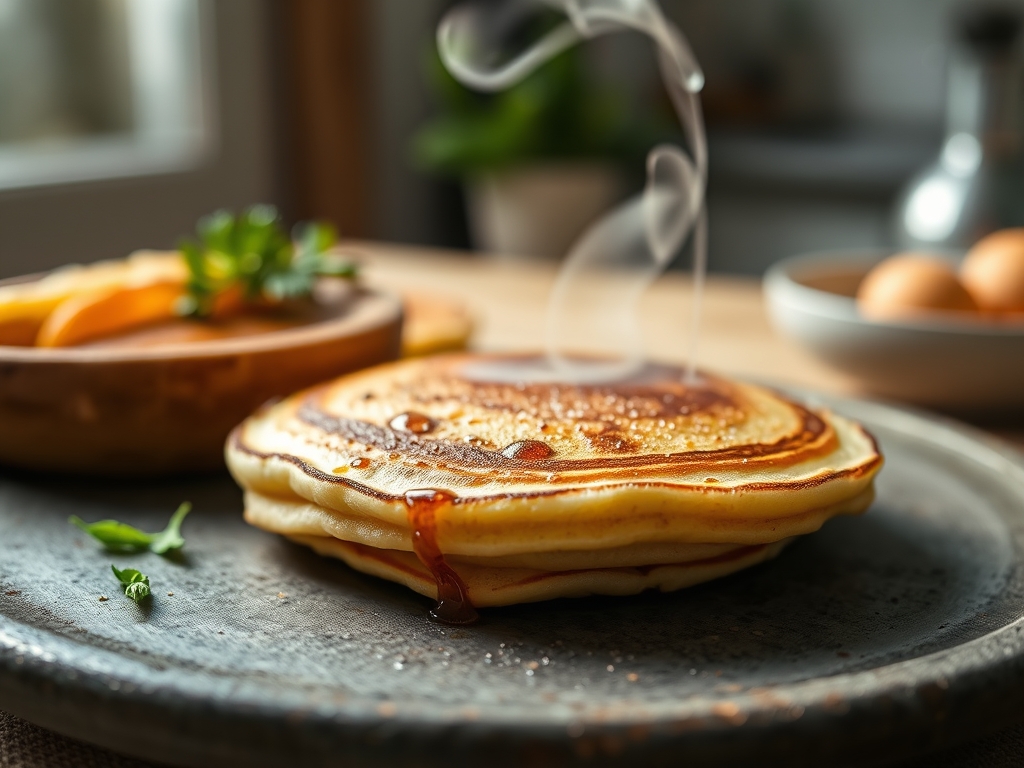
Referencing the Masterclass photo, observe the uniform golden-brown hue and the distinct vertical lift. If your pancakes show a "ring" of white around the edges with a dark center, your pan is likely warped or the heat is concentrated too centrally. To fix this, use a cast-iron diffuser or a heavier pan to distribute thermal energy. If the surface looks "pitted" or cratered, you waited too long to flip. The goal is a smooth, matte finish with a slight sheen from the rendered butter. Dull, greyish cakes usually indicate a lack of sugar; sugar is not just for sweetness, it is the primary fuel for the Maillard reaction that creates those complex, toasted flavor compounds.
THE DEEP DIVE
Macro Nutrition Profile:
A standard two-cake serving provides approximately 350 calories, 12g of fat, 45g of carbohydrates, and 8g of protein. The glycemic load is moderate, but can be mitigated by adding fiber-rich inclusions like flaxseeds or choosing a high-protein buttermilk variant.
Dietary Swaps:
- Vegan: Replace buttermilk with soy milk plus 1 tbsp apple cider vinegar. Substitute the egg with a "flax egg" (1 tbsp ground flax + 3 tbsp water).
- Keto: Swap all-purpose flour for a 3:1 ratio of almond flour and coconut flour. Use erythritol as the sweetener.
- Gluten-Free: Use a high-quality 1:1 GF flour blend that includes xanthan gum to mimic the protein elasticity of wheat.
Meal Prep & Reheating Science:
To maintain molecular structure, flash-freeze individual cakes on a wire rack before bagging. This prevents ice crystal formation from crushing the delicate air cells. Reheat in a toaster or oven at 350 degrees Fahrenheit; avoid the microwave, as it agitates water molecules too violently, resulting in a soggy, steamed texture.
THE KITCHEN TABLE
Why are my pancakes rubbery?
You likely over-worked the batter, over-developing the gluten network. Mix until the flour just disappears; lumps are your friends. Also, ensure you are not using high-protein bread flour, which creates too much structural resistance for a light, fluffy cake.
Can I use regular milk instead of buttermilk?
Technically yes, but you lose the acid-base reaction with the baking soda. If using regular milk, omit the baking soda and increase the baking powder by 50 percent to compensate for the loss of chemical lift and leavening power.
What is the best fat for the griddle?
Clarified butter (ghee) is the gold standard. It provides the piquant, nutty flavor of butter but has a higher smoke point, allowing for a crispier exterior without the risk of burning the milk solids found in standard butter.
Why is the first pancake always bad?
The "first pancake syndrome" is usually a result of improper thermal regulation. The pan has not yet reached a stable, equilibrium temperature. Use the first small drop of batter as a sacrificial probe to calibrate your heat settings.