Stop treating your produce like a side dish and start treating it like a structural engineering project. Most home cooks approach the leafy green as an afterthought; they toss it into a pot, apply indiscriminate heat, and wonder why they end up with a pile of swampy, metallic mush. We are here to conduct a comprehensive Steamed Spinach Audit. This is about more than just softening fiber; it is about the aggressive management of oxalic acid and the preservation of chlorophyll through precise thermal application. When done correctly, the result is a vibrant, emerald-hued masterpiece that retains its integrity rather than collapsing into a sad, watery heap. We are looking for that perfect point where the cell walls have just begun to yield, releasing a concentrated, earthy sweetness without sacrificing the structural snap. If your current output looks like it belongs in a cafeteria tray from 1984, your infrastructure is failing. It is time to recalibrate your kitchen protocols and master the molecular transition from raw leaf to refined excellence.
THE DATA MATRIX
| Metric | Specification |
|---|---|
| Prep Time | 10 Minutes |
| Execution Time | 3 Minutes |
| Yield | 2 Servings |
| Complexity (1-10) | 3 |
| Estimated Cost per Serving | $1.50 USD |
THE GATHERS
Ingredient Protocol:
- 450g / 1 lb Fresh Baby Spinach (Triple-washed and spun dry)
- 30ml / 2 tbsp Extra Virgin Olive Oil (High polyphenolic count preferred)
- 3g / 0.5 tsp Flaky Sea Salt
- 2g / 2 cloves Garlic (Razor-thin mandoline slices)
- 15ml / 1 tbsp Fresh Lemon Juice (To be applied post-thermal exposure)
- 1g / 0.25 tsp Red Pepper Flakes (For a piquant finish)
Section A: Ingredient Quality Audit:
The primary failure point in any Steamed Spinach Audit is the raw material. If your leaves are yellowing or exhibit a slimy texture, the cellular breakdown has already begun; no amount of technical skill can reverse rot. For wilted or "tired" spinach that is otherwise safe, a ten-minute immersion in an ice-water bath will re-pressurize the vacuoles, restoring turgidity. If you find your spinach has an overly aggressive metallic "bite," it is likely high in oxalic acid. To mitigate this, ensure you are using a stainless steel saucier rather than cast iron or aluminum, which can react with the acids and discolor the greens. Always verify the source; hydroponic spinach often lacks the mineral depth of soil-grown varieties but offers a cleaner, more consistent texture for high-speed steaming.
THE MASTERCLASS
1. Thermal Priming and Aromatics
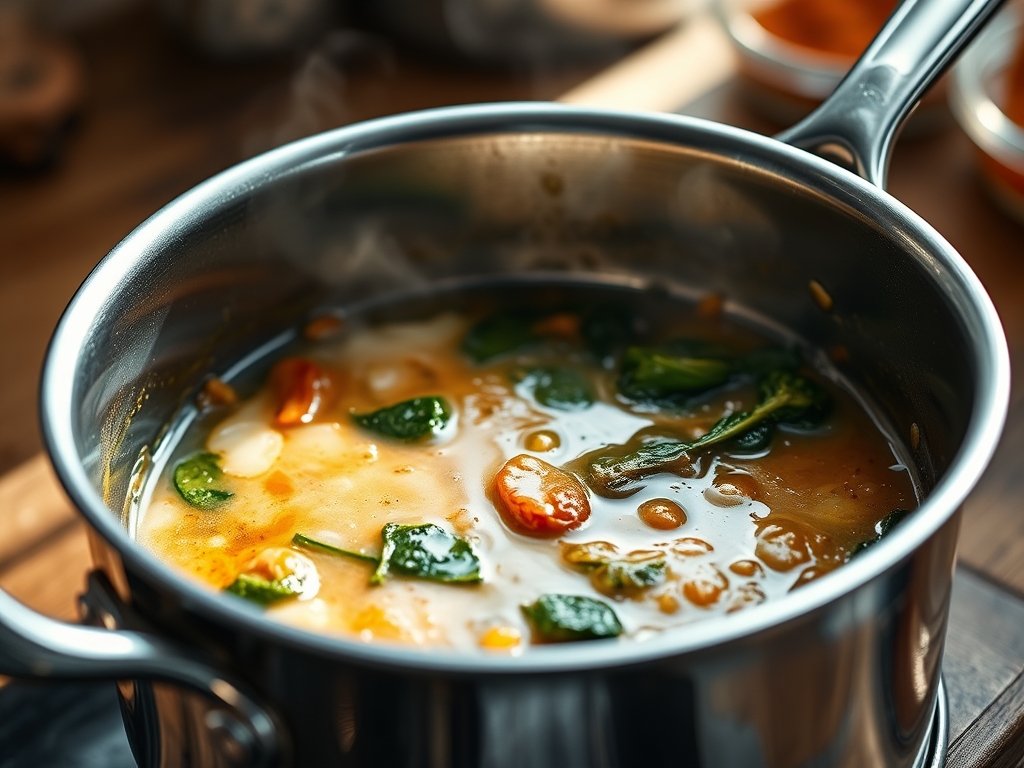
Begin by placing your saucier over medium-low heat. Add the olive oil and the sliced garlic. You are not looking to brown the garlic; you are looking to infuse the lipid base. Use a digital scale to ensure your oil-to-leaf ratio is precise. Once the garlic becomes fragrant and translucent, increase the heat to medium-high.
Pro Tip: This stage is about building a flavor foundation. By slowly heating the garlic in the oil, you release essential oils that will coat every leaf, creating a barrier that helps prevent the spinach from releasing too much internal moisture too quickly.
2. The Volumetric Collapse
Add the spinach in three distinct batches. Use a pair of silicone-tipped tongs to turn the leaves constantly. This is not a passive steam; it is an active aeration process. The goal is to expose every leaf surface to the heated oil and the residual moisture on the leaves.
Pro Tip: Professional chefs use a bench scraper to quickly move chopped aromatics, but for the spinach, your tongs are your primary tool. Constant movement ensures that the leaves at the bottom do not overcook while the top remains raw.
3. Flash Steaming and Lid Management
Once the volume has reduced by half, add a teaspoon of water or dry white wine and immediately cover the pan with a tight-fitting lid for exactly 45 seconds. This creates a high-pressure steam environment that finishes the internal cooking of the stems without turning the leaves to paste.
Pro Tip: This is the "Flash Point." The steam penetrates the tough cellulose of the stems. If you exceed 60 seconds, you risk the degradation of chlorophyll into pheophytin, which turns the spinach a dull, unappetizing olive-drab color.
4. The Final Emulsification and Seasoning
Remove the lid and kill the heat. The spinach should be bright green and slightly shrunken. Add your sea salt and red pepper flakes. Toss vigorously to render any remaining liquid into a light, viscous glaze that clings to the leaves. Finish with the lemon juice just before plating.
Pro Tip: Adding salt too early draws out water through osmosis, leading to a soggy result. By salting at the end, you maintain the "pop" of the leaf while ensuring the seasoning sits on the surface for maximum impact.
Section B: Prep & Timing Fault-Lines:
The most common human error is the "set it and forget it" mentality. Spinach has a thermal window of about 30 seconds between "perfectly wilted" and "molecularly destroyed." If your timing is off, the greens will shed their water, leaving you with a puddle in the pan. Another fault-line is overcrowding. If the pan is too small, the bottom layer will boil in its own juices while the top remains raw. Always use a wide-bottomed pan to maximize surface area contact.
THE VISUAL SPECTRUM
Section C: Thermal & Visual Troubleshooting:
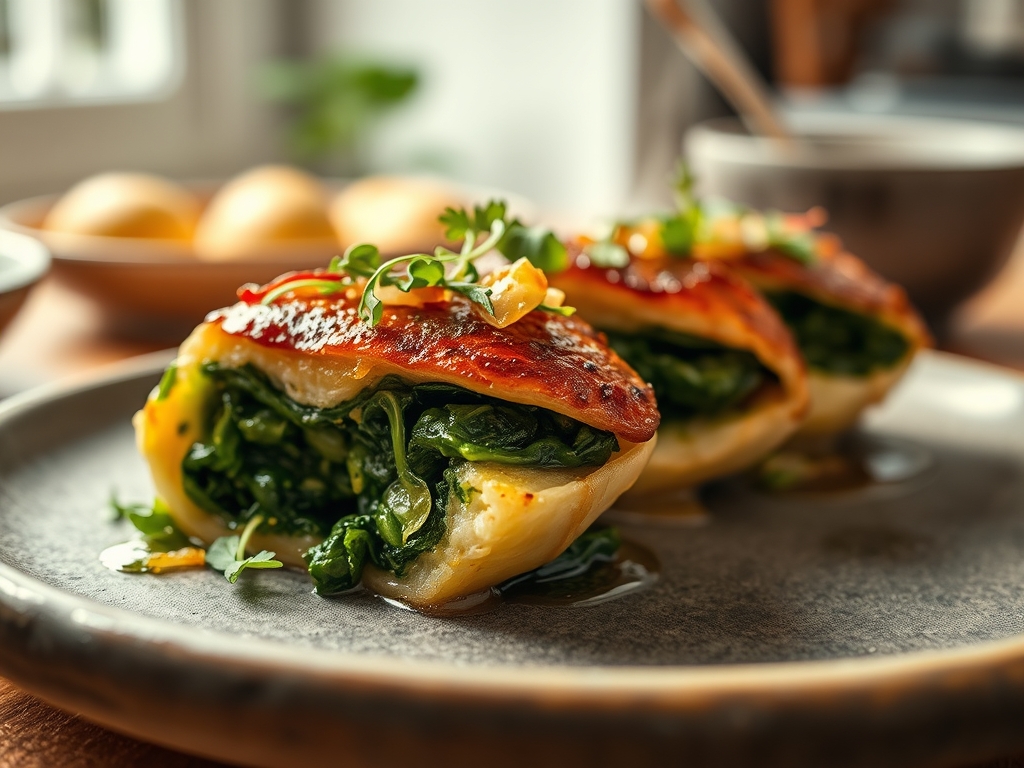
Look closely at the Masterclass photo above. Notice the "glistening" effect? That is the result of proper lipid coating. If your spinach looks matte or dry, you have either under-oiled or over-steamed, allowing the moisture to evaporate and the leaves to toughen. If you see brown edges, your heat was too high or your tossing was infrequent. The ideal visual cue is a "flexible structuralism" where the leaf is soft enough to fold over a fork but still possesses enough ribbing to hold its shape. If the color has shifted toward a brownish-grey, you have over-acidified or over-cooked the batch. Immediate immersion in an ice bath can save the color if you catch it early, but the texture will be compromised.
THE DEEP DIVE
Macro Nutrition Profile
A standard serving of this audited spinach provides approximately 40 calories, 3g of protein, 2g of fiber, and 3g of healthy fats. It is a powerhouse of Vitamin K, Vitamin A, and Manganese. The addition of healthy lipids (olive oil) is not just for flavor; it is a technical necessity for the absorption of fat-soluble vitamins.
Dietary Swaps (Vegan/Keto/GF)
This protocol is naturally Vegan, Keto, and Gluten-Free. For an umami-heavy variation, you may deglaze with a teaspoon of liquid aminos or soy sauce instead of lemon juice. To increase the fat content for strict Keto protocols, a small pat of grass-fed butter can be swirled in during the final emulsification phase.
Meal Prep & Reheating Science
Spinach is notoriously difficult to reheat because the secondary heating further breaks down the cell walls. To maintain molecular structure, do not microwave. Instead, flash-heat the spinach in a dry pan over high heat for 60 seconds. This evaporates any "weeping" moisture and restores the viscous coating of the oil.
THE KITCHEN TABLE
Why does my spinach always taste metallic?
That is the oxalic acid reacting with your palate. Ensure you are using a non-reactive pan and finishing with an acid like lemon juice or vinegar to balance the pH levels and mask the bitterness.
Can I use frozen spinach for this audit?
Negative. Frozen spinach has already undergone blanching, which destroys the cellular structure we are trying to preserve. Frozen product is suitable for dips or fillings, but not for a high-infrastructure wilted green dish.
How do I prevent a puddle of water on the plate?
Spinach is 90 percent water. To avoid the puddle, ensure your heat is high enough to evaporate excess moisture and never salt the leaves until the very final second of the cooking process.
Is it necessary to remove the stems?
For baby spinach, the stems are tender and provide structural contrast. For mature "savoy" spinach, the stems are fibrous and should be removed or cooked for 2 minutes longer than the leaves themselves.