Listen closely because the humble Brussels sprout is not just a vegetable; it is a compact, multi-layered structural challenge that most home cooks fail to engineer correctly. We are dealing with a dense, sulfurous core protected by delicate, moisture-rich leaves that are prone to either total dehydration or soggy mediocrity. To achieve the perfect Roasted Brussels Sprouts, you must master the delicate balance between the external Maillard reaction and internal steam retention. We want a piquant, deeply caramelized exterior that shatters upon impact, revealing a tender, buttery interior that has been perfectly seasoned by osmotic pressure. This is culinary infrastructure at its finest. Forget those boiled, gray spheres of sadness from your childhood. We are building a flavor profile that utilizes high-intensity thermal energy to transform bitter glucosinalates into sweet, nutty compounds. If you are ready to stop "cooking" and start "executing," then grab your digital scale and clear your station. We are about to optimize the most misunderstood brassica in the botanical kingdom.
THE DATA MATRIX
| Metric | Specification |
|---|---|
| Prep Time | 15 Minutes |
| Execution Time | 25 Minutes |
| Yield | 4 Servings |
| Complexity | 4 / 10 |
| Estimated Cost per Serving | $1.25 USD |
THE GATHERS
Ingredient Protocol:
- 680g / 1.5 lbs Fresh Brussels Sprouts (uniform size)
- 45ml / 3 tbsp Extra Virgin Olive Oil (high smoke point preferred)
- 5g / 1 tsp Diamond Crystal Kosher Salt
- 2g / 0.5 tsp Freshly Cracked Black Pepper
- 15ml / 1 tbsp Aged Balsamic Vinegar (viscous consistency)
- 30g / 2 tbsp Grated Parmigiano-Reggiano
- 1g / 0.25 tsp Red Pepper Flakes (optional for heat)
Section A: Ingredient Quality Audit:
Sub-par raw materials will compromise your structural integrity. If your sprouts feel spongy or display yellowing outer leaves, they have lost critical cellular moisture. Technical Fix: Trim the oxidized base and soak the sprouts in an ice-water bath for ten minutes to re-pressurize the cell walls through turgor pressure. If your olive oil smells metallic or "crayony," it has oxidized. Discard it. Only use fats that can withstand 400 degrees Fahrenheit without breaking down into acrolein, which produces a bitter, acrid smoke.
THE MASTERCLASS
1. Geometric Standardization
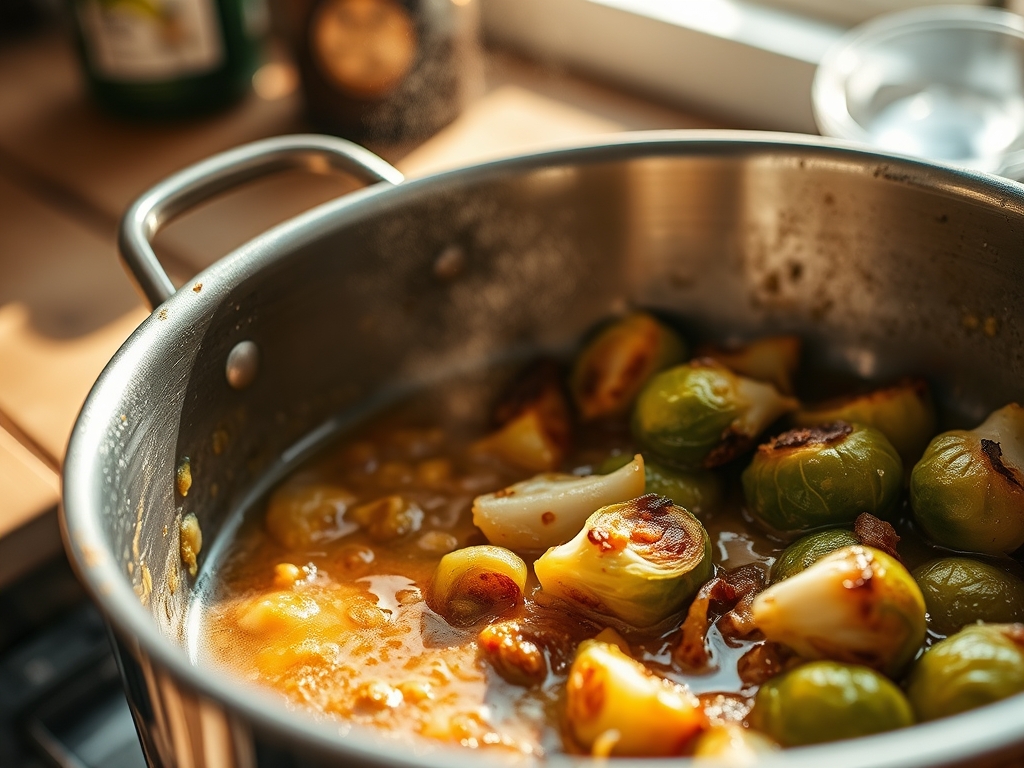
Use a sharp chef's knife or a bench scraper to organize your workspace. Trim the woody stem end and halve each sprout vertically through the core. Keeping the core intact is vital; it acts as the structural anchor for the leaves.
Pro Tip: Uniformity is the soul of consistency. Use your digital scale to ensure your batches are equal in mass so they reach thermal equilibrium at the same moment.
2. The Lipid Coating
In a large stainless steel mixing bowl, toss the sprouts with the olive oil, salt, and pepper. You are looking for total surface saturation. The oil acts as a heat-transfer medium, ensuring the hot air of the oven reaches every crevice of the leaves to render out moisture.
Pro Tip: Do not crowd the bowl. Use your hands to massage the oil into the leaves; this ensures the seasoning is distributed via a thin, viscous film rather than in concentrated pockets.
3. Thermal Positioning
Preheat your heavy-gauge baking sheet inside a 425 degree Fahrenheit oven. Carefully remove the hot tray and place the sprouts cut-side down. This immediate contact initiates the Maillard reaction, creating a deep brown crust before the interior overcooks.
Pro Tip: Professional kitchens use heavy rimmed sheet pans because they hold significant thermal mass. This prevents the oven temperature from crashing when you introduce the cold vegetables.
4. The High-Heat Interval
Roast for 20 to 25 minutes. Do not disturb them for the first 15 minutes. We need sustained conductive heat to create that "char" infrastructure. At the 20-minute mark, use a metal spatula to flip one or two. They should be dark amber, not black.
Pro Tip: If you notice uneven browning, rotate the pan 180 degrees. Most domestic ovens have "cold spots" that can be mitigated by manual rotation.
5. The Acidic Finish
Once removed from the oven, immediately transfer the sprouts to a saucier or clean bowl and drizzle with the balsamic vinegar. The residual heat will cause the vinegar to infuse into the charred leaves, balancing the earthy bitterness with bright acidity.
Pro Tip: This is the "glazing" phase. The sugars in the balsamic will slightly caramelize against the hot sprouts, creating a glossy, professional sheen.
Section B: Prep & Timing Fault-Lines:
The most common failure is "The Steam Trap." If you wash your sprouts and do not dry them completely before oiling, you are essentially boiling them in a bag of oil. Water creates a steam barrier that prevents the temperature from rising above 212 degrees Fahrenheit, meaning you will never achieve a char. Always use a salad spinner or lint-free towels to ensure the exterior is bone-dry.
THE VISUAL SPECTRUM
Section C: Thermal & Visual Troubleshooting:
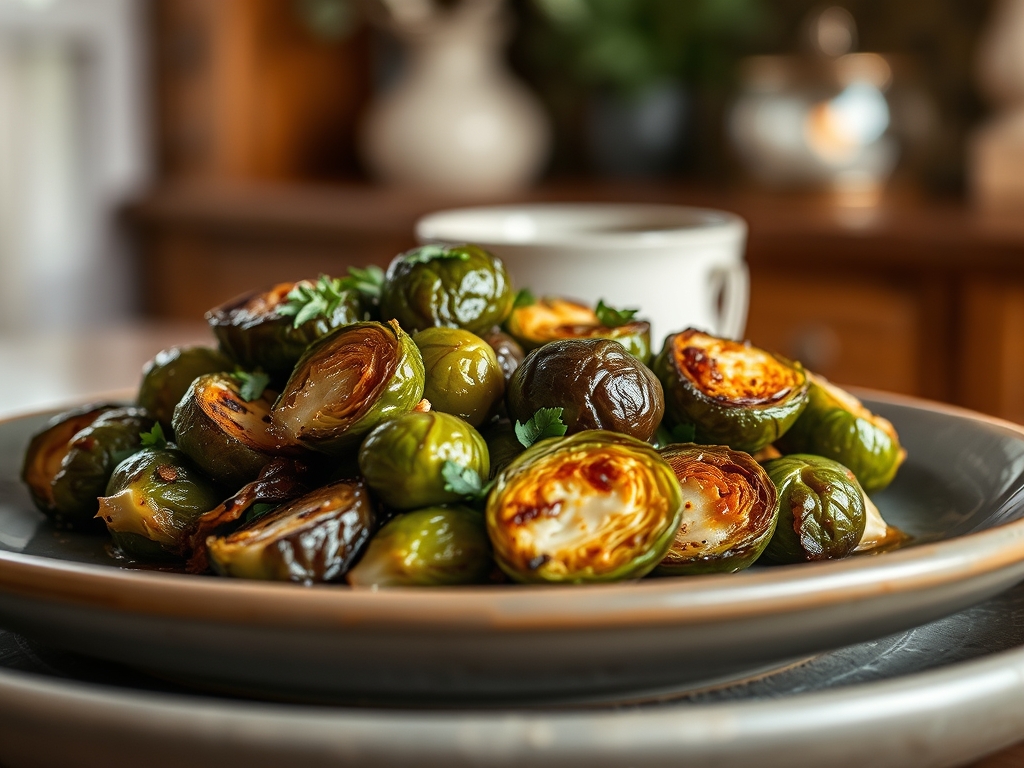
Look at the Masterclass photo above. Notice the "lacquered" appearance of the outer leaves. If your sprouts look dull or "dusty," you likely under-indexed on the fat content or over-indexed on the salt too early, drawing out too much moisture. If the leaves are burnt but the centers are hard, your oven temperature was too high; the exterior carbonized before the heat could penetrate the core. Aim for that specific "mahogany" hue seen in the reference image. This indicates that the natural sugars have undergone pyrolysis without turning into bitter carbon.
THE DEEP DIVE
Macro Nutrition Profile:
A standard serving of Roasted Brussels Sprouts provides approximately 150 calories, 9g of healthy fats, 12g of carbohydrates, and 4g of fiber. They are a powerhouse of Vitamin K and Vitamin C, which remain relatively stable if not subjected to prolonged boiling.
Dietary Swaps:
- Vegan: Omit the Parmigiano-Reggiano and substitute with nutritional yeast for a similar umami profile.
- Keto: Ensure the balsamic vinegar is a dry variety or substitute with a squeeze of fresh lemon juice to keep net carbs low.
- GF: Naturally gluten-free, but ensure your spices are processed in a certified facility.
Meal Prep & Reheating Science:
To maintain the molecular structure when reheating, avoid the microwave at all costs. Microwaves vibrate water molecules, which will turn your crisp sprouts into a mushy mess. Instead, use an air fryer or a hot skillet to "re-crisp" the exterior lipids. This re-activates the fats and restores the textural contrast between the exterior char and interior moisture.
THE KITCHEN TABLE
Why are my sprouts bitter?
Bitterness usually stems from undercooking the core or using old produce. High-heat roasting converts bitter compounds into sugars. If they are still bitter, increase your balsamic glaze or add a tiny pinch of sugar to the seasoning.
Can I use frozen sprouts?
Frozen sprouts have compromised cell walls due to ice crystal formation. They will never achieve the same structural "shatter" as fresh ones. If you must use them, roast them at 450 degrees Fahrenheit directly from frozen.
What is the best oil to use?
Avoid butter for the initial roast; the milk solids will burn. Use Extra Virgin Olive Oil or Avocado Oil. If you want a buttery flavor, toss a cold knob of butter with the sprouts after they leave the oven.
How do I get the leaves to stay on?
Some leaf separation is actually desirable. Those loose leaves become "sprout chips" that provide a fantastic textural counterpoint to the dense hearts. Don't fight the physics; embrace the crunch of the stray leaves.