The kitchen is a battlefield of thermodynamics; every morning, millions of amateur cooks face the brutal reality of the pan with nothing but hope and a spatula. We are moving beyond the realm of breakfast and into the high-stakes world of Fried Egg Dynamics. Imagine the scene: a cold, clinical skillet meets the sudden, violent introduction of high-quality lipids. The goal is a structural masterpiece featuring a translucent, viscous yolk suspended within a halo of perfectly coagulated, lace-edged whites. If you fail, you are left with a rubbery, sulfurous puck that offends the very concept of culinary infrastructure. This is not about flipping a protein; it is about managing the precise moment where liquid proteins undergo a phase shift into a solid state without sacrificing their delicate moisture content. We are auditing the sizzle, the spread, and the structural integrity of the albumen. Strap in, because we are about to optimize your morning routine with the surgical precision of a Michelin-starred laboratory.
THE DATA MATRIX
| Metric | Specification |
|---|---|
| Prep Time | 2 Minutes |
| Execution Time | 3 Minutes |
| Yield | 1 Serving |
| Complexity (1-10) | 4 |
| Estimated Cost per Serving | $0.85 USD |
THE GATHERS
Ingredient Protocol:
- 2 Large Pasture-Raised Eggs (approx. 110g / 4 oz)
- 15ml / 1 tbsp Unsalted European-Style Butter (82% Butterfat)
- 1.5g / 0.25 tsp Flaky Sea Salt
- 0.5g / 0.125 tsp Freshly Cracked Tellicherry Peppercorns
- 5ml / 1 tsp Neutral High-Smoke Point Oil (Optional for "Lace" effect)
Section A: Ingredient Quality Audit:
If your eggs are watery and the whites spread across the pan like a spilled drink, your raw materials lack structural density. This usually indicates aged eggs where the chalazae has weakened. To fix this, use a fine-mesh sieve to drain the thin, watery portion of the white before cooking. If your butter burns instantly, your heat management is flawed; the milk solids are scorching before the proteins can set. Switch to clarified butter or a blend of oil and butter to raise the smoke point while maintaining that piquant dairy flavor.
THE MASTERCLASS
1. Thermal Priming and Lipid Distribution
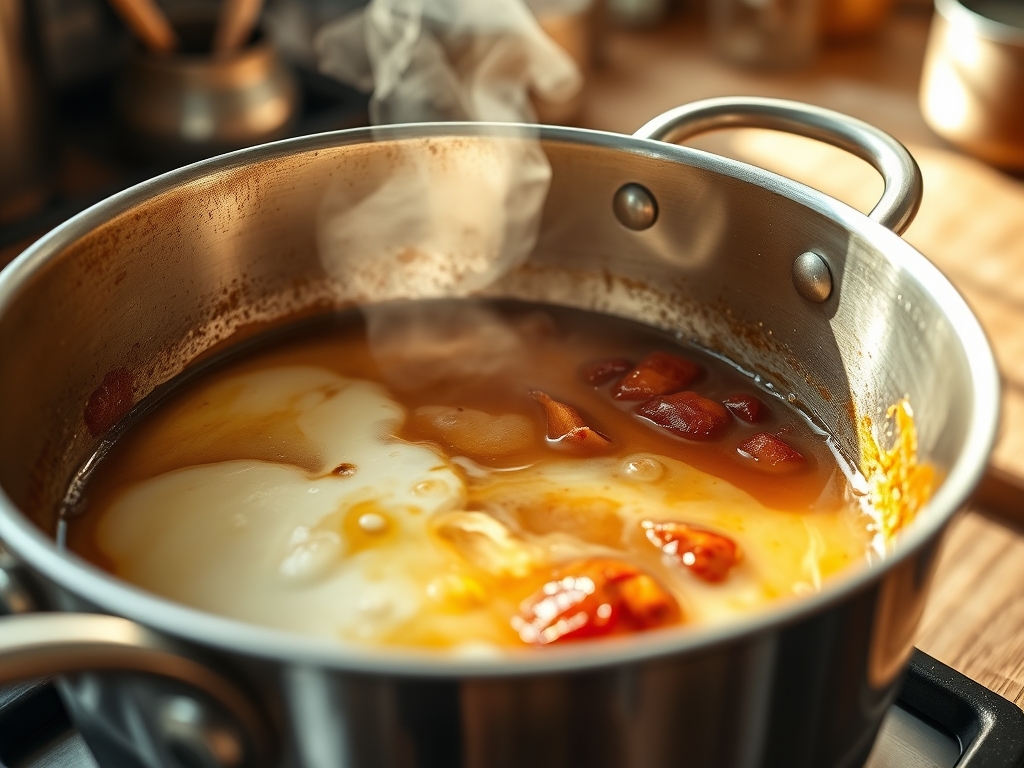
Begin by placing your heavy-bottomed carbon steel skillet or non-stick saucier over medium-low heat. Add the butter and monitor the melt. You are looking for the "foaming" stage where water evaporates and the milk solids begin to dance.
Pro Tip: Use an infrared thermometer to ensure the surface temperature sits between 255F and 280F. This range allows for the Maillard reaction to begin at the edges without the center becoming a desiccated wasteland.
2. The Controlled Descent
Crack each egg into a small ramekin first rather than directly into the pan. This allows you to inspect for shell fragments and ensures a centralized drop. Gently slide the eggs into the center of the foaming butter.
Pro Tip: Use a digital scale to weigh your eggs if you are batch-cooking; uniformity in mass ensures uniformity in thermal absorption. A consistent weight prevents one egg from overcooking while the other remains snotty.
3. Albumen Management
As the whites begin to set, use a bench scraper or a silicone spatula to gently nudge the edges inward if they spread too far. This maintains a thick "cushion" of white around the yolk, protecting the delicate membrane from direct heat.
Pro Tip: The science of Fried Egg Dynamics dictates that the white cooks at a lower temperature than the yolk. By keeping the white concentrated, you create a thermal buffer that keeps the yolk viscous and liquid.
4. The Basitng Maneuver
Tilt the pan slightly to pool the hot butter at the bottom edge. Use a spoon to rapidly bathe the whites (avoiding the yolk) with the hot lipid. This creates micro-bubbles that aerate the edges, leading to a crispy, "frizzled" texture.
Pro Tip: This technique, known as "arrosé," uses the butter to cook the top of the whites simultaneously with the bottom, ensuring no raw slime remains around the yolk circumference.
Section B: Prep & Timing Fault-Lines:
The most common human error is "The Panic Flip." If you feel the need to flip a sunny-side-up egg, your base heat is too high. Lower the flame and cover the pan with a lid for thirty seconds to use residual steam to set the top. If the yolk breaks upon entry, your "drop height" was too significant; minimize the distance between the ramekin and the pan surface to preserve the yolk's tension.
THE VISUAL SPECTRUM
Section C: Thermal & Visual Troubleshooting:
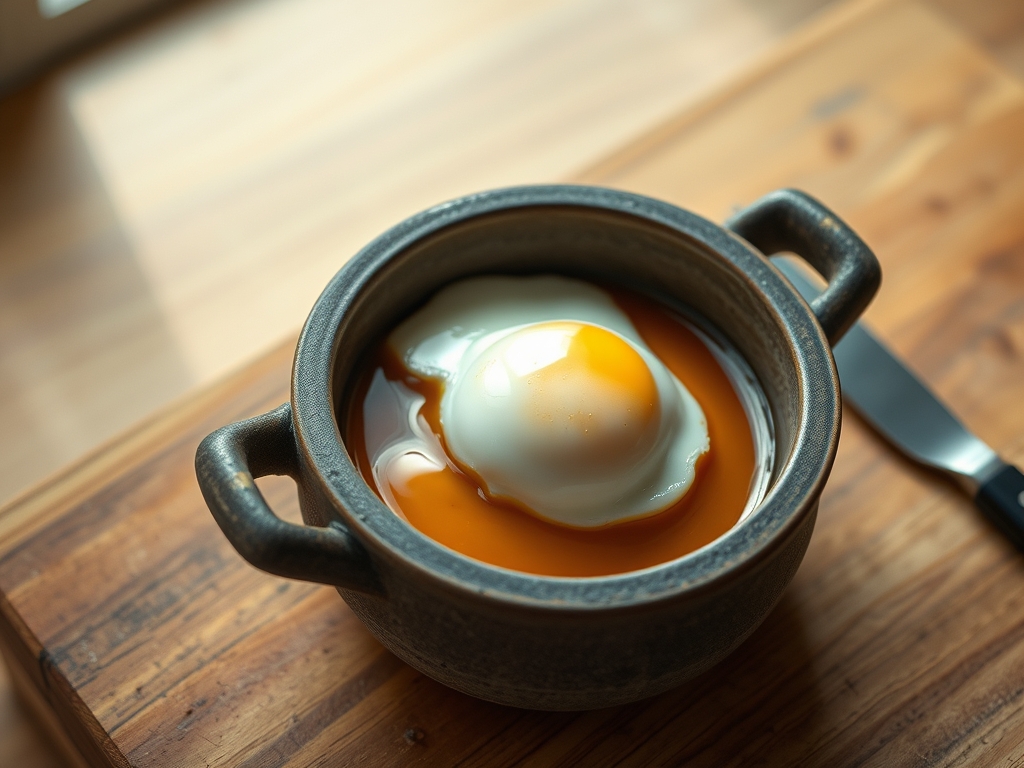
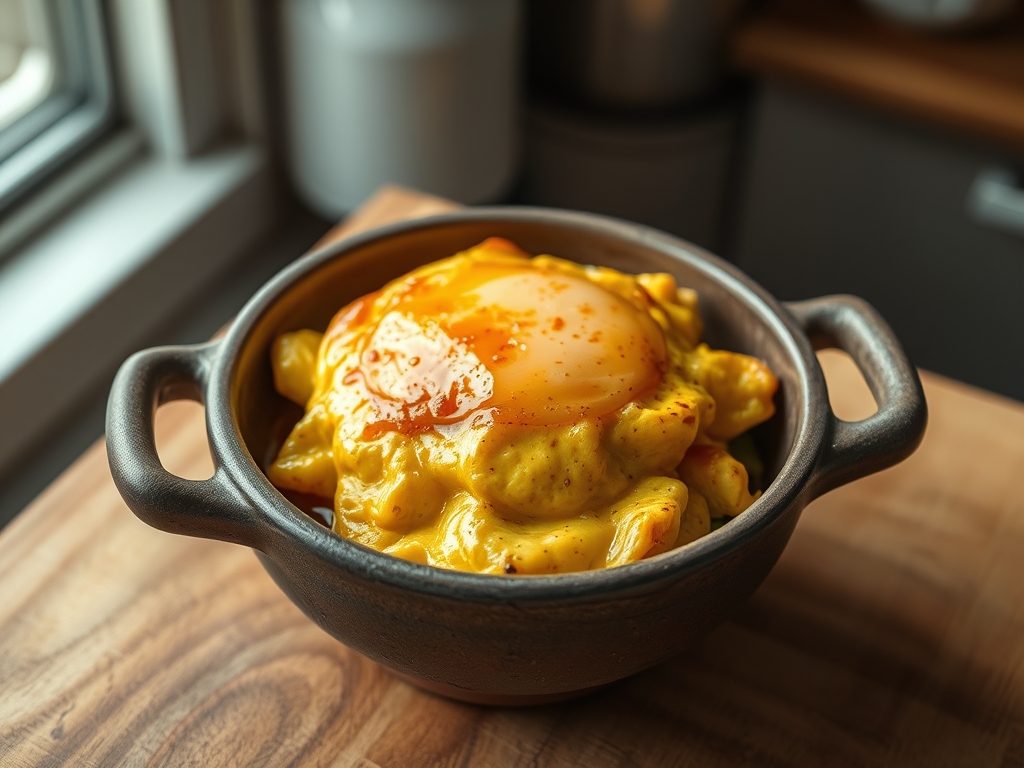
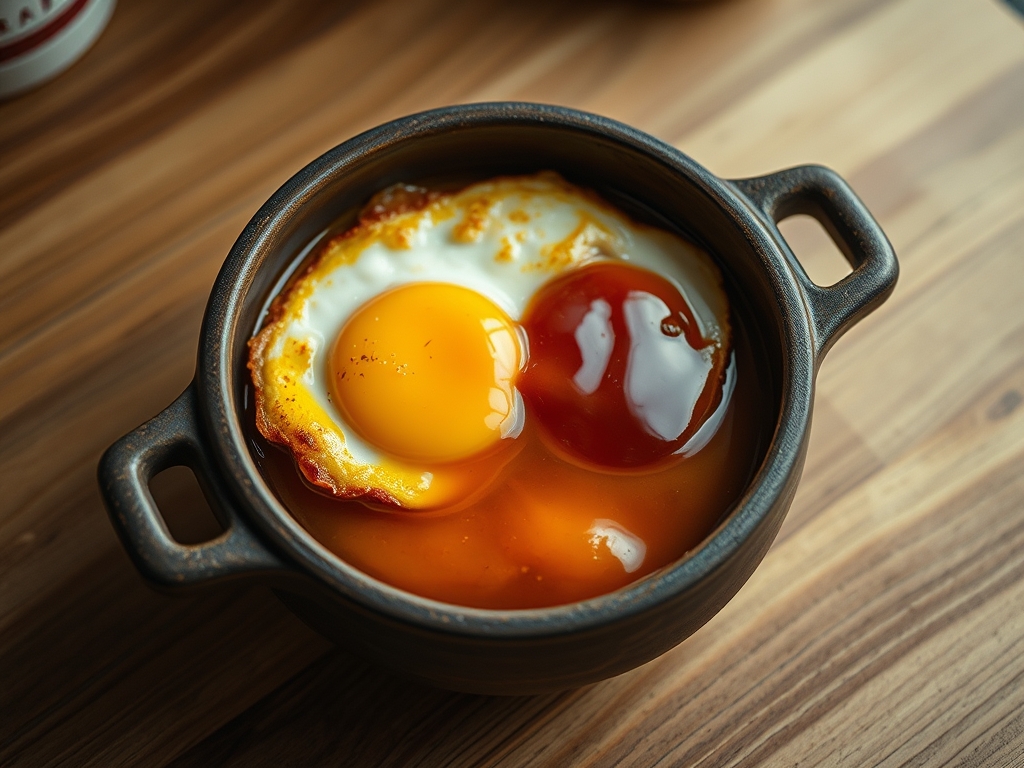
Referencing the Masterclass photo, the ideal specimen displays a "halo" effect. If your egg looks dull or matte, you have under-used your lipids; the egg should have a glossy, reflective sheen from the butter infusion. If the edges are brown but the yolk is cloudy, you have over-steamed the dish, hiding the vibrant orange hue. To fix a "rubbery" texture, ensure you are not using a thin aluminum pan which creates hot spots; a heavy base is required for even conduction. The visual cue for perfection is a yolk that wobbles like jelly when the pan is shaken, surrounded by a white that is opaque and firm but not "bubbly" or cratered.
THE DEEP DIVE
Macro Nutrition Profile:
A standard two-egg serving provides approximately 14g of high-bioavailability protein and 10g of fat. The micronutrient density is high, featuring Choline, Lutein, and Vitamin D. To maintain the molecular structure during consumption, season only at the final millisecond to prevent salt from drawing out moisture prematurely.
Dietary Swaps:
- Vegan: Use a pressurized silken tofu slurry seasoned with "Kala Namak" (black salt) to mimic the sulfurous profile of poultry eggs.
- Keto: Increase the lipid conduction by adding 15ml of heavy cream to the pan once the whites have set.
- GF: Naturally gluten-free; ensure any "crispy" additives like shallots are not dredged in flour.
Meal Prep & Reheating Science:
Fried eggs are notoriously difficult to reheat because the proteins "tighten" and become rubbery. If you must, use a sous-vide bag at 140F for ten minutes to gently bring the yolk back to a viscous state without further denaturing the white. Avoid the microwave at all costs; it will turn your yolk into a kinetic projectile.
THE KITCHEN TABLE
Why does my yolk always pop?
Usually, this is due to thermal shock or a rough crack. Ensure eggs are closer to room temperature and use a flat surface to crack the shell, preventing internal shards from piercing the delicate yolk membrane during the drop.
Can I use olive oil instead of butter?
Absolutely. Olive oil provides a different lipid profile that produces a "shattered glass" crispness on the bottom. It lacks the milk solids for browning, so expect a cleaner, more translucent aesthetic and a more piquant herbal finish.
What is the "water-drop" method?
Adding a teaspoon of water and covering the pan creates localized steam. This is the "cheat code" for perfectly set whites without flipping, though it risks dulling the yolk's vibrant color with a thin layer of cooked protein.
Why are my egg whites gray?
This is often a reaction between the sulfur in the egg and the iron in a poorly seasoned cast-iron skillet. To maintain a pristine white, use a well-seasoned carbon steel pan or a high-quality ceramic non-stick surface.