The scent of rendered fat hitting a white-hot cast iron surface is the siren song of the professional kitchen. It is a chemical symphony where the Maillard reaction dictates the melody. However, the difference between a loose, crumbling mess and a structural masterpiece lies entirely within the realm of Beef Burger Compression. Most amateur cooks treat ground beef like play-dough; they squeeze, mash, and pulverize the muscle fibers until the patty resembles a dense, hockey-puck-shaped tragedy. We are here to audit that failure. True burger integrity requires a calculated balance of grind size, fat distribution, and mechanical pressure. You are not just making dinner; you are managing a protein-lipid matrix. When you master the physics of the bind, you unlock a texture that is simultaneously tender and resilient. This is the infrastructure of flavor. We are looking for a bite that yields to the tooth but holds its shape against the weight of piquant sauces and heavy toppings. Let us calibrate your technique and eliminate the structural deficits of your current grilling protocol.
THE DATA MATRIX
| Metric | Specification |
|---|---|
| Prep Time | 20 Minutes |
| Execution Time | 10 Minutes |
| Yield | 4 Substantial Patties |
| Complexity (1-10) | 4 |
| Estimated Cost per Serving | $4.50 USD |
THE GATHERS
Ingredient Protocol:
- 680g / 1.5 lbs Prime Black Angus Chuck (80/20 lean-to-fat ratio)
- 15ml / 1 tbsp Cold rendered beef tallow or unsalted butter
- 10g / 2 tsp Coarse Kosher salt
- 5g / 1 tsp Freshly cracked black pepper
- 4 Brioche buns (high-egg content for structural support)
- 30ml / 2 tbsp Neutral high-smoke point oil (Avocado or Grapeseed)
Section A: Ingredient Quality Audit:
If your raw beef appears gray or "slick" to the touch, your protein strands have begun to denature; discard immediately. Sub-par fat content is the primary cause of structural collapse. If your grind is too lean (90/10), the patty will lack the "glue" provided by rendering lipids. Technical fix: Grate 30g of frozen unsalted butter into the mix to artificially inflate the fat percentage. This ensures the patty remains moist while the Beef Burger Compression creates the necessary tension. Avoid pre-salted meat at all costs. Salt is a powerful surfactant that dissolves myosin; adding it too early turns your burger into a rubbery sausage.
THE MASTERCLASS
1. The Cold-Chain Calibration
Place your stainless steel mixing bowl and your meat into the freezer for 15 minutes before handling. Use a digital scale to portion the meat into exactly 170g / 6oz mounds. Do not knead the meat.
Pro Tip: Keeping the fat in a solid state is vital. If the fat reaches room temperature, it becomes viscous and smears across the protein fibers, preventing a clean sear and ruining the internal aeration.
2. The Architectural Bind
Gently shape the mounds into discs using a bench scraper to maintain clean edges. Apply Beef Burger Compression by pressing a small indentation into the center of each patty with your thumb.
Pro Tip: This "dimple" compensates for the muscle fibers contracting and bulging upward during the cook. By engineering a concave center, you ensure a perfectly flat surface for optimal contact with the heat source.
3. Surface Tension and Seasoning
Only season the exterior of the patties seconds before they hit the heat. Use a steady hand to infuse the surface with a heavy crust of salt and pepper.
Pro Tip: Professional chefs use a "high-drop" seasoning technique (releasing salt from 12 inches above) to ensure even distribution. This creates a uniform crust that traps internal juices during the rendering process.
4. The Thermal Impact
Heat your heavy-bottomed skillet or saucier until the oil begins to shimmer and reach its flash point. Lay the patties away from you to avoid oil splatter. Press down firmly once with a heavy spatula to maximize surface contact.
Pro Tip: This initial press is the only time you should apply downward force. It facilitates the Maillard reaction by ensuring every millimeter of the meat surface undergoes rapid browning and caramelization.
Section B: Prep & Timing Fault-Lines:
The most common human error is "over-handling." Every second the meat spends in contact with your warm hands, the fat melts and the structural integrity of the Beef Burger Compression weakens. If you notice the meat sticking to your palms, stop. Chill your hands in ice water and dry them before continuing. Temperature control is your primary tool; if the skillet isn't screaming hot, you are essentially boiling the meat in its own juices rather than searing it.
THE VISUAL SPECTRUM
Section C: Thermal & Visual Troubleshooting:
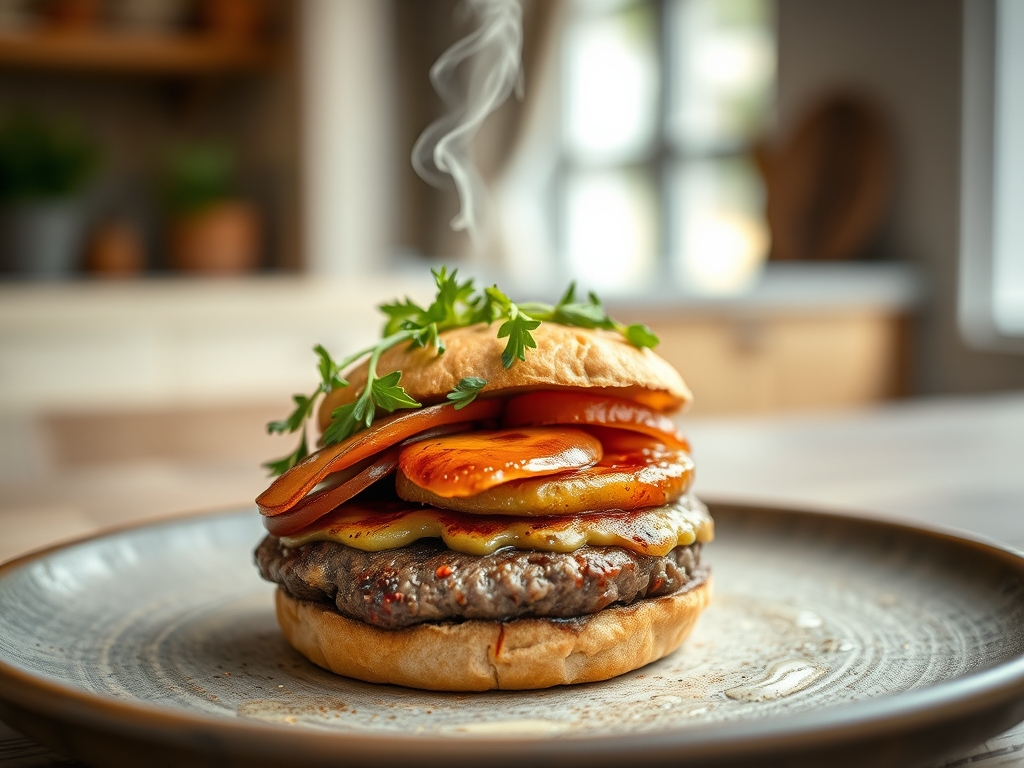
Referencing the Masterclass photo, look for the "crust-to-crumb" ratio. The exterior should be a deep mahogany, not black. If the edges look ragged or "fuzzy," your grind size was too fine, leading to a loss of definition. If the patty has shrunk significantly and looks like a sphere, you neglected the center indentation. Dull, matte colors on the surface indicate a lack of heat; you need that shimmering, reflective sheen of rendered fat to signal a successful sear. If the interior is gray but the exterior is pale, your heat was too low and your cook time was too long.
THE DEEP DIVE
Macro Nutrition Profile:
A standard 170g patty provides approximately 430 calories, 34g of protein, and 32g of fat. While high in saturated fats, the protein density makes it a cornerstone of high-performance diets.
Dietary Swaps:
- Keto: Replace the brioche bun with a large butter-lettuce wrap or a grilled Portobello mushroom cap.
- Vegan: Use a high-quality pea-protein substitute, but add 5ml of liquid smoke to mimic the depth of rendered beef fat.
- GF: Utilize toasted gluten-free buns or a "naked" presentation over a bed of arugula to deglaze the plate with balsamic.
Meal Prep & Reheating Science:
To maintain the molecular structure when reheating, avoid the microwave. The rapid agitation of water molecules turns the fat rubbery. Instead, use a low-temperature oven (120C / 250F) with a splash of beef bone broth in the pan to re-hydrate the protein fibers without breaking the initial sear.
THE KITCHEN TABLE
Why does my burger fall apart on the grill?
You likely over-worked the meat or used a grind that was too lean. Proper Beef Burger Compression requires cold fat to act as a structural adhesive between the protein strands during the initial heat application.
Should I add eggs or breadcrumbs for a better bind?
No. That is a meatloaf, not a burger. A true burger relies on the natural proteins and fat of the beef. If you need fillers, your meat quality or temperature control is the underlying issue.
What is the best way to tell if it is done?
Use an instant-read digital thermometer. For a perfect medium-rare, pull the meat at 52C / 125F. The carry-over cooking will bring it to the ideal 54C / 130F while the meat rests.
Does the type of salt actually matter?
Absolutely. Table salt is too fine and dissolves too quickly, leading to a "cured" texture. Coarse Kosher salt provides the necessary surface area to create a crunchy, savory crust through the Maillard reaction.