Listen to the sound of high-stakes culinary engineering. It is the rhythmic hiss of moisture escaping a pressurized cast-aluminum chamber. It is the violent transformation of a viscous, pale batter into a structural masterpiece of golden-brown architecture. We are not just making breakfast; we are managing a high-output heat exchange. The secret to the perfect crunch lies in the Waffle Iron Thermal profile. When the batter hits the preheated plates, the immediate conduction triggers a rapid expansion of trapped CO2. This creates the internal honeycomb structure while the exterior undergoes a rigorous Maillard reaction. We are looking for that specific, piquant aroma of toasted malt and browned butter. If your iron lacks the thermal mass to maintain temperature upon contact, you end up with a limp, steamed sponge rather than a crisp, geometric lattice. This is about precision. This is about the intersection of fluid dynamics and thermodynamics. Put down the frozen box and step into the laboratory. We are about to render the perfect waffle.
THE DATA MATRIX
| Metric | Specification |
|---|---|
| Prep Time | 15 Minutes |
| Execution Time | 20 Minutes |
| Yield | 6 Large Belgian Waffles |
| Complexity (1-10) | 4 |
| Estimated Cost per Serving | $1.15 |
THE GATHERS
Ingredient Protocol:
- 250g / 2 cups All-purpose flour
- 15g / 1 tbsp Baking powder
- 5g / 1 tsp Fine sea salt
- 30g / 2 tbsp Granulated sugar
- 475ml / 2 cups Whole milk (room temperature)
- 2 Large eggs (separated)
- 115g / 0.5 cup Unsalted butter (melted and cooled)
- 5ml / 1 tsp Pure vanilla extract
Section A: Ingredient Quality Audit:
The most common failure point in waffle infrastructure is the leavening agent. If your baking powder is past its prime, the batter will fail to aerate, resulting in a dense, leaden disc. Test your powder by dropping a pinch into hot water; if it does not fizz violently, discard it. Furthermore, the temperature of your lipids is critical. If you incorporate hot melted butter into cold milk, the fat will solidify into tiny beads. This uneven distribution prevents a proper emulsion. Always ensure your dairy and fats are at a harmonious room temperature before integration to ensure a smooth, viscous consistency.
THE MASTERCLASS
1. Dry Component Integration
Sift your flour, baking powder, salt, and sugar into a large stainless steel mixing bowl. Use a wire whisk to ensure the leavening agents are perfectly distributed throughout the flour matrix.
Pro Tip: Use a digital scale for the flour. Volume measurements are notoriously inaccurate due to compression. Professional bakers know that 250g is always 250g, whereas a "cup" can vary by 20 percent.
2. Lipid and Dairy Emulsification
In a separate saucier or glass bowl, whisk the egg yolks, milk, cooled melted butter, and vanilla. The goal is to create a homogenous liquid phase that will easily coat the starch granules without overworking the gluten.
Pro Tip: The egg yolks act as a natural emulsifier thanks to their lecithin content. Whisking them thoroughly into the milk before adding the dry goods ensures a more stable batter structure.
3. Structural Aeration
In a clean copper or glass bowl, beat the egg whites until stiff peaks form. This introduces millions of tiny air bubbles that will expand during the Waffle Iron Thermal phase, creating that coveted light-as-air interior.
Pro Tip: Use a balloon whisk or a hand mixer for this step. If any yolk contaminates the whites, the fat will prevent the protein chains from trapping air. Clean your tools with a dash of lemon juice to remove any residual grease.
4. The Fold
Gently fold the whipped egg whites into the main batter using a silicone spatula. Do not over-mix. You want to see small streaks of white; this indicates you have preserved the aeration.
Pro Tip: Over-mixing develops gluten, which is the enemy of a tender waffle. Treat the batter with the same respect a structural engineer treats a delicate suspension bridge.
5. Thermal Execution
Preheat your iron until the indicator light signals peak temperature. Ladle the batter into the center, allowing it to flow toward the edges. Close the lid and resist the urge to peek.
Pro Tip: Use a bench scraper to clean any overflow immediately. The steam escaping the sides is your primary indicator of progress. When the steam stops, the internal moisture has been rendered, and the waffle is ready.
Section B: Prep & Timing Fault-Lines:
Timing is the silent killer of crispness. If you let the batter sit for more than thirty minutes, the chemical leaveners will exhaust their CO2 production, leading to a flat product. Temperature control is equally vital. If the iron is too cold, the batter will stick to the plates because the proteins have not seared quickly enough to release. If it is too hot, the exterior will carbonize before the interior has set. Use an infrared thermometer to verify your iron reaches at least 375 degrees Fahrenheit (190 Celsius) before the first pour.
THE VISUAL SPECTRUM
Section C: Thermal & Visual Troubleshooting:
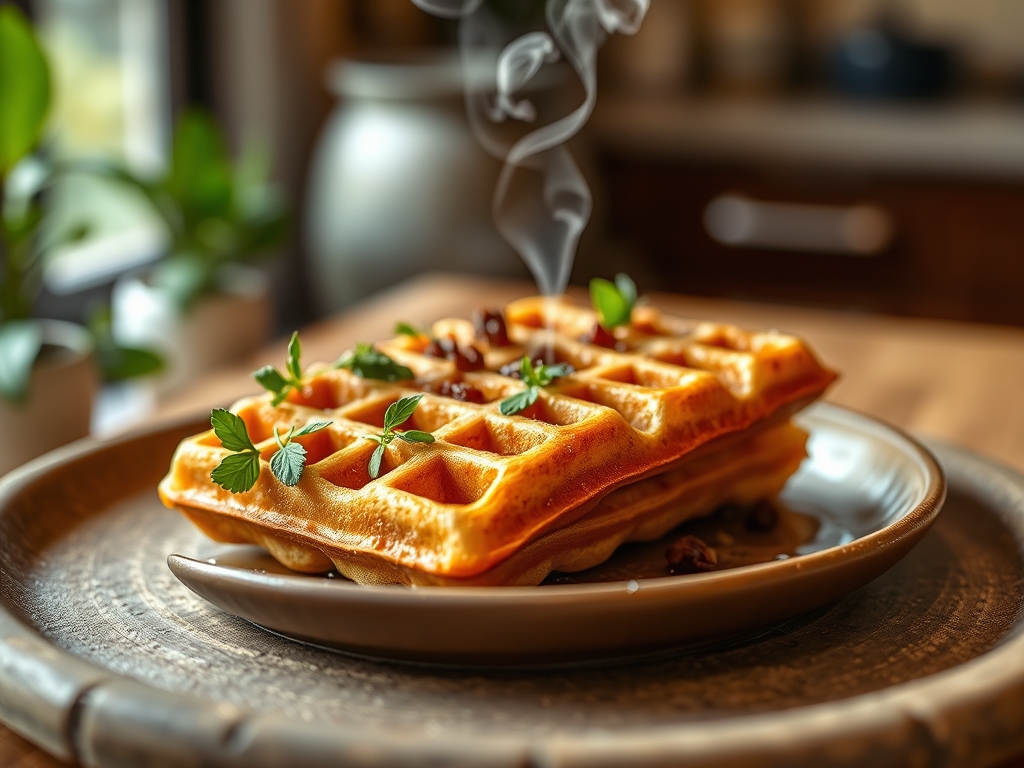
Referencing the Masterclass photo, notice the deep, mahogany-colored ridges and the pale, tender pockets. This contrast is the hallmark of proper dual-sided conduction. If your waffles are a uniform, pale yellow, your Waffle Iron Thermal output is too low. Increase the heat setting or allow more recovery time between batches. If the edges are frayed or lacy, your batter is too thin; whisk in an extra tablespoon of flour to increase viscosity. Dull, matte surfaces usually indicate a lack of fat. Ensure your iron is lightly seasoned or increase the butter content in the batter to help the exterior fry against the metal plates.
THE DEEP DIVE
Macro Nutrition Profile:
A standard serving provides approximately 350 calories, 18g of fat, 42g of carbohydrates, and 8g of protein. While calorie-dense, the high fat and protein content provide sustained energy compared to simple sugary cereals.
Dietary Swaps:
For a vegan alternative, substitute the milk with unsweetened almond milk and use "flax eggs" (ground flaxseeds mixed with water). For a Gluten-Free version, a high-quality 1-to-1 rice flour blend works well, though you may need to add 5g of xanthan gum to maintain structural integrity. Keto enthusiasts can utilize almond flour and erythritol, though the Maillard reaction will be less pronounced.
Meal Prep & Reheating Science:
To maintain the molecular structure for later consumption, under-bake the waffles slightly and freeze them in a single layer. To reheat, use a toaster or a convection oven at 400 degrees Fahrenheit. This flashes the surface moisture, re-crisping the exterior without drying out the interior crumb. Never use a microwave; it vibrates water molecules throughout the bread, resulting in a rubbery, steamed texture.
THE KITCHEN TABLE
Why are my waffles soft instead of crunchy?
The most likely culprit is trapped steam. If you stack hot waffles, the residual heat creates moisture that softens the crust. Always place finished waffles on a wire cooling rack to allow air circulation.
Can I make the batter the night before?
You can mix the dry and wet ingredients separately. However, do not combine them or whip the egg whites until you are ready to cook. The chemical reactions and aeration are highly time-sensitive.
My waffles are sticking to the iron. Help!
This is usually a temperature issue or a lack of fat. Ensure the iron is fully preheated. If problems persist, lightly brush the plates with a high-smoke-point oil like grapeseed before the first batch.
What is the best way to infuse flavor?
Infuse your melted butter with citrus zest or spices like cinnamon before mixing. This distributes the aromatics evenly throughout the fat phase, ensuring every bite is consistently flavored.