
Stop treating your hors d'oeuvres like a backyard afterthought and start treating them like a high-stakes engineering project. We are moving beyond the realm of mashed sulfur and cheap mustard. Today, we are auditing the very architecture of the yolk. We are talking about the structural integrity of a lipid-heavy emulsion that must remain viscous yet airy; stable yet melt-in-the-mouth. To achieve the perfect specimen, we must look at the Deviled Egg Data. This is not just a recipe; it is a technical audit of protein denaturation and fat incorporation. If your filling resembles a grainy paste rather than a silk-smooth mousse, you have failed the first law of culinary thermodynamics. We are here to aerate the mundane and infuse every bite with a piquant punch that vibrates across the palate. We are optimizing for texture, torque, and taste. Strap in, because your kitchen is about to become a laboratory of yolk-based excellence.
THE DATA MATRIX
| Metric | Specification |
|---|---|
| Prep Time | 20 Minutes |
| Execution Time | 15 Minutes |
| Yield | 24 Units |
| Complexity (1-10) | 4 |
| Estimated Cost per Serving | $0.22 |
THE GATHERS
Ingredient Protocol:
- 12 Large Grade A Eggs (approx. 600g)
- 120ml / 0.5 cup High-Fat Mayonnaise (homemade preferred)
- 15ml / 1 tbsp Dijon Mustard (smooth, not grainy)
- 5ml / 1 tsp Apple Cider Vinegar
- 2g / 0.5 tsp Smoked Paprika (for the infuse phase)
- 1g / 0.25 tsp Fine Sea Salt
- 0.5g / 0.125 tsp Cayenne Pepper
- 15g / 1 tbsp Fresh Chives (finely minced)
Section A: Ingredient Quality Audit:
The primary failure point in most fillings is the quality of the yolk itself. If your eggs are too fresh, the pH levels make peeling a nightmare, resulting in a mangled albumen. Fix: Use eggs that are at least 7 to 10 days old. If your mayonnaise is too thin, the filling will weep. Fix: Audit your emulsion. If it lacks body, whisk in a teaspoon of Greek yogurt or a dash of xanthan gum to stabilize the matrix. If the mustard is overly acidic, it will curdle the fats. Balance the pH with a microscopic pinch of sugar to stabilize the viscous nature of the yolk mixture.
THE MASTERCLASS
1. The Precision Boil
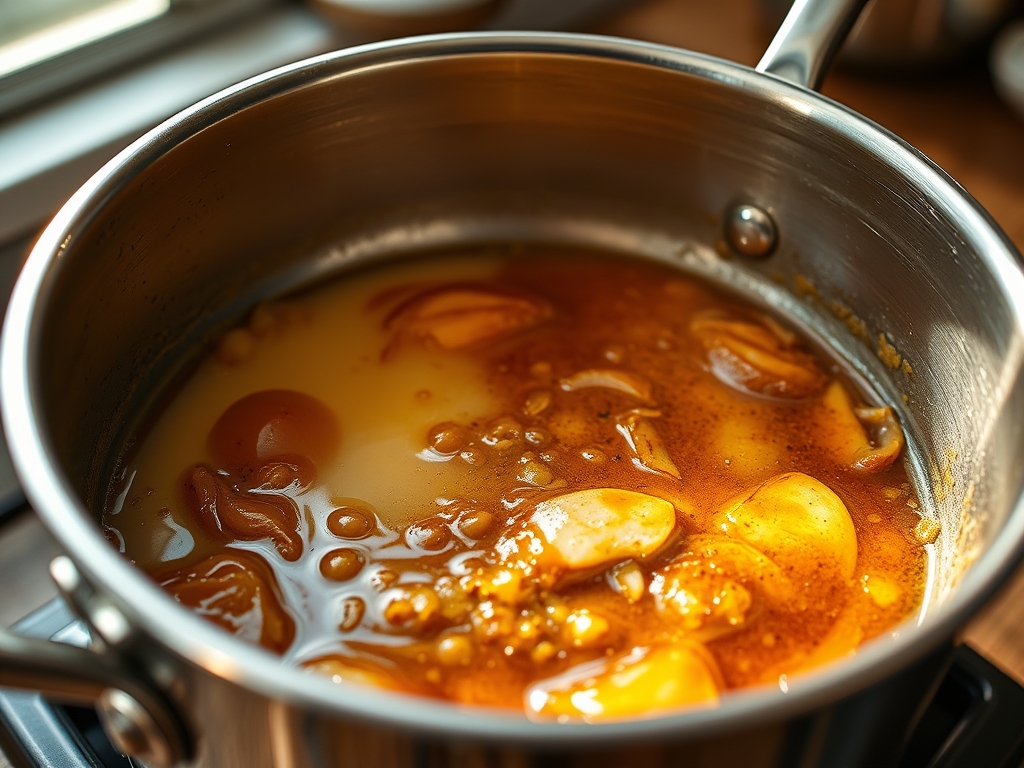
Place eggs in a single layer in a heavy-bottomed saucier. Cover with cold water by one inch. Bring to a rolling boil, then immediately remove from heat and cover. Let stand for exactly 12 minutes.
Pro Tip: This controlled descent in temperature prevents the formation of ferrous sulfide (the green ring). Use a digital scale to ensure your eggs are uniform in size for consistent thermal penetration.
2. The Cryogenic Shock
Immediately transfer eggs to a bath of ice and water for at least 10 minutes. This halts the cooking process and shrinks the protein away from the shell membrane.
Pro Tip: Rapid cooling is the only way to ensure the yolk remains a vibrant, sunny yellow rather than a dull, chalky ochre. Use a bench scraper to gently crack the shells underwater for a cleaner peel.
3. The Molecular Pass-Through
Slice eggs lengthwise and remove yolks. Pass the yolks through a fine-mesh tamis or chinois into a stainless steel bowl.
Pro Tip: This is the secret to professional Deviled Egg Data. Mashing with a fork creates lumps; passing through a screen ensures a microscopic particle size for a perfectly smooth emulsion.
4. Lipid Re-incorporation
Whisk in the mayonnaise, mustard, and vinegar. Use a silicone spatula to fold the ingredients until the mixture is glossy and holds a stiff peak.
Pro Tip: Add the fats in three stages. This allows the yolk proteins to encapsulate the oil droplets effectively, preventing the filling from breaking or "sweating" later.
5. The Aeration Finish
Transfer the mixture to a piping bag fitted with a star tip. Pipe the filling into the whites using a circular motion to build height and volume.
Pro Tip: Do not overfill. Aim for a 1.5:1 ratio of filling to white. Use a digital scale if you want 100 percent uniformity across the entire batch for a professional audit look.
Section B: Prep & Timing Fault-Lines:
Temperature is your enemy. If you pipe warm filling into cold whites, condensation will form at the interface, causing the yolk to slide out. Always ensure both components are at a stabilized room temperature (approx. 20C / 68F) before assembly. If your timing is off and the yolks sit out too long, they will develop a dry "skin." Fix: Cover the yolk paste with plastic wrap pressed directly onto the surface to prevent oxidation.
THE VISUAL SPECTRUM
Section C: Thermal & Visual Troubleshooting:
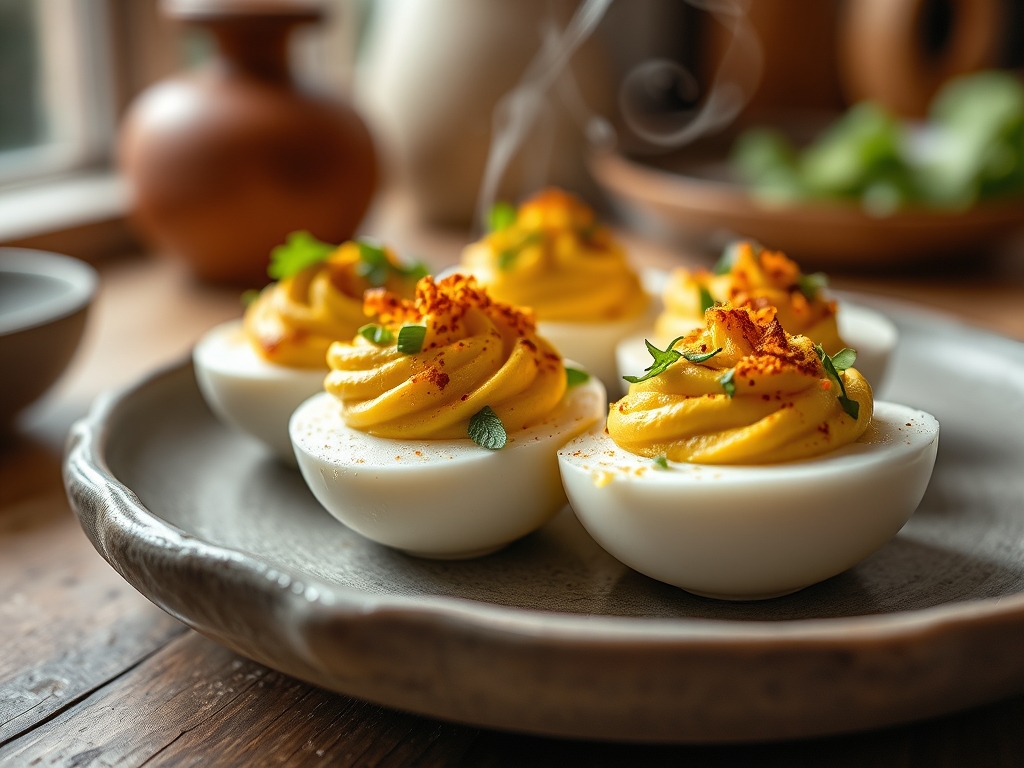
Look at the Masterclass photo above. Notice the sharp definition of the piped ridges and the lack of weeping at the base. If your ridges are melting, your filling lacks structural lipids; add more yolk or a stabilizer. If the color is pale, you likely over-boiled the eggs, leaching out the carotenoids. For a dull finish, a light spray of olive oil can restore the sheen. If your paprika looks like dirt rather than dust, it has oxidized. Always use fresh, vibrant spices to ensure the visual "pop" required for high-level presentation.
THE DEEP DIVE
Macro Nutrition Profile:
Each serving (two halves) contains approximately 140 calories, 12g of fat, 6g of protein, and 1g of carbohydrates. The high fat-to-carb ratio makes this an ideal fuel source for metabolic efficiency.
Dietary Swaps:
- Vegan: Replace eggs with firm silken tofu "whites" and a yolk-mimic made of mashed chickpeas, nutritional yeast, and kala namak (black salt) for that sulfurous aroma.
- Keto: This recipe is naturally keto-compliant. Ensure your mayonnaise has zero added sugars.
- GF: Naturally gluten-free, provided your mustard does not use flour as a thickener.
Meal Prep & Reheating Science:
Never reheat a deviled egg; the albumen will turn to rubber. To meal prep, store the whites and the filling separately. Keep the filling in a sealed piping bag to prevent oxidation. Assemble no more than two hours before service to maintain the molecular structure of the emulsion and prevent the "crusty" yolk phenomenon.
THE KITCHEN TABLE
Why are my yolks gray?
You overcooked them. The iron in the yolk reacted with the sulfur in the white. Stick to the 12-minute off-heat method to keep your Deviled Egg Data in the yellow zone.
Can I use a food processor?
Yes, but be careful. High-speed blades can break the fat emulsion if run too long, turning your filling into a liquid soup. A tamis is safer for texture control.
How do I stop them from sliding on the plate?
Slice a tiny sliver off the bottom of the egg white. This creates a flat "docking station" that prevents the egg from rolling during transport or service.
Why is my filling grainy?
You didn't pass the yolks through a sieve. Even the best whisking cannot break down the natural protein clumps of a hard-boiled yolk. Use a mesh screen.